
Last week, the Furniture and Woodwork Group organised a tour of the Old Bailey for its members, which Icon staff had the pleasure of attending.
The tour was led by Jay Patel and offered insight into both the remarkable history of the Central Criminal Court and its continuing role in the administration of justice.
The visit began in the oldest part of the building, designed by Edward William Mountford and officially opened by King Edward VII on 27 February 1907.
Here, we viewed the City of London crest and were introduced to the function of the Crown Court. Looking upward, we observed a shard of glass still embedded high in the wall; a preserved reminder of the 1973 IRA car bombing outside the Old Bailey.
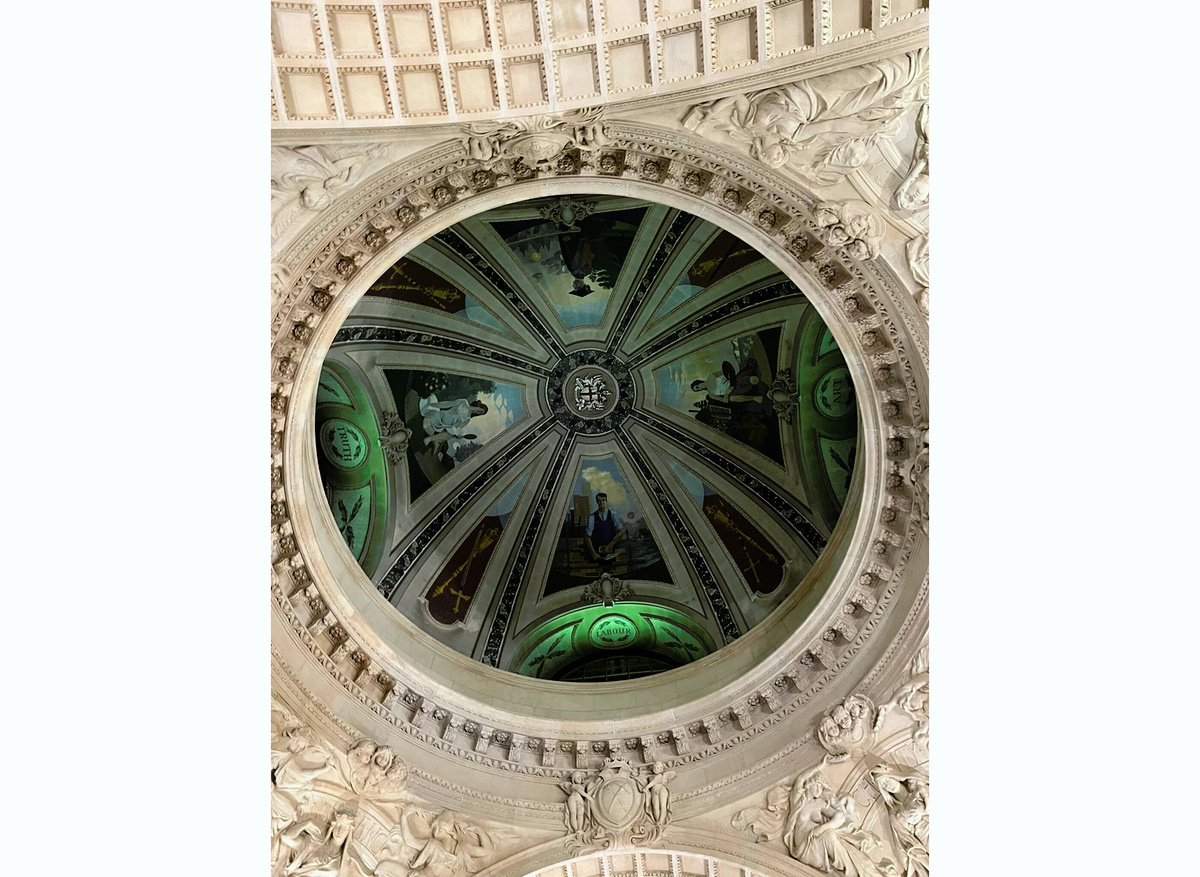
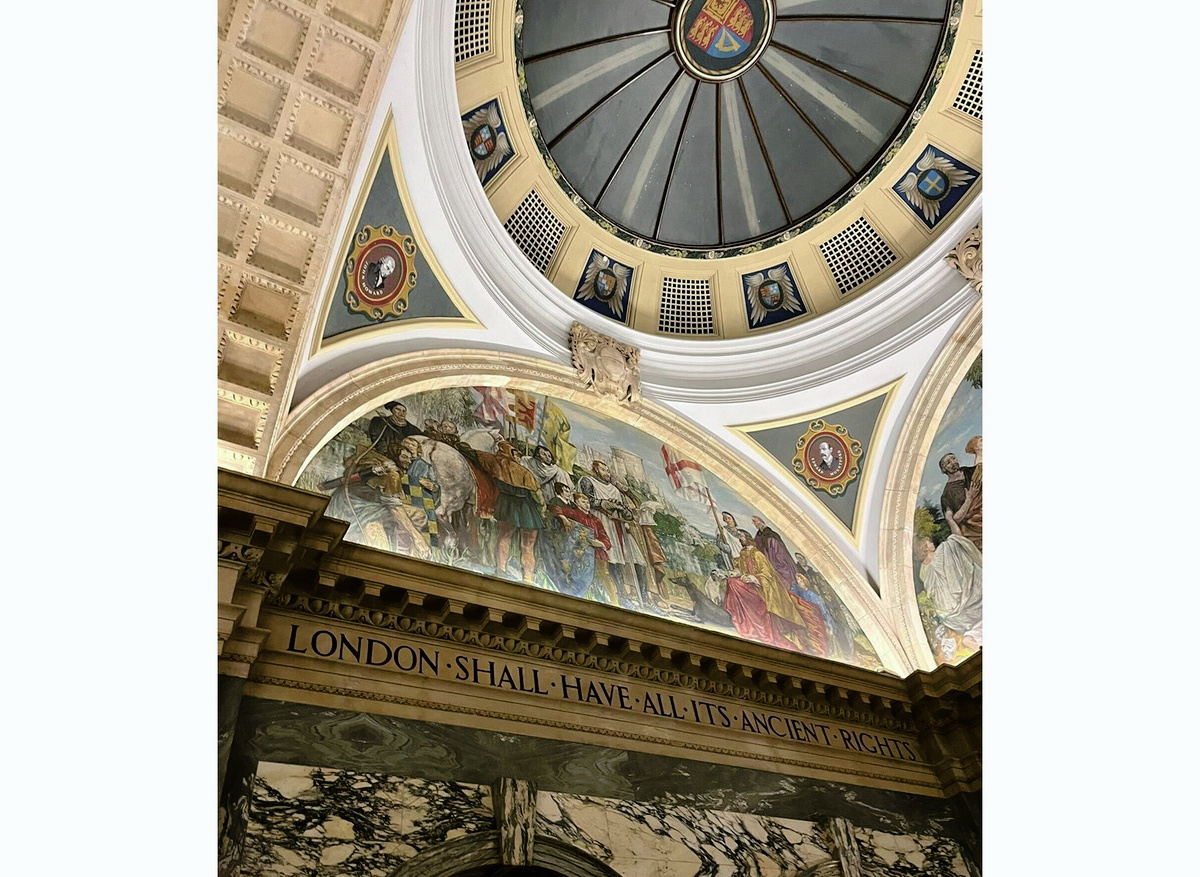
Old Bailey Dome
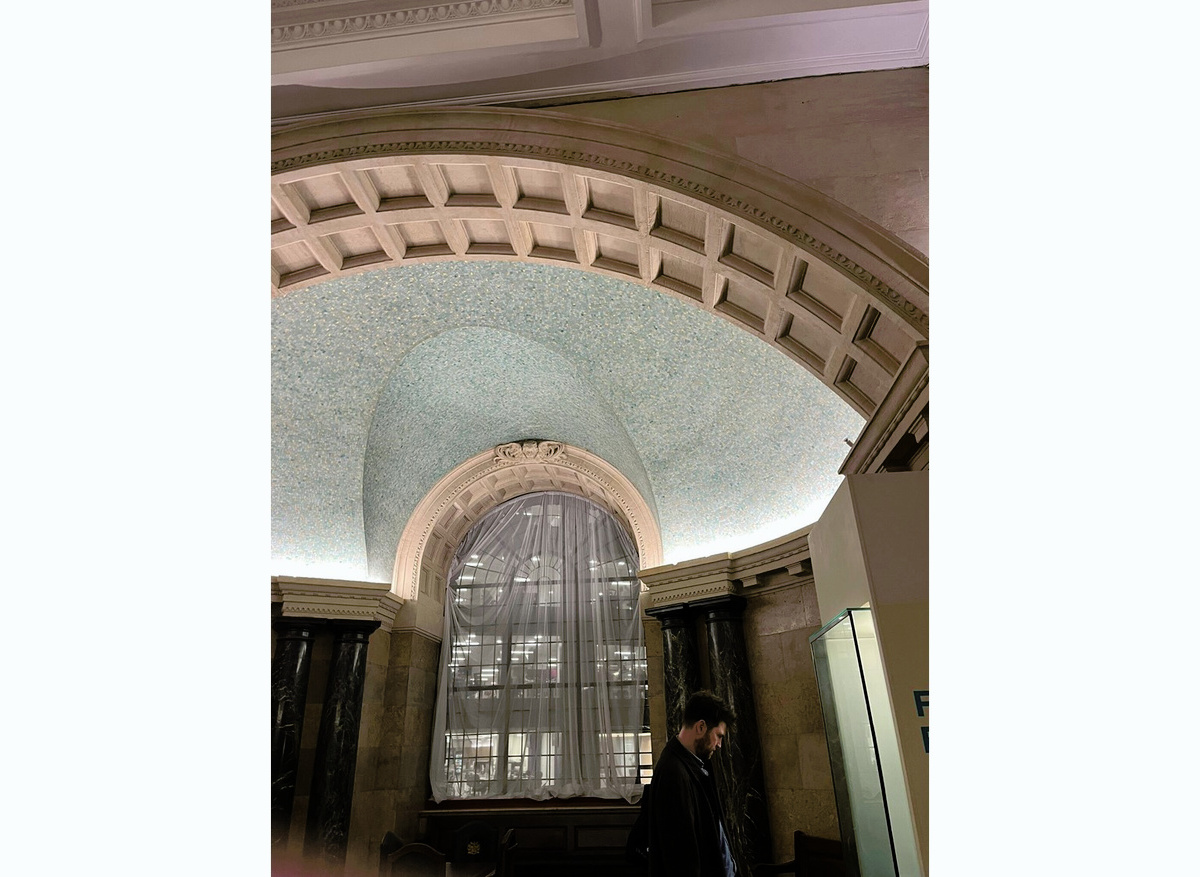
Inside the Old Bailey
The Lower Hall
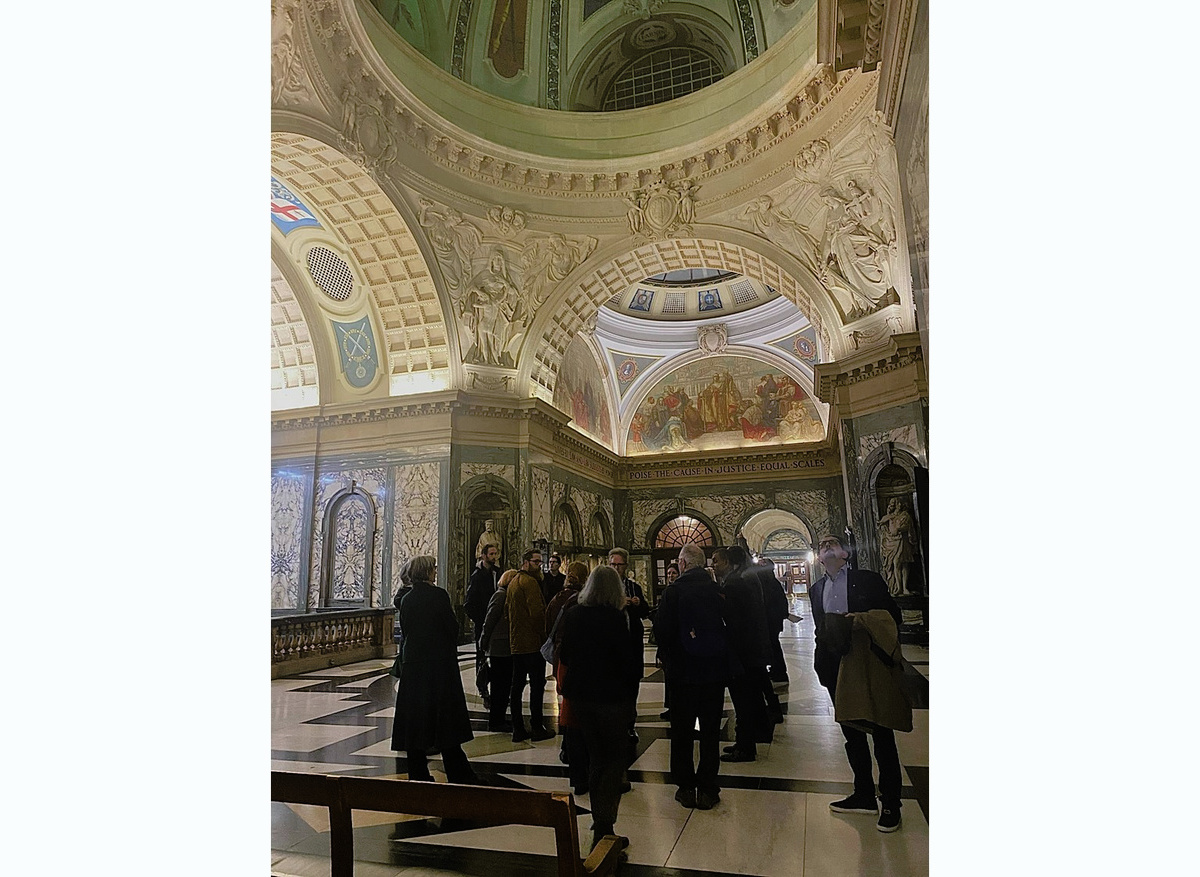
We were then guided to the Lower Hall, distinguished by marble columns, semi‑domes inlaid with mosaics, and alcoves containing historic artefacts relating to the site’s past, including objects recalling the era of public executions. The hall also features the plaque commemorating William Penn and William Mead and their historic writ of Habeas Corpus in 1670, as well as a stained‑glass window displaying the coats of arms of Recorders of London.
Statues of Elizabeth Fry, Sir Thomas Gresham, Charles I, and Charles II stand around the space, reflecting the building’s long and sometimes turbulent heritage.
Although the main ceremonial doors of the court sit in the Lower Hall, they have been opened only twice in modern history; first for the royal opening in 1907, and again during the arrival of Dr Crippen for his trial in 1910.
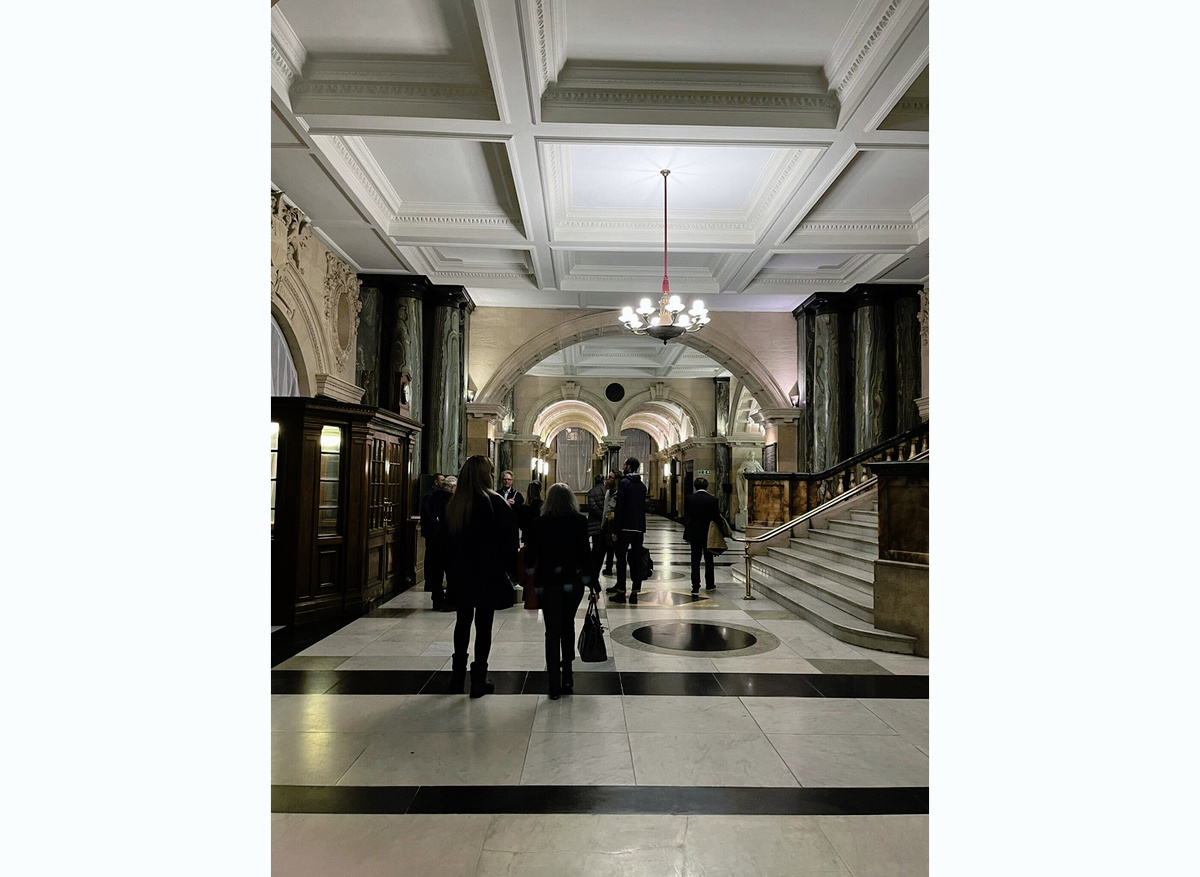
The Lower Hall of the Old Bailey
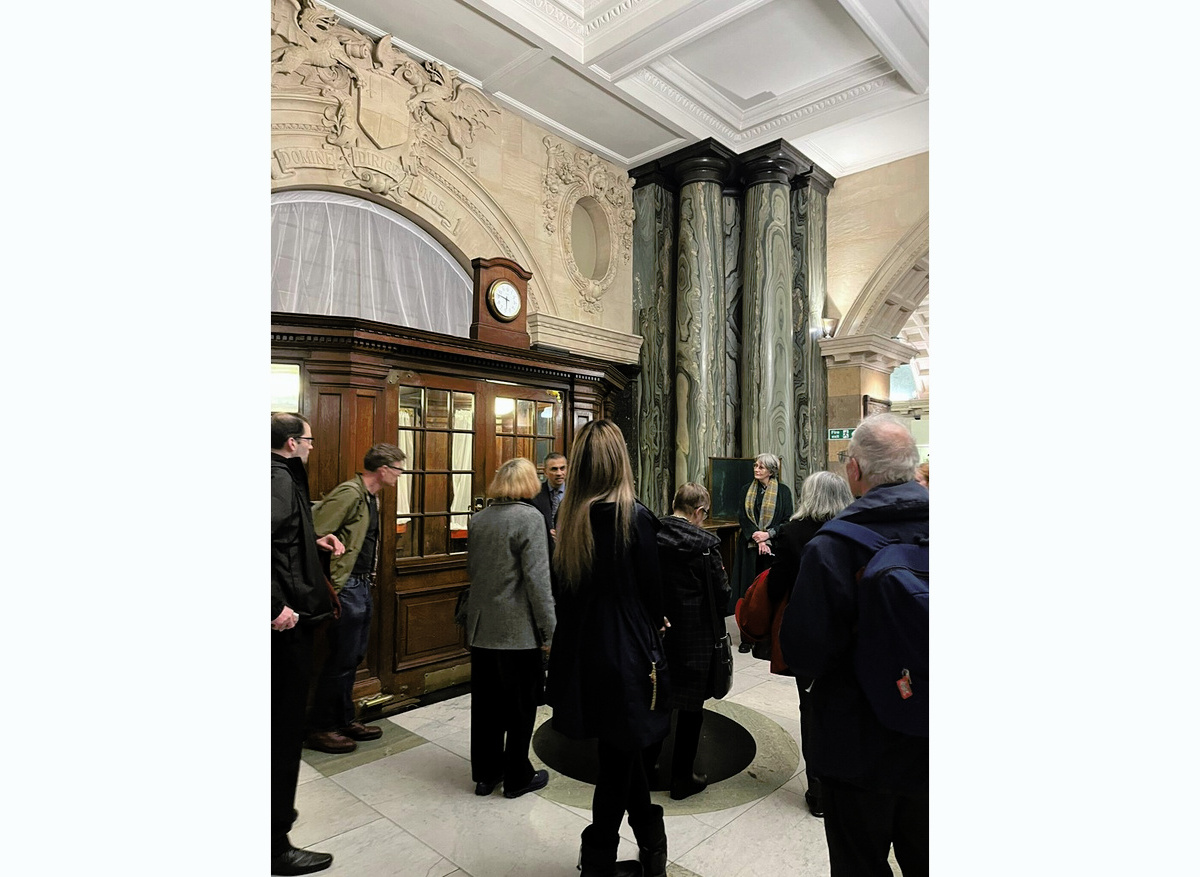
The Lower Hall of the Old Bailey
The Grand Hall
Ascending the staircase brought us into the impressive Grand Hall, adorned with beautiful murals originally painted by Gerald Moira. The hall lies directly beneath the iconic Dome, crowned by F. W. Pomeroy’s Figure of Justice, notable for being one of the few representations without a blindfold.
After extensive damage during the 1941 air‑raid, much of the Old Bailey was repaired and expanded; several murals were later repainted or recreated as part of the restoration.
The Grand Hall of the Old Bailey
The Grand Hall of the Old Bailey
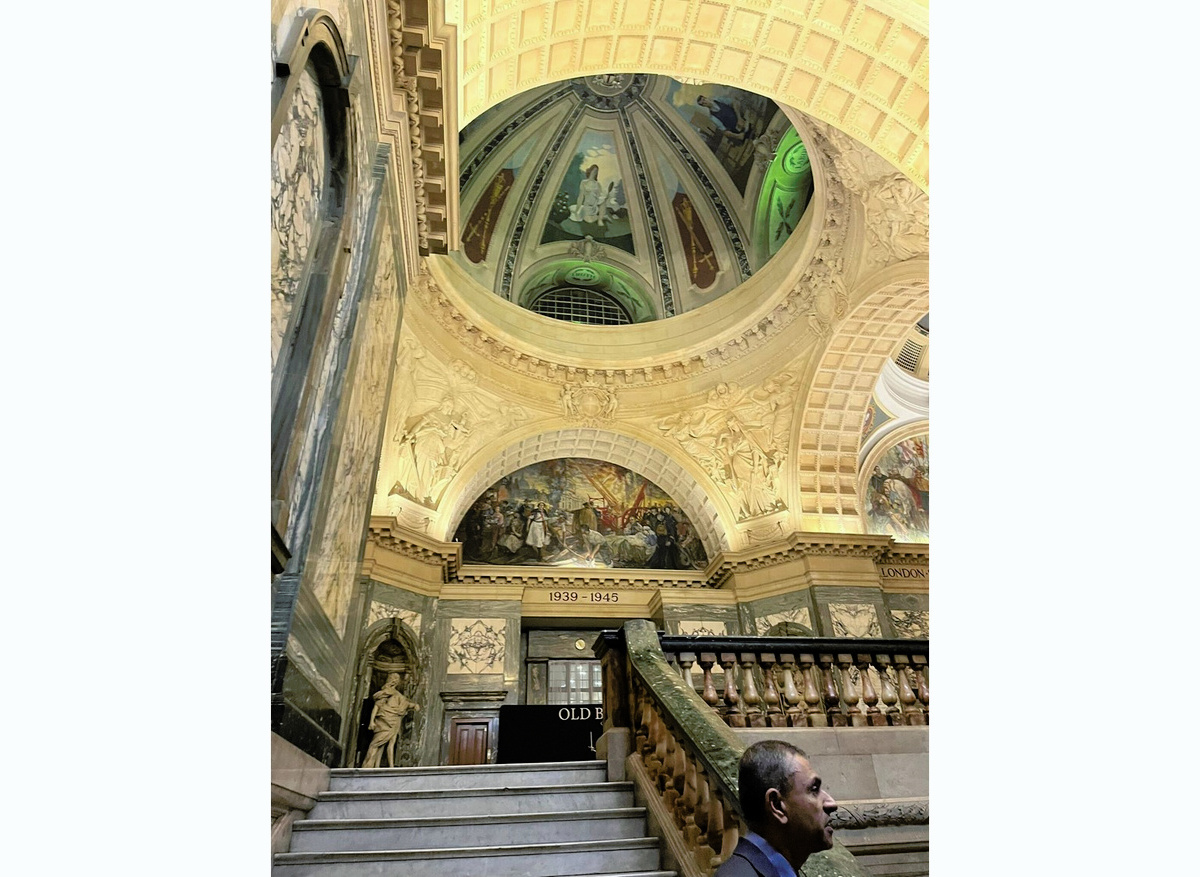
The Grand Hall of the Old Bailey
The Court Cells
Next, we visited Court Number One, adjacent to the Grand Hall. This historic courtroom, in use since 1907, is grandly furnished with ornate woodwork and oak seating, originating in Austria. These original fittings are protected by Historic England and therefore cannot be altered, meaning modern screens and wiring must be added without drilling into or concealing the historic timber. The only non‑original feature is the glass surrounding the dock.
Standing inside the dock, our group experienced the courtroom from the defendant’s perspective before descending via the internal staircase to the basement cells. These confined, windowless spaces prompted discussions of some of the many notable cases heard at the Old Bailey across centuries.
Another stairway led us to a modern 1970s courtroom, built during the South Block extension of 1972. This courtroom features updated facilities and higher glass panelling in the dock for security in trials involving more violent offenders.
The Judges' Dining Room
The final stop was the Judges’ Dining Room, a wood‑panelled space room featuring a long dining table for the 15 sitting judges, and space for guests. The walls are lined with crests of the London Sheriffs and portraits of the Royal Family, creating a dignified and atmospheric setting.
We extend our sincere thanks to the Furniture and Woodwork Group and to Michel Aslangul for organising this memorable visit, and to Jay Patel for bringing to life the rich history and human drama that have characterised the Old Bailey throughout its operations.