RICHeS Access Fund opens heritage science infrastructure to new users across the UK
Over £500,000 has been awarded through the first call of the RICHeS Access Fund to 43 organisations across all four nations of the UK, enabling them access to specialist heritage science facilities, collections and expertise that would otherwise have been beyond their reach.
The successful organisations include museums, galleries, libraries, archives, charities, community organisations, freelancers, independent researchers and universities. Many are accessing this kind of scientific infrastructure for the first time, having previously lacked the resources, networks or institutional pathways to work with advanced heritage science facilities. For many award holders, this is the first opportunity to undertake this type of research without requiring affiliation to a university or an Independent Research Organisation (IRO).
The RICHeS Access Fund was created to remove those barriers, opening participation in heritage science to a far wider range of organisations. By providing access support, the RICHeS Access Fund is enabling organisations of all sizes, including those outside traditional research environments to ask new questions, develop innovative approaches and contribute to the UK’s heritage science capability.
The response to the inaugural RICHeS Access Fund call was exceptionally strong, reflecting both the demand for specialist facilities and the appetite, across organisations of every size, to put scientific research to work answering new questions about the UK's shared heritage.
The projects now underway will:
- Uncover new evidence about historic objects, buildings and archaeological sites
- Improve conservation methods for nationally significant collections
- Investigate the impacts of climate change and environmental conditions on heritage
- Apply advanced imaging and scientific analysis to reveal previously hidden information
- Create new digital resources and research data that will benefit future generations
Projects will draw on facilities and collections distributed throughout the RICHeS network, reflecting the breadth of expertise available across the UK's heritage science infrastructure.
Professor Meggen Gondek, RICHeS IHQ, said:
‘RICHeS is incredibly proud that our network of facilities and expertise is going to be able to contribute to so many meaningful projects across the UK. Unlocking the potential of our past through heritage science is just the start and we look forward to seeing how the successful applicants will use these new revelations and breakthroughs to tell new stories, protect heritage and develop impact for their communities.’
From access to impact
The RICHeS Access Fund represents more than an investment in individual research projects, it represents a significant expansion of who can participate in heritage science. For many of the successful organisations, this is the first time they have been able to access advanced scientific facilities, specialist collections and technical expertise of this kind. Without the support of the RICHeS Access Fund, many of these projects would not have been possible.
By removing financial and practical barriers, the RICHeS Access Fund is enabling organisations that have historically had limited access to research infrastructure to undertake ambitious investigations, develop new partnerships and build confidence in using scientific approaches to address heritage challenges. The impact extends beyond individual projects, the funded work will generate new knowledge, strengthen conservation practice, develop sector capability and create lasting connections between heritage professionals, researchers, communities and the RICHeS infrastructure.
Each funded project has its own objectives, but together they represent a significant investment in the future of the UK's heritage sector. The examples below offer a snapshot of the work now beginning across the UK.
The Naburn Whale: A new Yorkshire icon
- Project Lead: Sarah King, York Museums Trust
- RICHeS Investment Lead: BIOARC-HS
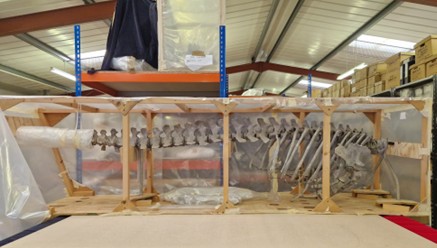
York Museums Trust, an independent charity, is uncovering the remarkable story of the Naburn Whale, a rare specimen that has been part of York Museums collection for over a century. The mounted skeleton is believed to be the white (beluga) whale stranded at Naburn Lock in 1905, far from its Arctic home, but its species has never been scientifically confirmed.
Using modern scientific techniques, including Zooarchaeology by Mass Spectrometry (ZooMS), the analysis will confirm the specimen’s identification and unlock its potential for research, learning and public engagement. The whale will become the centrepiece of a new exhibition exploring Yorkshire's wildlife, biodiversity and climate challenges, inspiring visitors to connect with nature and reflect on our changing relationship with the natural world.
Dr Sarah King, Curator of Natural Science at York Museums Trust, said:
‘We are delighted to have been selected as a recipient for the Access Fund. This funding will enable us to delve deeper into our extensive biology collection, uncover the forgotten or hidden stories of the Naburn whale specimen and present this information back to the people of Yorkshire and our museum visitors from around the world. As a charity, York Museums Trust is always incredibly grateful for the generosity of these funding schemes which help us to provide valuable insight into the rich and varied sites and collections in our care.’
New Narratives of the Norman Conquest: Dating Bosham’s ‘Bayeux Tapestry’ Power Centre
- Project Lead: Duncan Wright, Newcastle University
- RICHeS Investment Lead: Institute for Heritage and Environmental Science: 14CHRONO
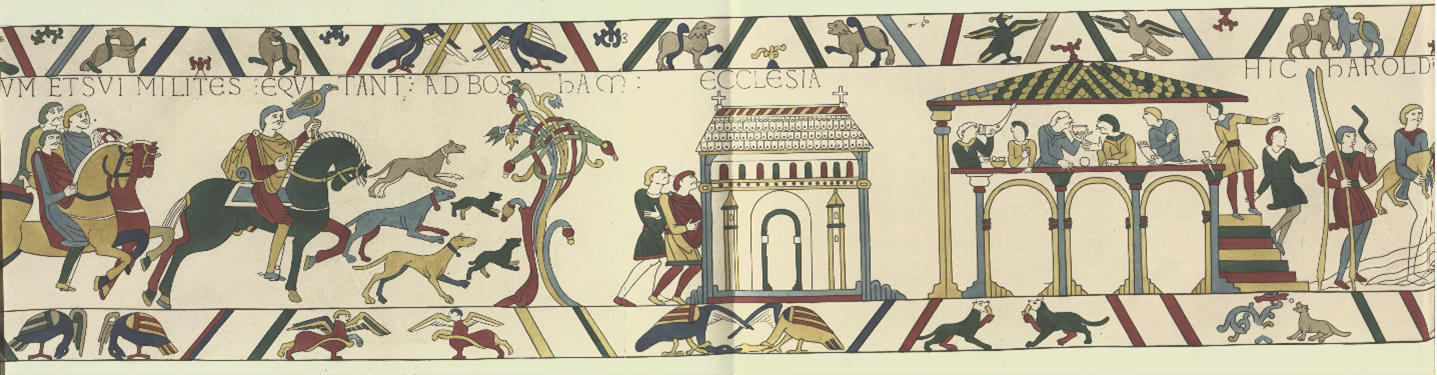
Newcastle University are investigating the story of the Norman Conquest, in part, at Bosham in West Sussex, the power centre of Harold Godwinson, England's last Anglo-Saxon king. Depicted on the Bayeux Tapestry, Bosham was where Harold prepared for his journey to Normandy in 1064, but the true story of this important site is only now being uncovered.
Recent archaeological research has revealed the remains of a high-status Anglo-Saxon hall and later medieval buildings, offering new insights into elite life before and after the Conquest. This project will use advanced scientific dating techniques to establish the exact timeline of these discoveries, transforming our understanding of Bosham's role in early medieval England. Coinciding with the 2026 Year of the Normans and the Bayeux Tapestry display in the UK, the project will bring new perspectives to one of the country's most significant medieval heritage sites.
Dr Duncan Wright, Senior Lecturer in Medieval Archaeology, said:
‘The generous support of the RICHeS Access Fund will allow the first scientific dating of Harold Godwinson's palace at Bosham, a site made famous by its depiction on the Bayeux Tapestry. The site of Harold's enclave was identified in 2024 by the AHRC-funded project Where Power Lies, but it is not entirely clear when the site was founded and how it evolved over time. This RICHeS Access Fund will support dating of both standing buildings as well as buried archaeological remains at Bosham; the work will provide a detailed chronology of Harold's famous site to be developed, in the year that the Bayeux Tapestry comes to the UK for the first time.’
These projects represent just a small sample of the diverse work supported through the first RICHeS Access Fund.
Across the UK, funded organisations will investigate subjects ranging from Roman military landscapes and prehistoric archaeology to historic bridges, museum collections, archival records, maritime heritage and climate resilience. Together, they demonstrate how access to world-class heritage science infrastructure enables organisations to answer new research questions, strengthen conservation practice and create lasting public benefit.
A lasting legacy
Where appropriate, research data generated through the RICHeS Access fund will be deposited with the Heritage Science Data Service (HSDS), ensuring outputs are Findable, Accessible, Interoperable and Reusable (FAIR). This growing evidence base will support future research, enable wider collaboration and maximise the long-term value of the investment, the first step in strengthening the UK's heritage science capability and building organisational confidence in scientific research across the sector.
Looking ahead
The first round RICHeS Access Fund demonstrates the transformative potential of widening access to heritage science infrastructure. Over the coming months, RICHeS will share stories, discoveries and outcomes from these organisations, highlighting the difference this investment is making for organisations, researchers and communities across the UK.
A second Access Fund call is planned to launch this autumn, creating further opportunities for organisations to access the RICHeS infrastructure and develop ambitious new research.
Today's announcement marks the beginning of a more open, collaborative and inclusive approach to heritage science. One that enables organisations of every size to use world-leading scientific expertise to better understand, protect and share the UK's cultural heritage.
All funded projects
- An appraisal of pathological animal bones held at UCL which form part of the unique Baker and Brothwell Collection
Maeve Moorcroft, Freelance Specialist
Service Providers used: University College London
- Animal bones as powerful carriers of meaning: memory and identity, life and death
Mandy Keating, Freelance Specialist
Service Providers used: University of Sheffield
- Assiros Toumba: Weed ecology and Bronze Age cultivation intensity.
Amy Bogaard, University of Oxford
Service Providers used: University of Sheffield
- Bouldnor and the Submerged Solent
Garry Momber, Maritime Archaeology Trust
Service Providers used: University of Southampton
- Burnswark: A Roman Siege of an Indigenous Hilltop Centre?
James O’Driscoll, University of Glasgow
Service Providers used: Queen’s University Belfast
- Chemical and sensory characterisation of fungal odours in the dune stinkhorn: Documenting environmental smellscapes for olfactory heritage
Sion Parkinson, Freelance Specialist
Service Providers used: University College London
- Climate-resilient Self-Healing Lime Mortars for historic masonry (SHLM)
Cristina De Nardi, Cardiff University
Service Providers used: English Heritage
- Conservation in a Changing Climate: Redefining Environmental Guidelines for Marine Iron
Nicola Grahamslaw, SS Great Britain Trust
Service Providers used: Cardiff University, English Heritage
- Culinary heritage and the formation of the New World: an analysis of early colonial pottery using organic residue analysis
Javier Andres Montalvo Cabrera, University of Leicester
Service Providers used: University of York
- Distinguishing between European drying oil sources in paint microsamples using compound-specific isotope analysis
David Peggie, National Gallery London
Service Providers used: University of Bristol
- Durham Castle Plaster Analysis
Gillian Rennie, Durham Castle
Service Providers used: Durham University
- Fading records: Assessing the stability of archival writing media for public engagement strategy
Sarah Graham, PRONI
Service Providers used: The National Archives
- Fair Isle: The Fealie Dyke and its environment as an indicator of past landscapes.
Daniel Rhodes, National Trust for Scotland
Service Providers used: University of the Highlands and Islands
- Informing the Conservation of a Heritage Bridge through Multi-Scale Characterisation of Historic Cast Iron
Kasun Kariyawasam, WSP Ltd
Service Providers used: University of Oxford
- Langstone Harbour Changing Coastlines Project
Lauren Tidbury, Maritime Archaeology Trust
Service Providers used: University of Southampton
- Mapping challenging landscapes on Holy Island
David Petts, Durham University
Service Providers used: University of Bradford
- Maritime Archaeological Investigation of Spurn (MARIS)
Katerina Velentza, University of Hull
Service Providers used: University of Southampton
- New Narratives of the Norman Conquest: Dating Bosham’s ‘Bayeux Tapestry’ Power Centre
Duncan Wright, Newcastle University
Service Providers used: Queen’s University Belfast
- Newport Medieval Ship Project: Post conservation scanning of individual timbers and test re-assemblies
Nigel Nayling, Swansea University
Service Providers used: University of Exeter, University of Southampton
- North Cornwall survey of historic shipwrecks and submerged landscapes
Julie Satchell, Maritime Archaeology Trust
Service Providers used: University of Southampton
- Past Pits
Derek Alexander, National Trust for Scotland
Service Providers used: University of the Highlands and Islands
- ‘Pictures in little’: Technical and material insights into a select group of early portrait miniatures through advanced scientific analysis
Victoria Button, Royal Collection Trust
Service Providers used: Historic Royal Palaces
- Plant remains and the environmental and economic context of the Ness of Brodgar
Nick Card, Ness of Brodgar Trust
Service Providers used: University of the Highlands and Islands
- Post excavation analysis of organic residues and sediments from shell midden 2B at Tarradale, Muir of Ord, Ross-shire
Eric Grant, North of Scotland Archaeological Society
Service Providers used: University of the Highlands and Islands
- Pottery Production at Roman Corbridge: its character, scale and significance
Ludovica Galli, Newcastle University
Service Providers used: Durham University
- Preserved in Peat: The Archaeology of Northern Ireland’s Bog Finds
Niamh Baker, National Museums NI
Service Providers used: Queen’s University Belfast
- Quantifying Acidic Pollutants and Airflow Requirements in Cool Film Storage
Saya Honda Miles, Historic England Archive
Service Providers used: English Heritage
- Reconnecting with Māori taonga through heritage science aided research and transnational exchange
Areti Galani, Newcastle University