
While working with the archaeological unit responsible for the rare Iron Age hoard near Thetford, trainee archaeologist and Icon Early Career member Indiana Edwards gained hands-on experience in delicate micro-excavation, gaining insight into the meticulous work and essential role of archaeological conservators.
The discovery of the rare Iron Age hoard a few miles from Thetford has dominated headlines for its importance in British Archaeology, but it’s excavation highlights the importance of archaeological conservators. The block lifting, and subsequent micro-excavation of the hoard allowed the recovery of material and insight that may have been lost during an in-situ excavation.
During my summer working in the field for the archaeological unit responsible for the outstanding find, Norfolk Museum Service’s conservation staff were kind enough to offer me the privilege of joining them at the Castle to gain insight into the meticulous work required to preserve our archaeological heritage.
Before work began, the block underwent CAT scanning. This advanced technology allowed for the mapping of the contents and their positioning within the soil - vital information required for precise excavation.
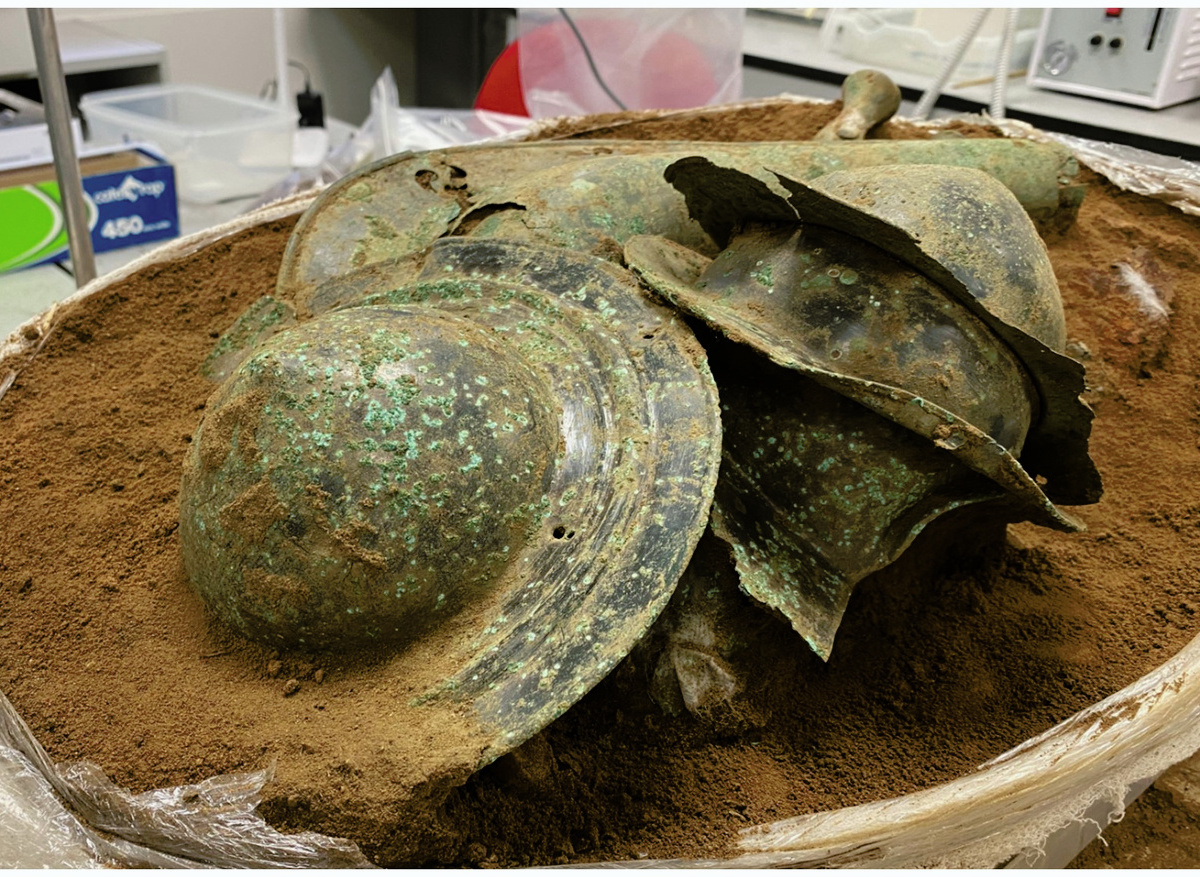
The Carnyx block after the removal of the Boar Head Standard
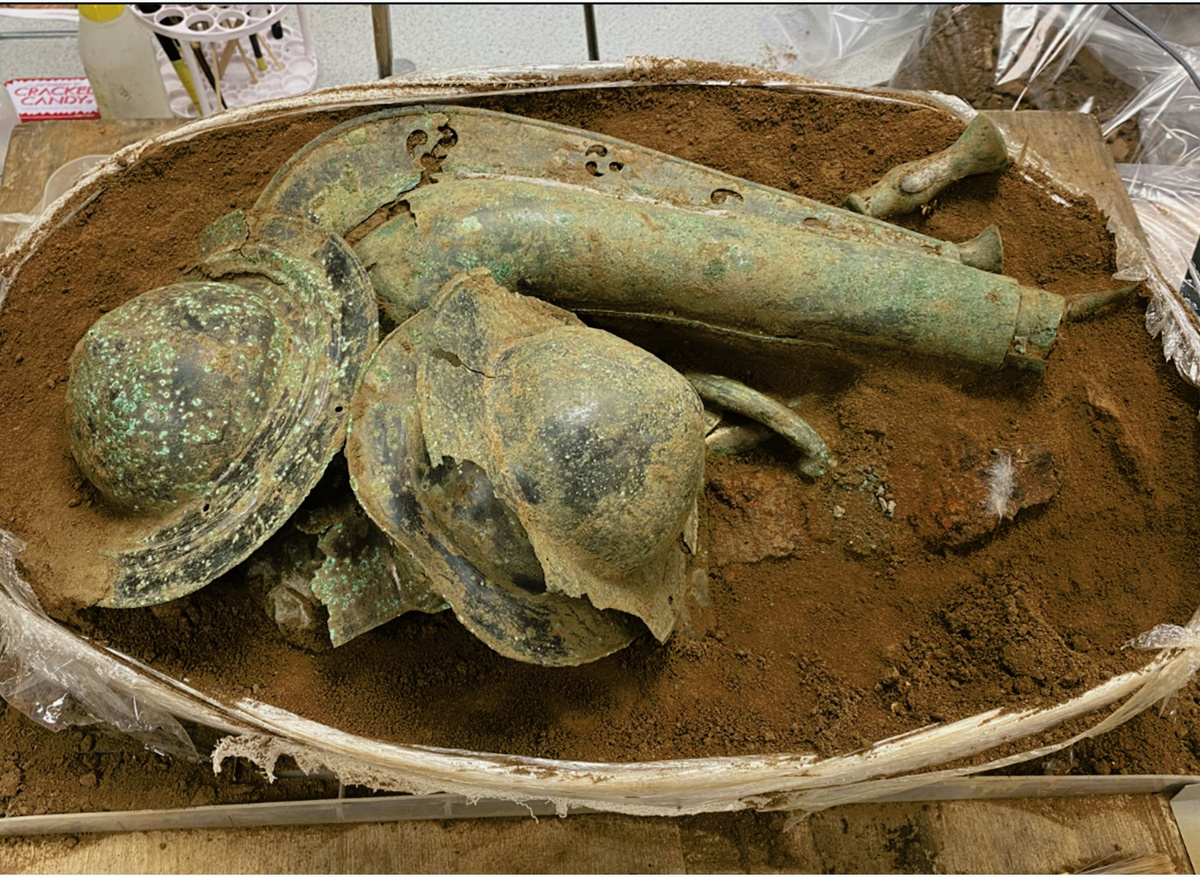
The Carnyx block after the removal of the Boar Head Standard
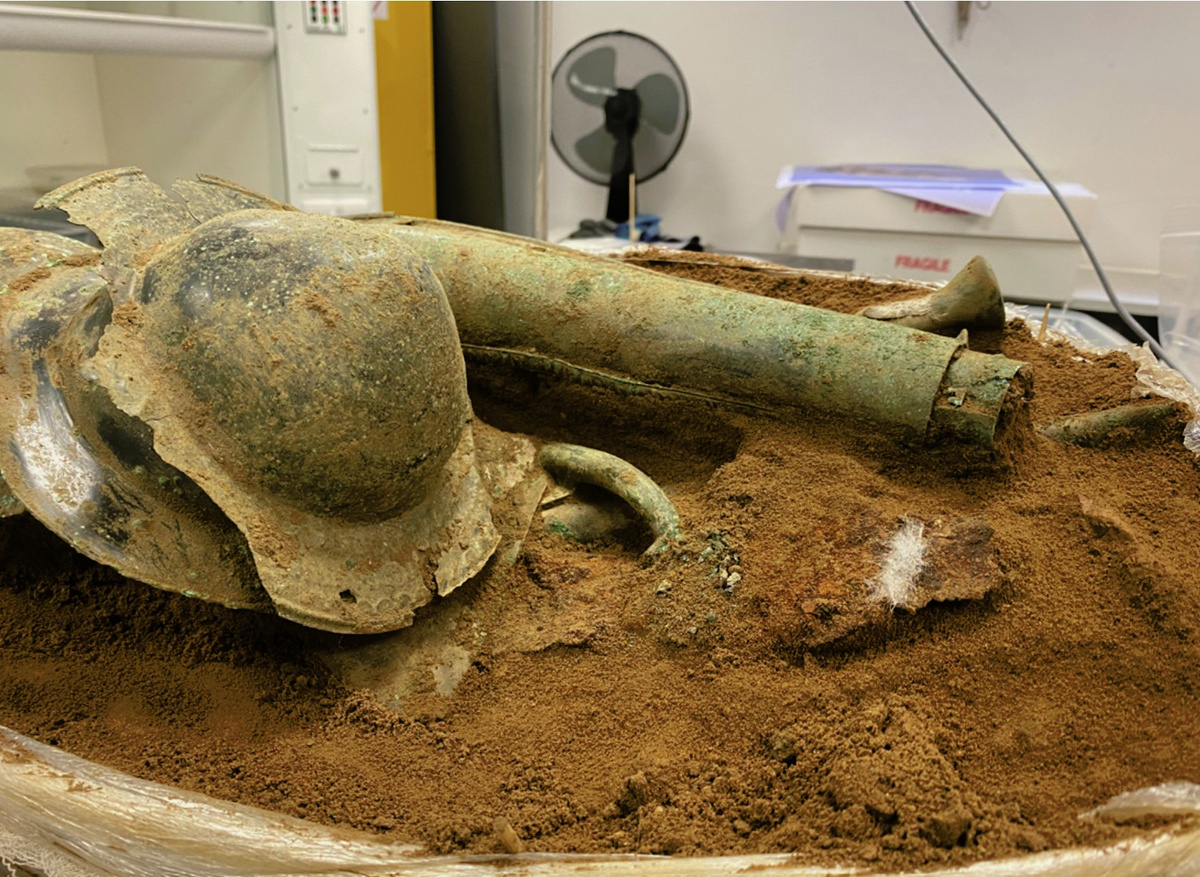
The Carnyx block after the removal of the Boar Head Standard
During my visit, I worked alongside Senior Archaeological Conservator Jonathan Clark, who had already begun the painstaking process of micro-excavation. At the time of my arrival, the Boar’s head had already been lifted from the block, revealing parts of the Carnyx tubing and a length of iron. Jonathan allowed me to assist with the micro-excavation of one of the topmost shield bosses. Using a combination of bamboo skewers and porcupine quill, I loosened the soil surrounding this boss. These implements are softer than the copper metal of the Carynx, mitigating the risk of scratching. The loose soil was then brushed away and checked for any fragments. The sandy silt was easily removed, though denser spots required more force. Fragile and unstable areas of metal were temporarily consolidated with Japanese tissue paper and Klucel G, left visible so care could be taken when lifting more fragile areas.
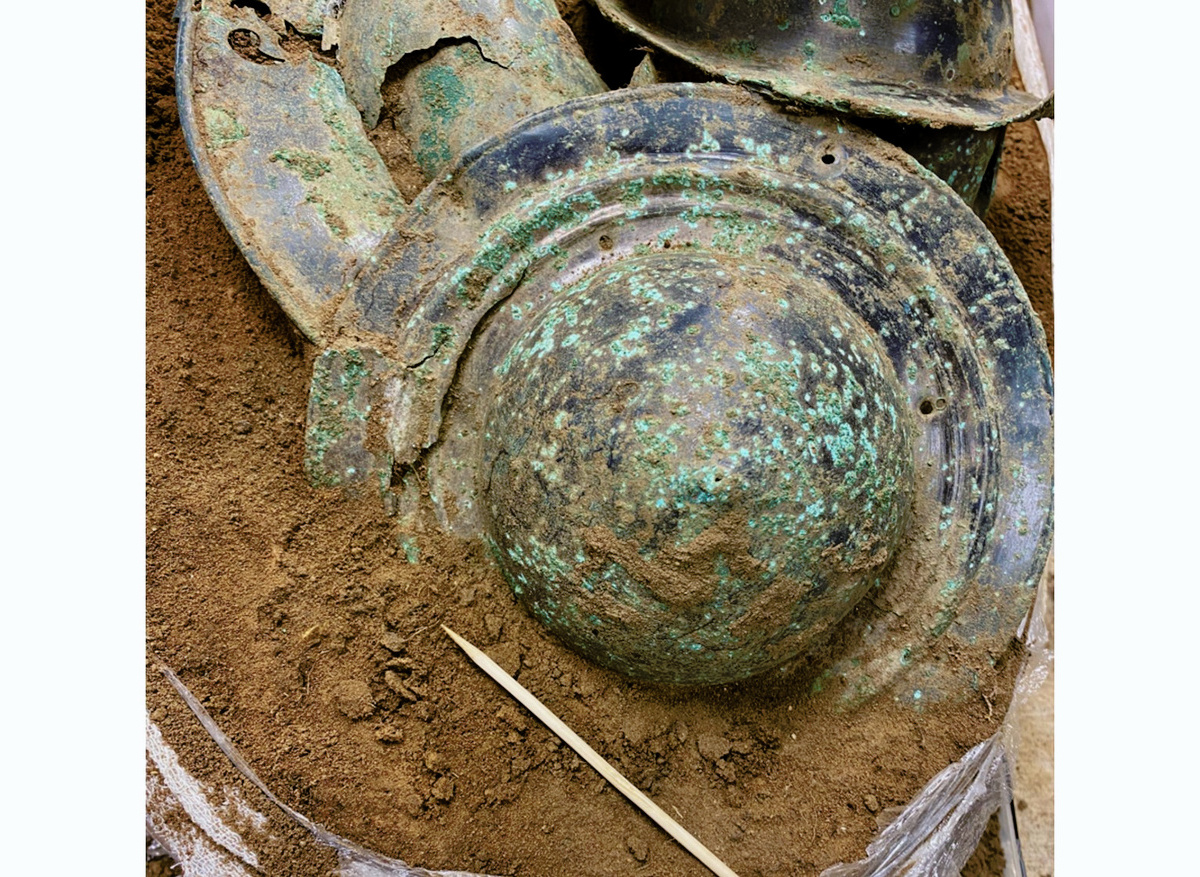
Shield Boss before micro-excavation
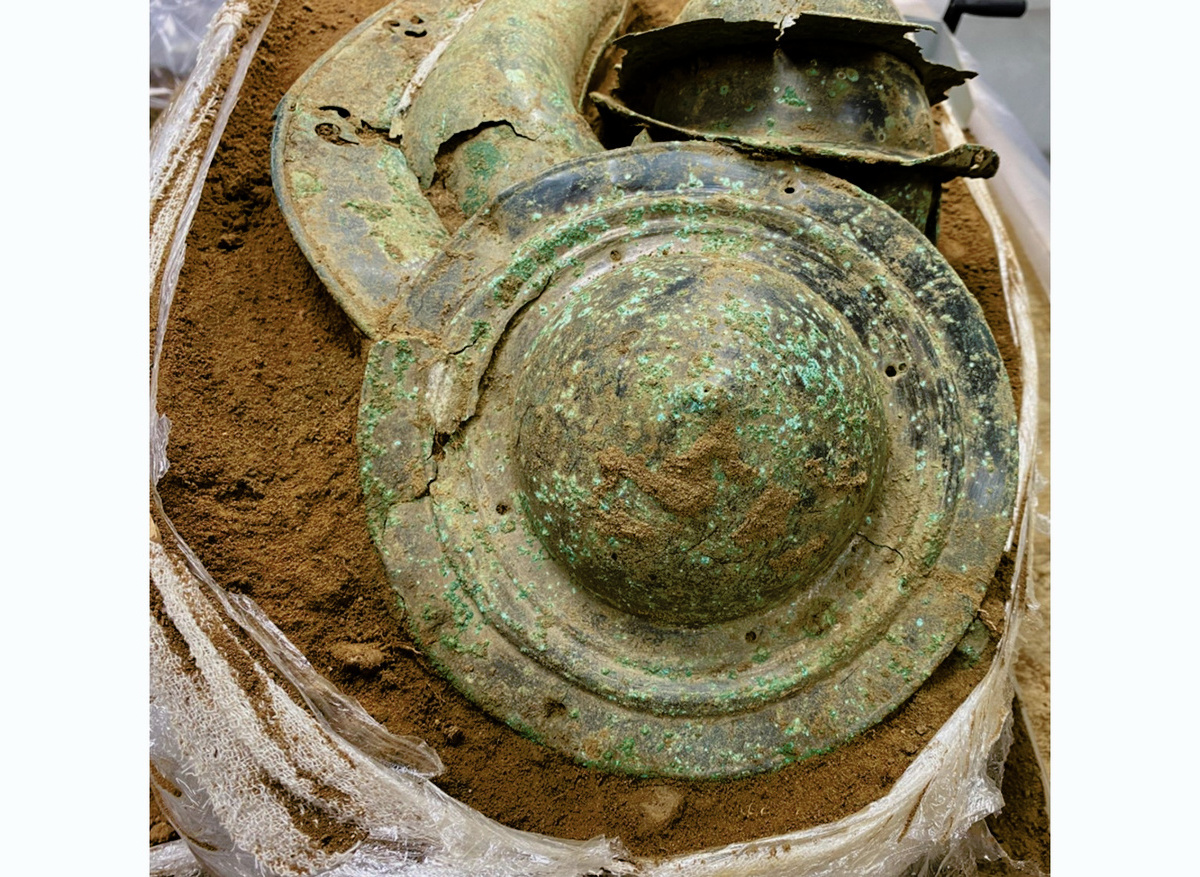
Shield Boss after micro-excavation
Having worked the summer as a trainee field archaeologist, carrying out an excavation at this scale gave me an insight into how my experience in the field can be transferred into my conservation studies and future practice.
I would like to thank Jonathan and Norwich Museum Services Conservation staff for their hospitality and willingness to show me the work they are doing to ensure historical and archaeological material is preserved for current and future generations, and for allowing me to be a small part of this work. Thank you to Pre-Construct Archaeology for organising this once-in-a-lifetime opportunity.
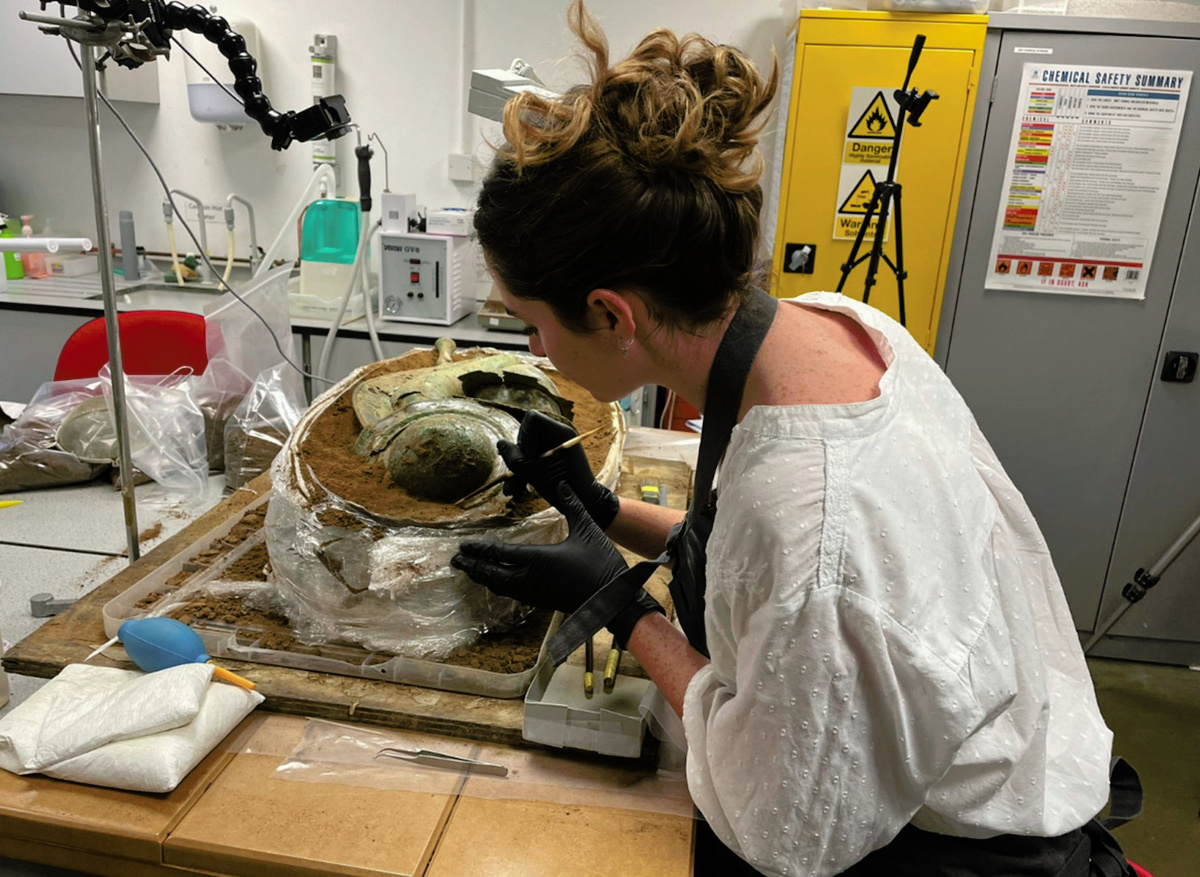
Indiana micro-excavating the Carnyx
By Indiana Edwards
Trainee Archaeologist, Studying BSc Conservation of Objects in Museums and Archaeology at Cardiff University