Goal
In the current economic and political climate, cultural heritage can often be overshadowed by high-profile Government priorities such as the economy, health and international relations. It is consequently increasingly important for Icon to promote the value of cultural heritage conservation and its relevance to national agendas. While we undertake targeted activities to influence specific policies and legislation, we also engage Ministers and politicians in these issues through meetings, letter writing and briefings to ensure conservation remains on the Government’s radar.
Task
In 2018, we identified the appointment of a new DCMS Heritage Minister as an opportunity to raise the profile of cultural heritage conservation within Westminster. Icon wrote to the Minister, welcoming him to his new post and inviting him to experience “conservation in action.” Icon’s quick action and persuasive messaging resulted in a positive response from the Minister’s office and secured a date in a busy ministerial diary. As a leader in conservation and heritage science research – and conveniently located near the Houses of Parliament – Tate Britain was a natural venue and partner.
Action
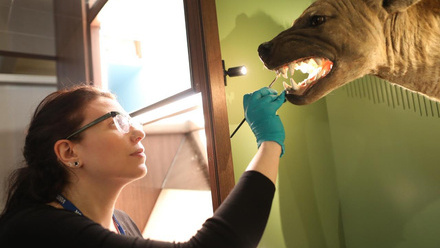
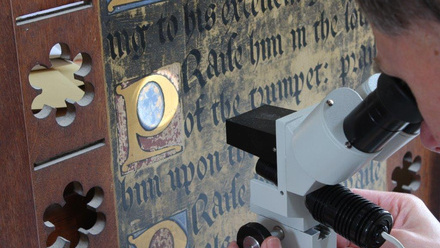
Icon member Rebecca Hellen worked with her colleagues at the Tate to organise an exciting behind-the-scenes visit that demonstrated the range and complexity of the skills, experience and expertise required in conservation. In the paintings studio at Tate Britain, the team introduced the Minister and his officials to current work on paintings by Joshua Reynolds, David Hockney and J.M.W. Turner, while highlights in the sculpture and installation studios included Eva Hesse’s Addendum and the NANORESTART research project. The Minister expressed his curiosity about the techniques and methods employed in looking after the artworks, often leaning in to get a closer look and asking pertinent and thoughtful questions. Such was the Minister’s interest for the range of projects in the studios, that at times we found ourselves politely nudging him along!
The tour culminated in a presentation from Icon’s Chief Executive on the value of the conservation profession and current matters of concern, including retaining practical skills, nurturing a workforce more representative of UK society and the profession’s role in building a global Britain. The Minister praised the sector’s contribution to tourism and cultural diplomacy, voicing gratitude for Icon’s recent work in fostering international partnerships.
Outcome
By highlighting our greatest asset – the work of our highly skilled and accredited professionals – we successfully grabbed the Minister’s interest, priming a positive response to our messages. We were able to outline the challenges and opportunities within our sector to an engaged listener, increasing understanding of conservation at Government level. The Minister’s office has subsequently consulted Icon on core questions like soft power and how best to support conservation’s contribution to the upcoming International Strategy. This relationship represents an essential avenue for driving change on the topics that matter to us most.
Learning
The experience gave us proof of something that we knew all along – “conservation in action” is one of the most effective advocacy tools at our disposal, due to its power to captivate even the most high-level audiences. By showing conservation in practice, we can effectively communicate our impact. This has a significant implication for Icon members: you all have the potential to be powerful advocates for the profession. Not only do you possess insider knowledge of the crucial issues affecting conservation, but you also hold the skills and expertise that make our sector so important and unique.
Next Steps
Icon will extend its influence as a strong voice for conservation by identifying even more opportunities for engaging decision makers and the public. We call on all Icon members to support this vital advocacy mission. While you encounter extraordinary objects every day, a behind-the-scenes peek is a memorable and privileged experience that can convince even the most sceptical members of the public – and even Government Ministers! – of the importance of conservation.