
Icon’s CEO, Emma Jhita, speaks to Meggen about the importance of playing to strengths, creating opportunities for people to connect and collaborate, and staying curious.
Emma: It’s great to meet you! I’m really interested in how your background in early mediaeval archaeology has shaped your leadership of RICHeS as a large scale national infrastructure project.
Meggen: When it comes to archaeology, I’ve always been a practically minded person. I really enjoy field work, as many archaeologists do, and teaching archaeology techniques and methods. What makes a good field team is recognising that you’re a team and balancing out your strengths and weaknesses so that you work more effectively. As head of an infrastructure that has a lot of nodes across the UK, one of the things that really inspires me is when we come together and support the sector as a team rather than thinking about one individual unit trying to do it all.
The ability to communicate and talk through problems is also important. In archaeology, if you’re standing in front of a section and things aren’t entirely clear, someone will offer a theory or an interpretation, and then someone else riffs off that. It’s that ability to have a dialogue, where everybody’s point of view and experience has real value.
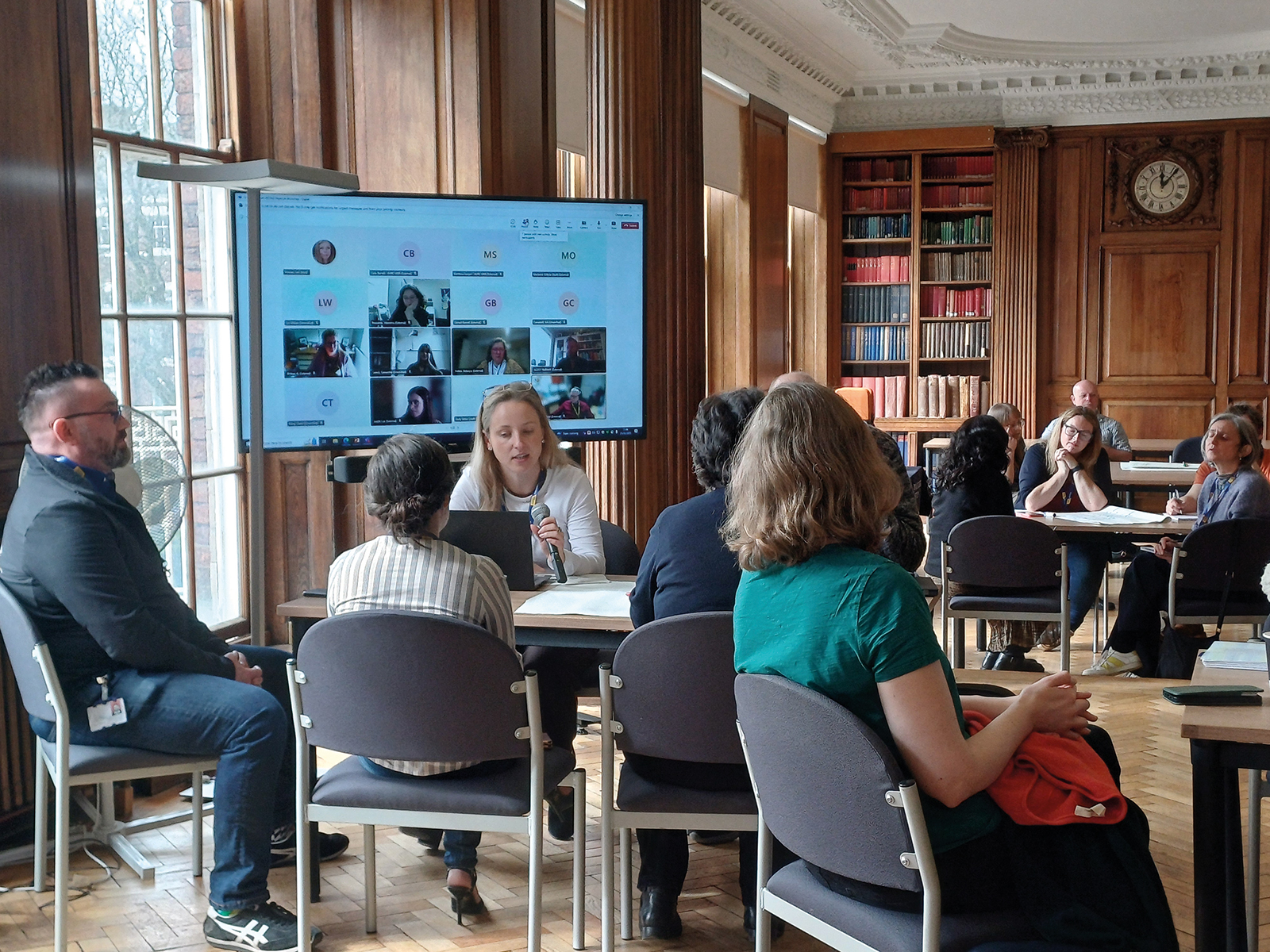
Participants take part in interactive workshop discussions during the RICHeS Regional Workshop at the University of Liverpool
As the leader of RICHeS, that’s important as an ethos – instilling the idea that we really need to listen, because we’re not experts in everything, certainly not in all the different techniques that are involved in heritage and conservation science. We have to listen and then we can try and identify themes and patterns and support the sector in that way.
Emma: Amazing. That’s a really powerful way to look at leadership.
Meggen: At RICHeS infrastructure headquarters (IHQ), we have an amazing team of dedicated people who really believe in what the programme can potentially do for the sector. I see my role as more of a coordinator, trying to harness everybody’s enthusiasm and leading by example, making sure that the very essence of RICHeS is collegiality – something we hope extends across the RICHeS distributed research infrastructure, our network of world class facilities, collections and specialist knowledge.
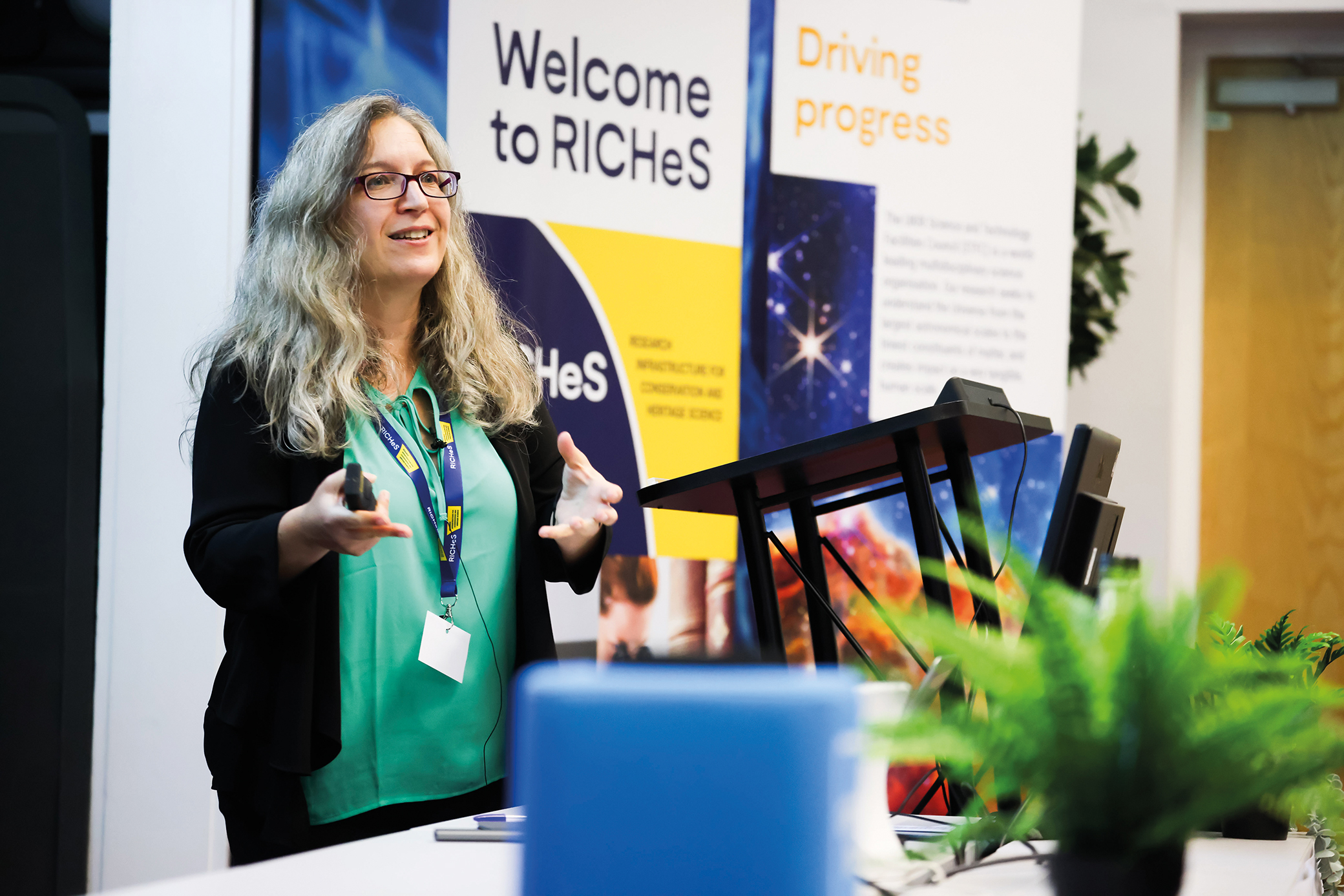
Professor Meggen Gondek speaks at the RICHeS programme launch, outlining the vision, priorities and ambitions of the programme
Emma: I imagine across the wider RICHeS network, the diversity of expertise and knowledge must be quite overwhelming.
Meggen: None of us in the RICHeS team have that vast experience. Some of us come from the heritage and conservation sector while others are from outside and bring valuable experience that way. But when we look at all the things that the RICHeS network can do and wants to do, it’s really mind blowing.
At this point in the programme, we’re still in the build phase. We’re in ‘nurture’ mode, helping to make sure that our investments – the projects we have funded – are supported and getting ready to go out into the real world and offer that extensive experience and opportunity to others.
Emma: It’s nearly 18 months since the launch of RICHeS. Can I ask, practically, how things work?
Meggen: It is a challenge. From the get-go, RICHeS was designed as a distributed research infrastructure and we’re proud that we’re in all four nations across the UK, rather than investing in one or two mega sites. There’s a lot of ideology behind that in terms of widening access across the regions.
But this does present challenges because we’re working in different legal contexts, particularly in relation to heritage and culture. And RICHeS has to have an understanding of that, from the point of view of our investments, but also the users and applicants who might want to access the facilities.
With the distributed network, what we want to do first is tell people what’s available and where, and that’s what the Heritage Science Data Service (HSDS) does through its Catalogue of Services. So, hopefully this will allow you to find someone to collaborate with in your area, if you are defined geographically, or from further afield, if you want to collaborate that way.
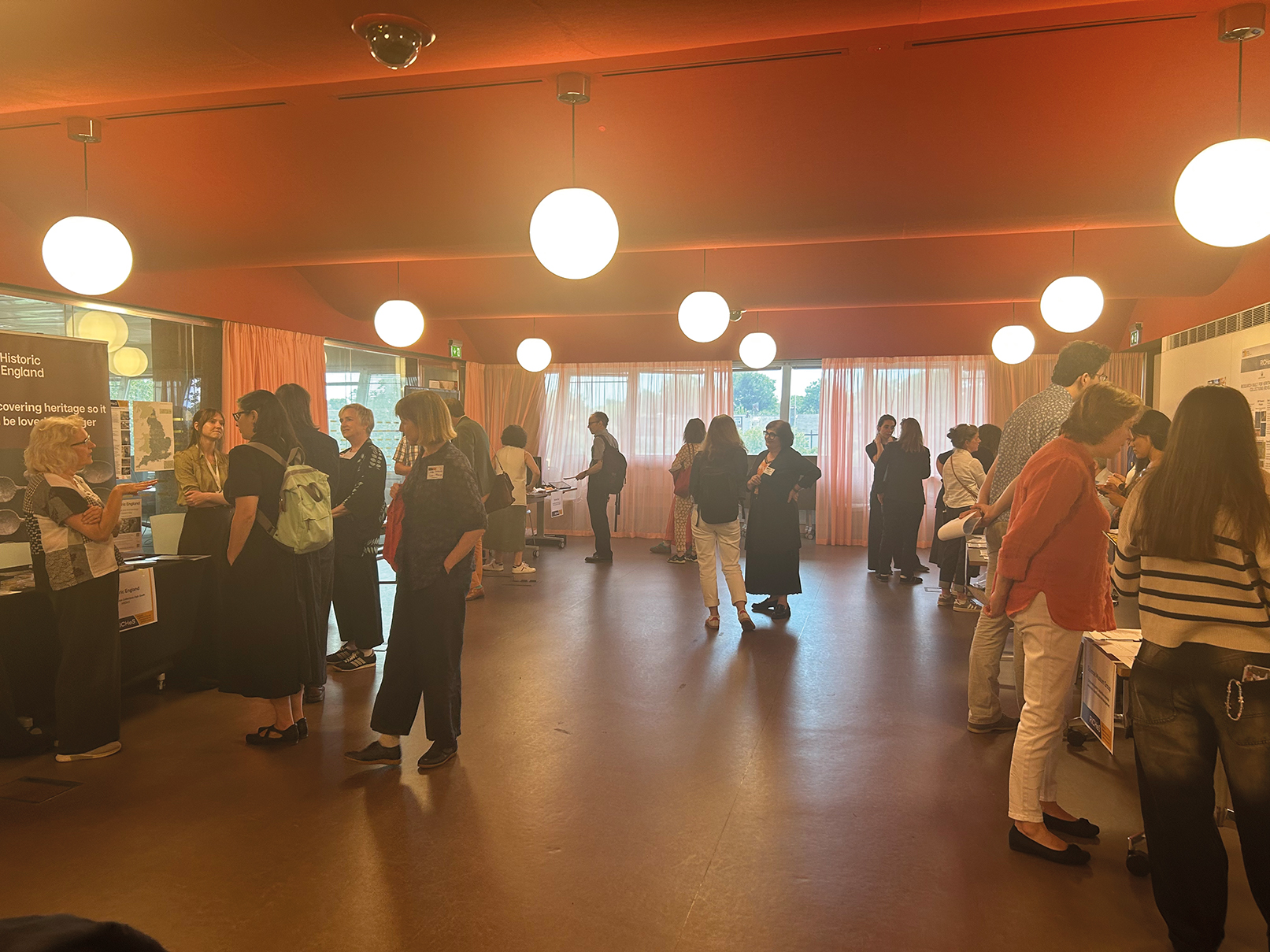
Delegates network during the RICHeS Regional Workshop at The National Archives
So again, it’s finding where those strengths lie and thinking about workflows across the network. If you had this type of material or that type of problem, what do you do about that? You might go to investment A, and they would advise you on sampling or condition, and then you might go to investment B or C to address a certain question. It’s thinking about how the network can benefit users more widely, rather than accessing just one facility.
Emma: So, in terms of that network reach, the benefits could be exponential once things get moving.
Meggen: We’ve had around 328 collaborations and partnerships formed in the first wave of investments and a large chunk of those are part of the HSDS consortium, but I think every single RICHeS investment has experienced something similar off the back of being involved in the programme, which has strengthened their research capability. We’re very proud of that and hoping it will continue to grow.
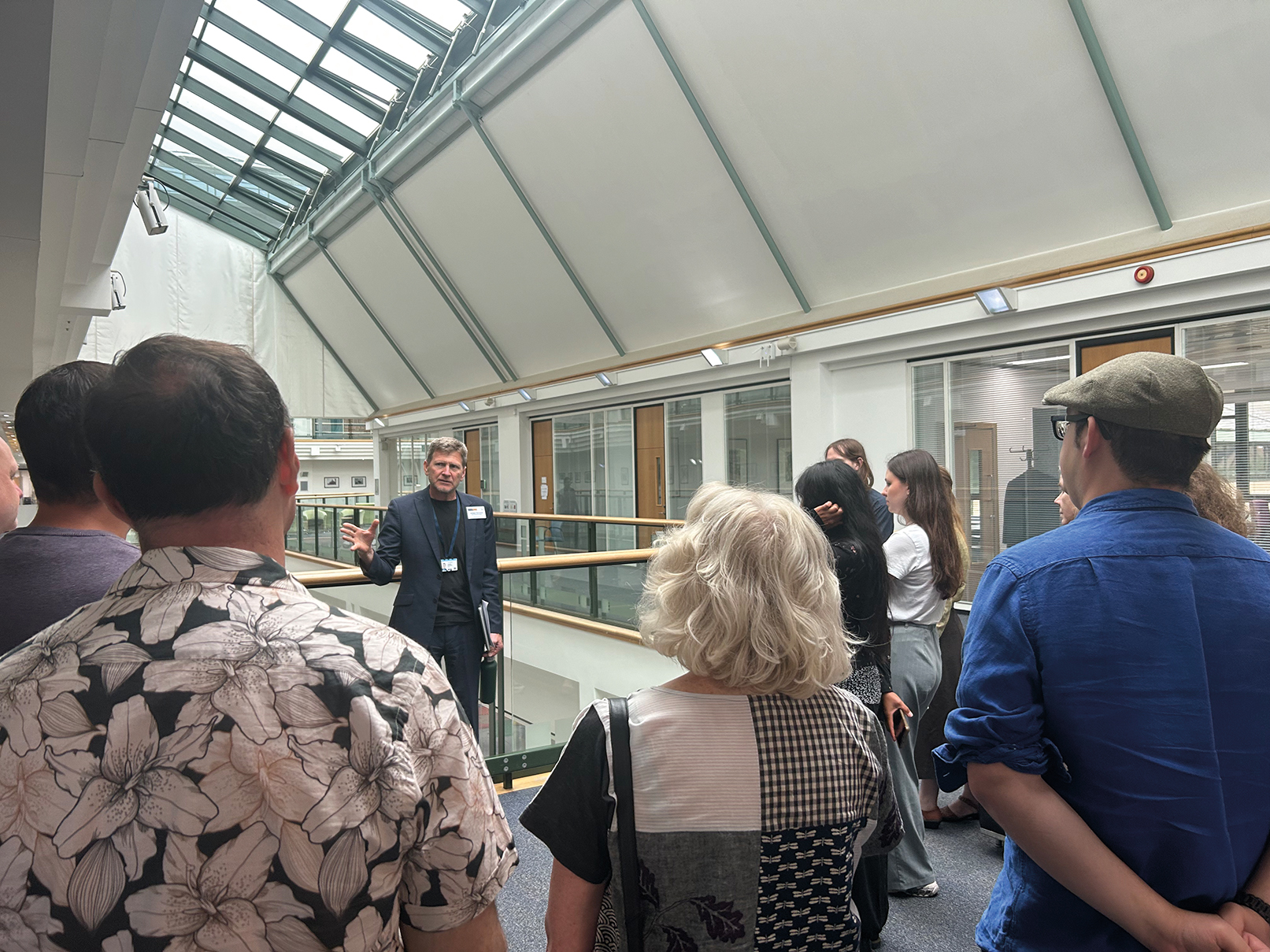
Juergen Vervoorst ACR FIIC takes delegates on a guided tour of The National Archives during the RICHeS Regional Workshop
Emma: It really shows how valuable intentional, thoughtful funding can be.
Meggen: I think there’s no doubt that the Arts and Humanities Research Council’s (AHRC) investments over the past 10 years has really boosted the sector in a purposeful way – by thinking about science and digital technologies and capability, to make sure that we don’t lose our grip on being a world leader in this area. But also, to push the boundaries and to take all that expertise and make it even more world leading.
And the model that is being developed here in the UK is being watched really closely, in terms of how heritage and conservation science is being supported by government intervention. And, of course, we have the predecessors of RICHeS to thank for setting up the programme. It started with the House of Lords inquiry into Heritage and Science back in the day, and it’s taken a while to bring those recommendations to life, but I think AHRC deserves a good amount of credit for working in conjunction with other councils and departments as well.
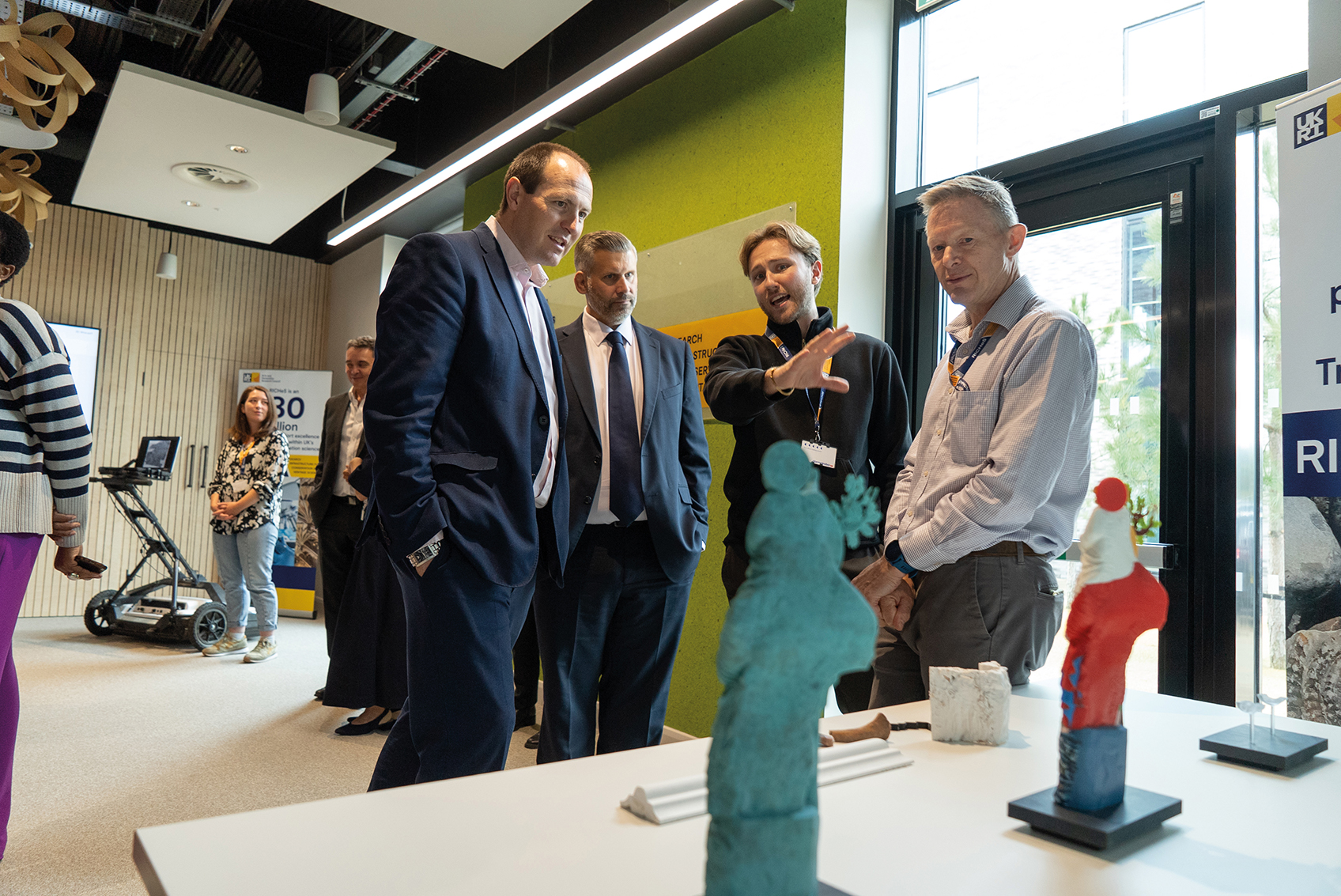
Professor Sir Ian Chapman, UKRI CEO, showcases the collaboration between STFC, RICHeS and Norton Priory Museum and Gardens at the launch of the RICHeS IHQ
Emma: It’s great that heritage and conservation science currently have a seat at the table, in terms of that profile and funding. That’s a great place to be, isn’t it? To have the agency to advocate for ongoing and future sustained investment.
Meggen: It does feel like heritage science and conservation is having a bit of a moment. And it’s not just RICHeS but in other activities already in train, like Icon going for chartered status. As a group, we need to try and capitalise on these movements towards greater professionalisation, greater political and social influence, and helping people recognise the real value of heritage.
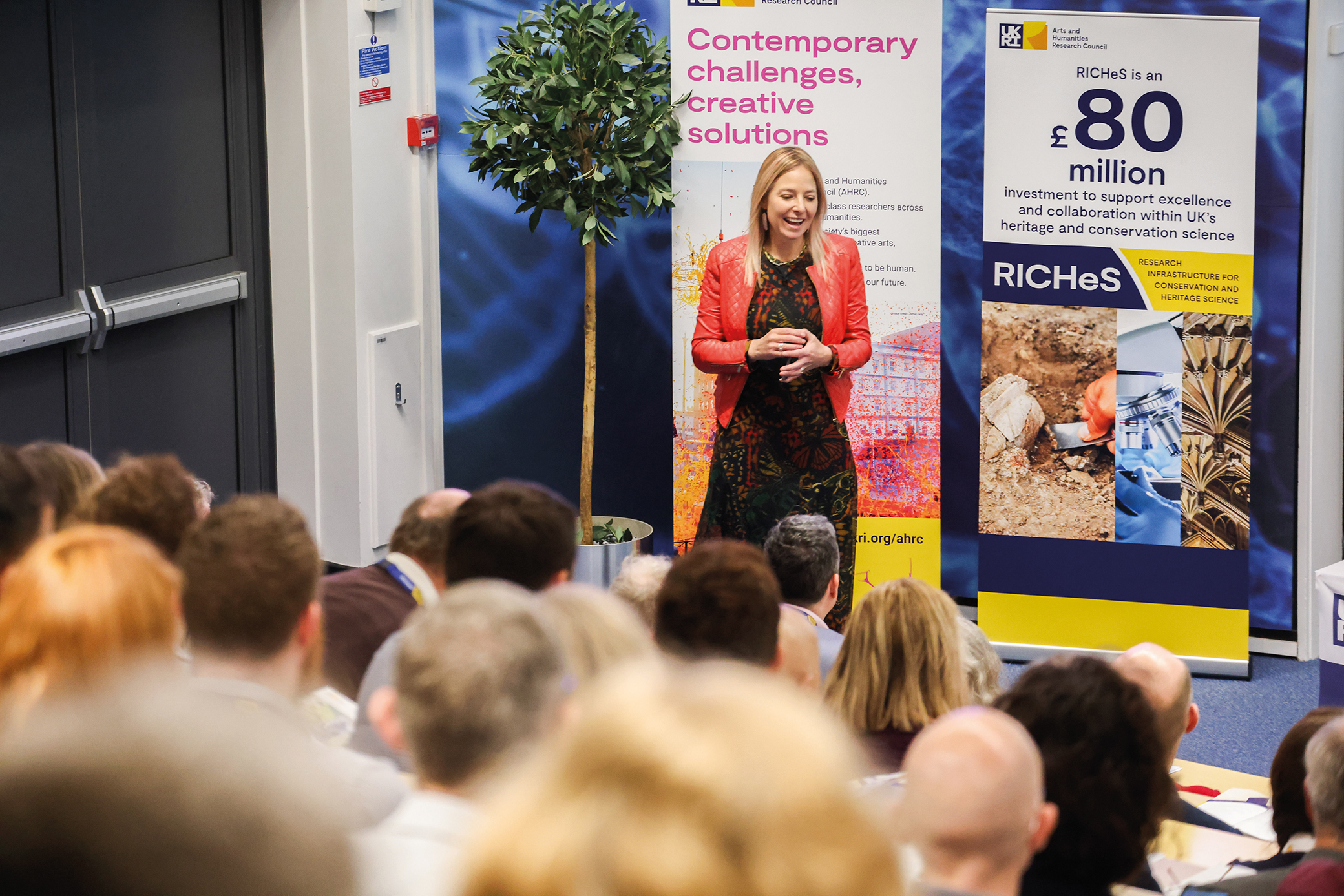
Professor Alice Roberts delivers the keynote address at the RICHeS programme launch
Emma: Definitely. We’re here at RICHeS IHQ in Daresbury which opened last autumn. It would be great to get a sense of what the physical site here means to the programme and the sector.
Meggen: Being on this site and connected to the Science and Technology Facilities Council (STFC) was a purposeful choice by AHRC. This campus has an amazing track record in developing business opportunities and innovation and supporting small organisations to explore income diversification and understand their potential in both a financial and technological sense.
Having our IHQ here means we have conversations and opportunities that we just wouldn’t have if we were based in a museum or university. We take part in panels and meetings where we hear about and contribute to innovations that are happening across the campus, which creates a crossflow of ideas and opportunities. We can then feed that back to our investments and eventually to the wider heritage sector.
We’ve already looked at commercialisation with the team, as we all want to be more sustainable in the future. The world is changing, so we need to look at how we can ensure that heritage science is seen as a positive development and more valuable than some people assume. These are crucial technological and scientific processes that can impact outside the heritage sector and here we are, in a place where we can help our investments connect and collaborate with people working in bioscience, materials development and quantum computing.
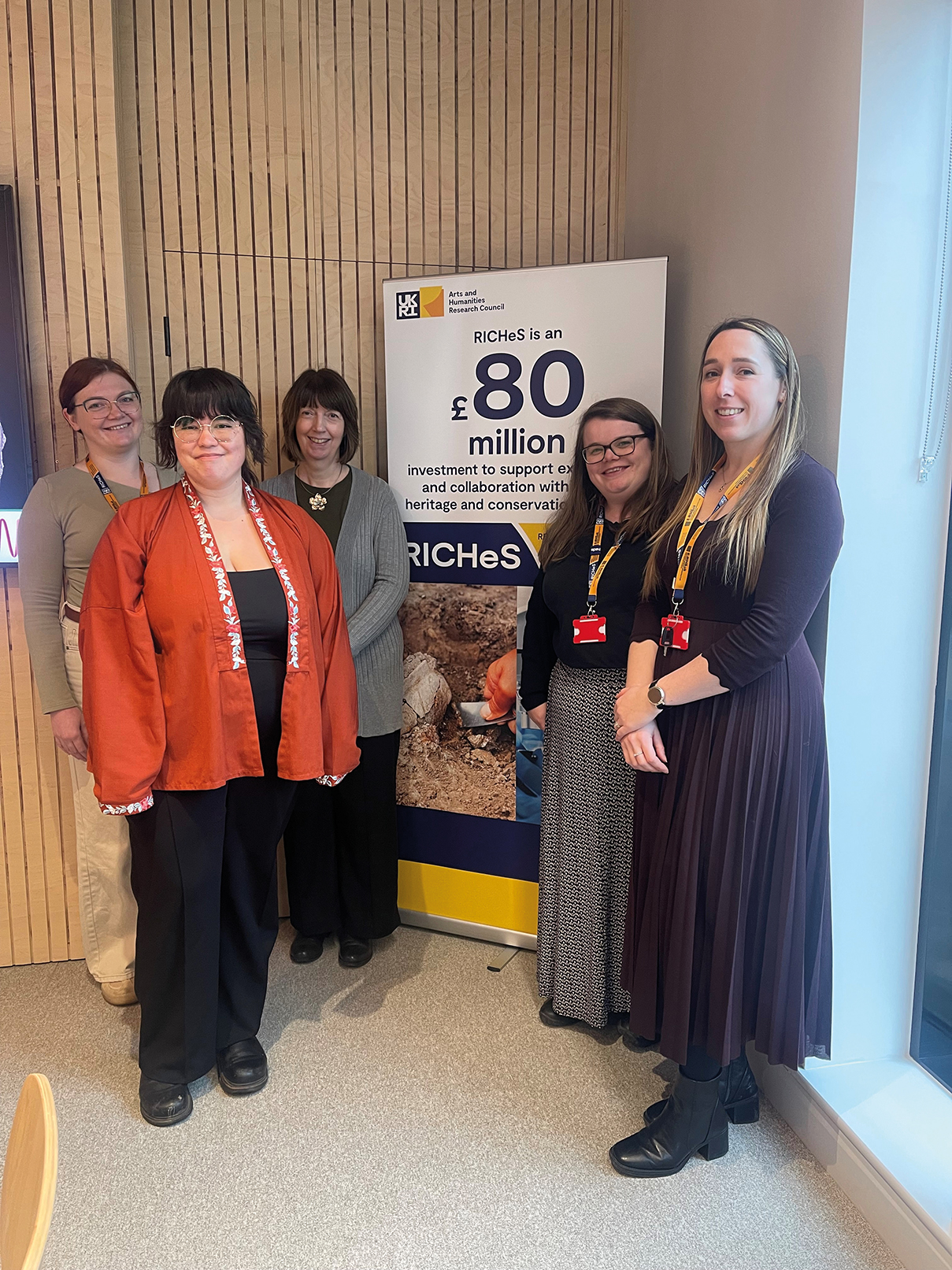
Members of the RICHeS team and sector colleagues welcomed Emma Jhita and Emma Chaplin to their infrastructure headquarters in Daresbury
Emma: The potential of that connectivity is really exciting, isn’t it?
Meggen: It really is. What heritage does so well is connect people and tell that human story. It showcases some hard science in a way that people understand and are actually interested in, as opposed to maybe an equation or something that’s too high level. But when it’s about an object or people in the past, it becomes tangible and understandable.
Emma: I appreciate we’re in the early stages of the funded projects but are there any aspects of the RICHeS programme that you feel would be worth highlighting?
Meggen: We recognise our digital responsibility and the value of enabling access to high-quality data from a wide range of organisations and projects. Through the HSDS, and by working collaboratively across our network, we are beginning to develop ideas, approaches and practices to address complex data challenges. These emerging solutions have the potential to serve as models for others facing similar issues.
Emma: That democratisation has the potential to be really transformative, doesn’t it? Moving on to the RICHeS Access Fund, it’d be great to hear about your vision for equitable access for smaller museums, archives and heritage organisations.
Meggen: It’s a really big thing for our team, even though it’s just one small component of the whole RICHeS work package. Our vision is that people who don’t usually think they can access government funding to do research will now take up that opportunity through the RICHeS Access Fund.
We’ve consulted with the sector a lot, to try and create something that is attractive to apply for and not overly onerous. Any application has the risk of not being successful and there will probably be more demand than we can fulfil, but we really did set out to try and encourage projects that will make a difference at a local, even community level. We’re excited to see what happens.
Emma: It’s going to be transformative, I’m sure. My next question is about the different technologies being made possible through RICHeS and the potential they have to reshape traditional approaches to conservation, and across heritage.
Meggen: A lot of it’s very exciting. T here’s certainly a raft of non-invasive technologies which are critical, because we all want to preserve as much as possible. So, there’s a huge array of different imaging and X-ray opportunities across the UK now, that are hopefully easier to access either through the RICHeS Access Fund or other collaborative projects and funding opportunities. We’ve also got a number of collections – both physical and digital – that are being made easily available for the first time.
Emma: I really like that it’s innovation through access that’s potentially going to have the biggest impact.
Meggen: I think it’s also that learning experience. If you’re a small organisation, you’re probably constantly applying for funding, but perhaps not this type of funding. Once you get a little bit of money from someone, it often builds your confidence and helps you to understand how to write the next application. You might be emboldened to go for a bigger grant and to deliver and keep going. If we can help the sector in that respect, then that’s excellent.
Emma: Absolutely. My next question is what do you think is the catalyst for successful collaboration?
Meggen: This is probably more my own opinion, but I think one thing that a successful project and collaboration must have is a real purpose. At its heart, it’s got to do something, make something better, try and help fix an issue, or try and change the way people do things. It doesn’t have to be big, but I think coming together to fulfill a genuine need is key, because it holds the vision and keeps the end goal in sight.
Emma: Finally, is there any advice you would like to share with early career professionals who are hoping to work in science, culture and heritage?
Meggen: I would say we are at an exciting time. It’s always hard when you’re early in your career – it’s not easy for anybody – but sometimes the heritage sector can be particularly challenging, for different people and for various reasons. But what got them this far is a sense of curiosity and it’s important to keep that curiosity and nourish it.
Another important skill is being able to tell someone in maybe two sentences why your work matters. Being able to tell that story is good for building your confidence and for any job interview you might go to, but it’s also critical for the sector. If we can’t say why our work matters, then nobody’s really going to pay attention to us.
Emma: That sounds like wonderful advice. Thank you, Meggen. It’s been brilliant to talk to you.
To learn more about RICHeS, please visit their website at www.riches.ukri.org.