
Blickling Hall has a history spanning more than 1,000 years, from its origins as a medieval manor linked to Harold Godwinson to its association with the Boleyn family. The striking Jacobean mansion seen today was built in the 1620s by Sir Henry Hobart, creating one of Norfolk’s most significant historic estates.
Introduction
In March 2020, the National Trust (NT) launched an innovative two-year trial at Blickling Hall which was designed to explore the efficacy of two biological solutions in eradicating a particularly entrenched infestation of Tineola bisselliella, the webbing or common clothes moth. Early results are promising and NT conservators are hopeful that they will lead to a revised protocol where moth problems are proving resistant to traditional treatments.
Moth Mayhem
Despite a robust and long-standing housekeeping regime at the Hall, the problem had reached a level, in terms of exponential increase, range and extent, where Trust staff concluded the time had come for a more interventive approach.
Adult moths caught at Blickling as part of the Trust’s standard monitoring regime tripled from 2015 to 2020. The nearly 2,500 adult males caught at the house in 2020 amounted to 15% of all Tineola bisselliella identified across all Trust sites. This was of particular concern at Blickling, known for its lavish interiors and some fine, internationally significant textiles, which are unique to the house and its story.
A Multi-Pronged Attack
Modern-day damage from moth larvae is rare, but is occasionally reported by the house team, who recently discovered larvae, eggs and frass in the woollen pleats of a ladies’ sedan chair in the Great Hall. Moths are also regularly reported in the two apartments situated within the Mansion building. They bring the additional complexity of comfort heating and other modern-day requirements which have to be accommodated within care regimes designed for historic collections.
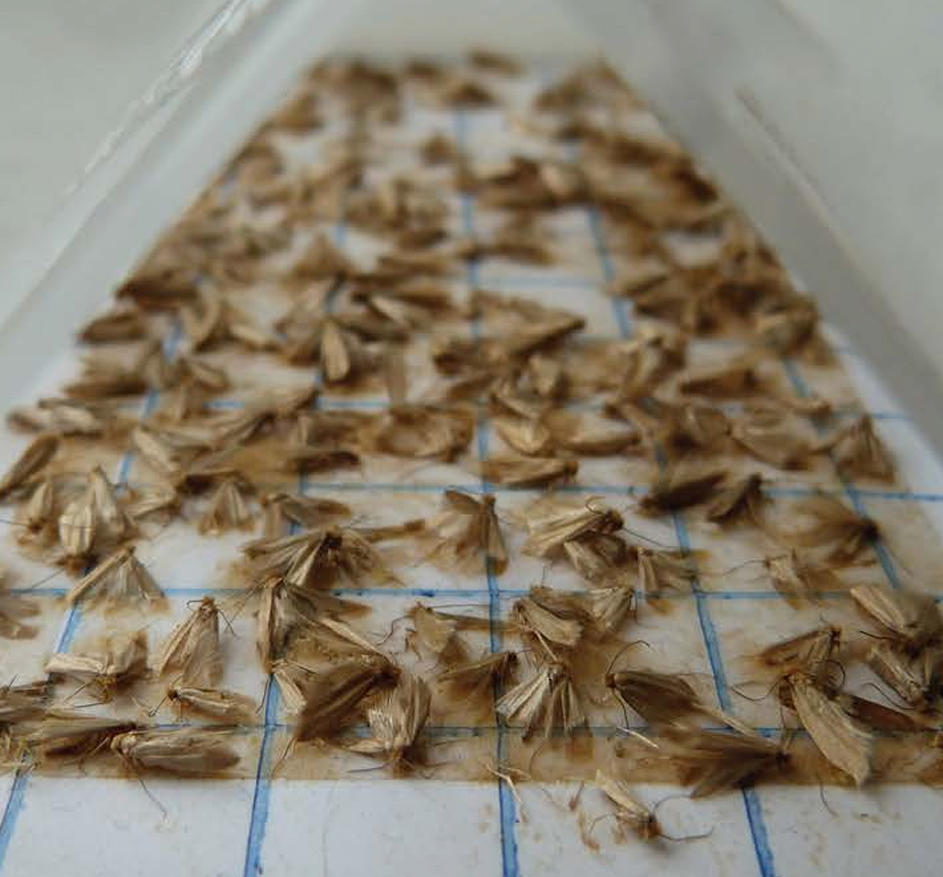
Webbing clothes moth adults caught on a trap at Blickling Hall, Norfolk in August 2017
It is not clear what is sustaining such a persistent moth population, if not the textiles and taxidermy on display at Blickling, and our suspicion has long been that the larvae are mostly feeding on dust and detritus beneath floorboards, behind voids and hidden in the complex roof structure. But who can afford to be complacent in the face of this kind of infestation profile in a location with such an at-risk collection?
From Tomatoes to Tapestries
In 2019 we turned to David Loughlin for advice. Owner of Historyonics, a leading UK supplier of insect treatments and supplies, David proposed a more assertive, multi-pronged attack designed to tackle all stages of the moth life-cycle simultaneously. This represents a notable step up from the Trust’s non-interventive strategy, which posits limited treatments against moth, within a museum-standard preventive Integrated Pest Management (IPM) approach.
David spent nearly twenty years working to prevent caterpillar attack in Mediterranean fruit orchards, using a mix of disruptive pheromones to deter mating, and microwasps to parasitize any viable eggs that may still be fertilised. Despite the very different environments, he was convinced this regime would transfer effectively to a historic-house setting. Both treatments have been tried in the heritage field before, albeit as solo options and with some limited success.
In order to fully target all stages of the life cycle, David also suggested that we not only maintain, but also increase and regularise, use of chemical treatments in certain areas. As with horticulture, we are actively moving away from chemical use in conservation at the Trust. But the complexities of Blickling Hall were felt to warrant it in the very particular circumstances outlined.
Project Plan
Treatment approach in hand, we decided to refine the aim of the project - to eradicate the infestation - by further seeking to establish whether pheromone disruption alone would be more or less effective than combined use with parasitoids. We did this by keeping the ground floor purely for pheromone disruption, limiting chemicals mostly to the attic floor and only combining the wasps with the pheromones on the first floor.
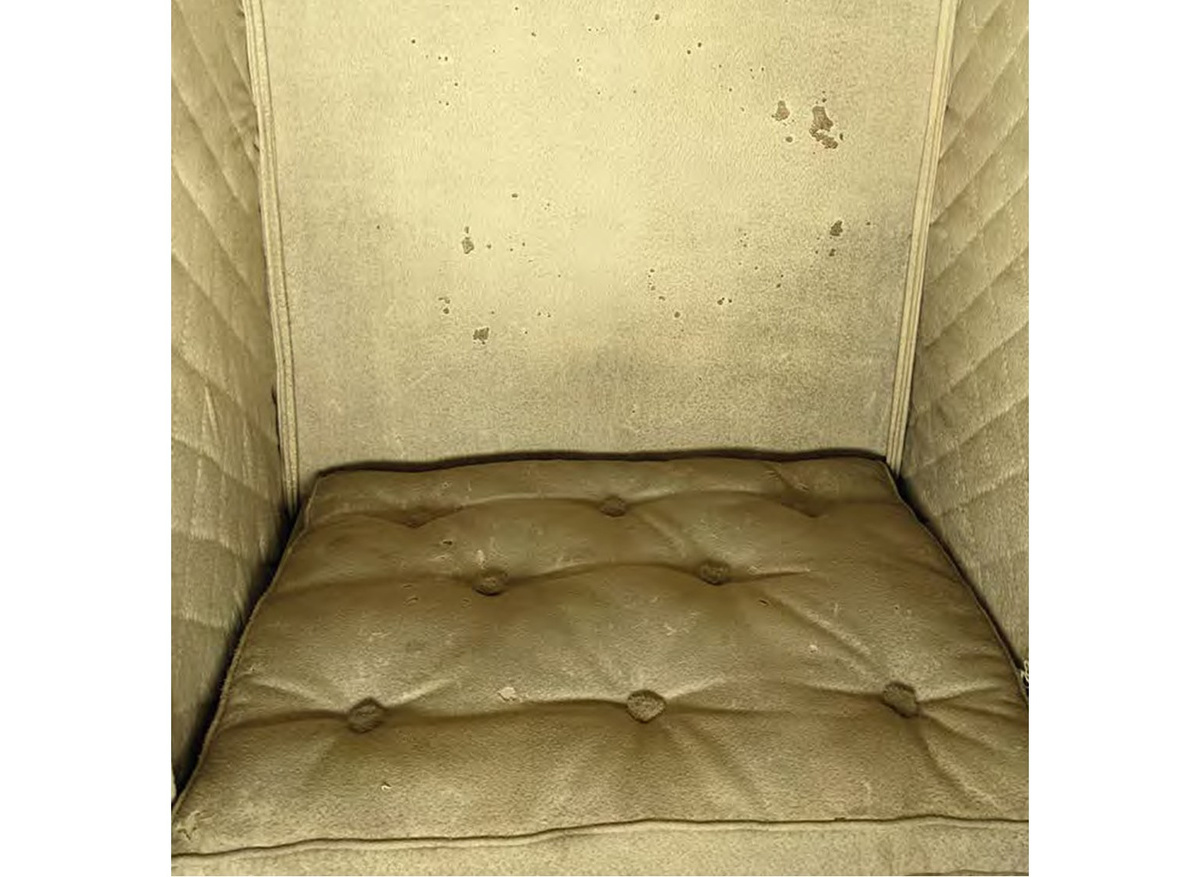
Webbing clothes moth damage to wool interior of Westminster sedan chair, c. 1760
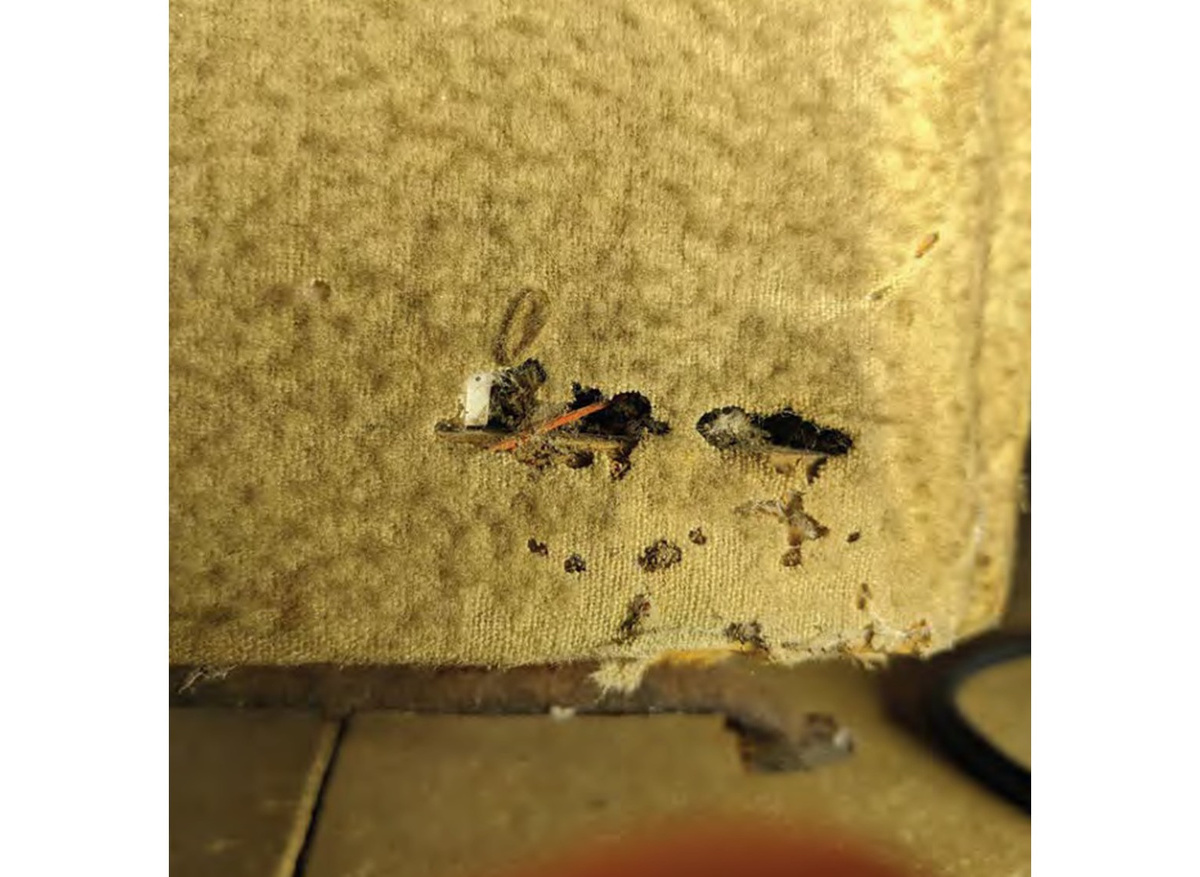
Webbing clothes moth damage to wool interior of Westminster sedan chair, c. 1760
Past experience and anecdotal advice suggested that pheromones alone can take at least five years to gain traction – not an option here. Using parasitoids did seem a drastic step, however, and we were keen to establish whether they were absolutely necessary, and if so, what our parameters for their future use might reasonably be.
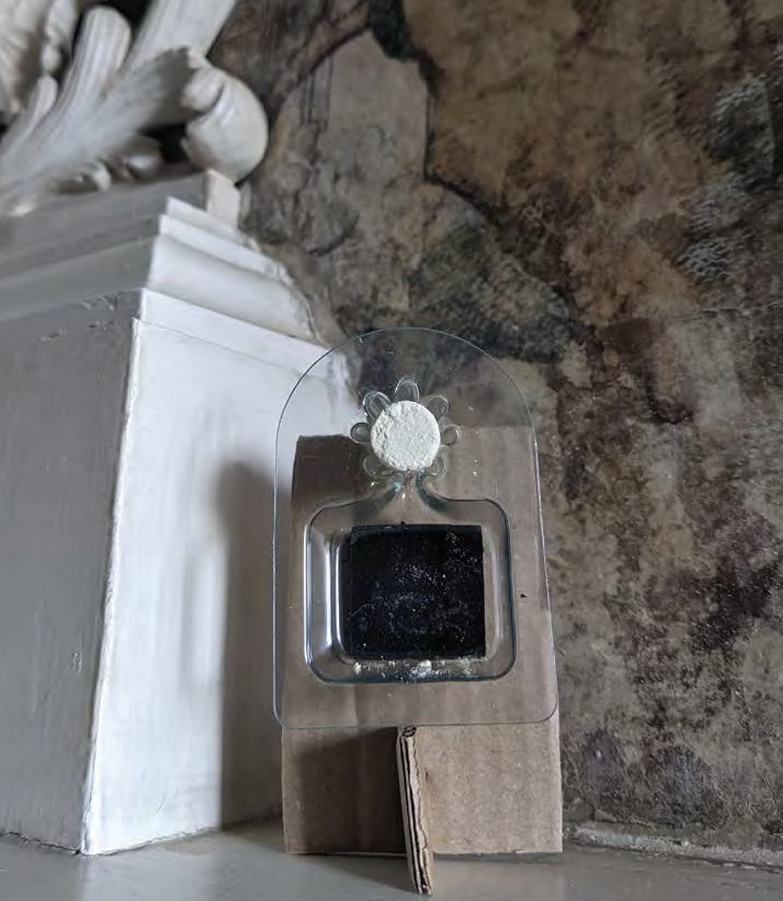
The CL pheromone tab in bespoke cardboard holder on a large mantelpiece
Lockdown Disruption
The project plan was disrupted by the first UK pandemic lockdown which came into effect in March 2020. No one was comfortable delaying or deferring however, so we refined the strategy, based on analysis which showed that 80% of the adult moths caught in 2020 were in fact limited to just thirteen of the sixty or so rooms, corridors and spaces encompassed by the property’s IPM monitoring regime. With limited staff on site we were nevertheless confident that we could devise a plan which was practicable and targeted the known ‘hot spots’.
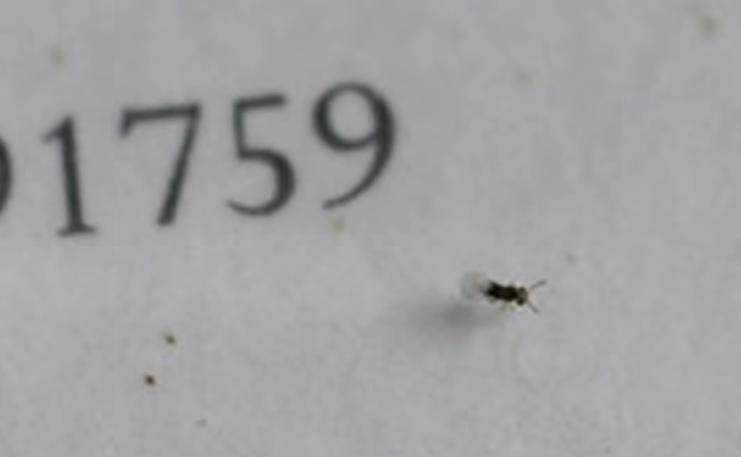
Trichogramma evenescens next to some 12-point type, for scale
Beginning in March, the treatments were delivered in batches such that the sixty-nine pheromone tabs could be replaced every twelve weeks, and the forty wasp cards could be refreshed fortnightly. The idea was to ensure a constant supply of wasps to target any eggs that were laid, albeit the disruptive pheromones should have had a dramatic effect on mating encounters.
With lockdown prohibiting the kind of onsite visits from specialists and consultants that would normally have underpinned such a project, advice and support was mostly given virtually. The placement of the tabs and wasp cards required considered planning and an excellent knowledge and understanding of the building. Thankfully this was not a problem, as Ellie Hobbs, Blickling’s Collections & House Officer, was among the non-furloughed staff and could take responsibility for onsite oversight of the trial and has detailed knowledge of adult moth behaviour at the Hall. She also kept detailed records and plans of placements, so changeover days were relatively efficient.
Early Lessons
Interestingly, Ellie quickly ascertained that the microwasps rarely fly, tending to scuttle or crawl (remarkably quickly), until they meet an obstacle, which they will either move around or attempt to scale, just as they do within tomato or fruit vines. We had read of this in one horticulturist paper encountered as part of our literature review and heritage entomologist David Pinniger had also flagged that Trichogramma evenescens ‘aren’t great fliers’, and that this might be a barrier to their use in the lofty environs of a 17thC manor. To our surprise, early data suggest this wasn’t necessarily an issue in the end.
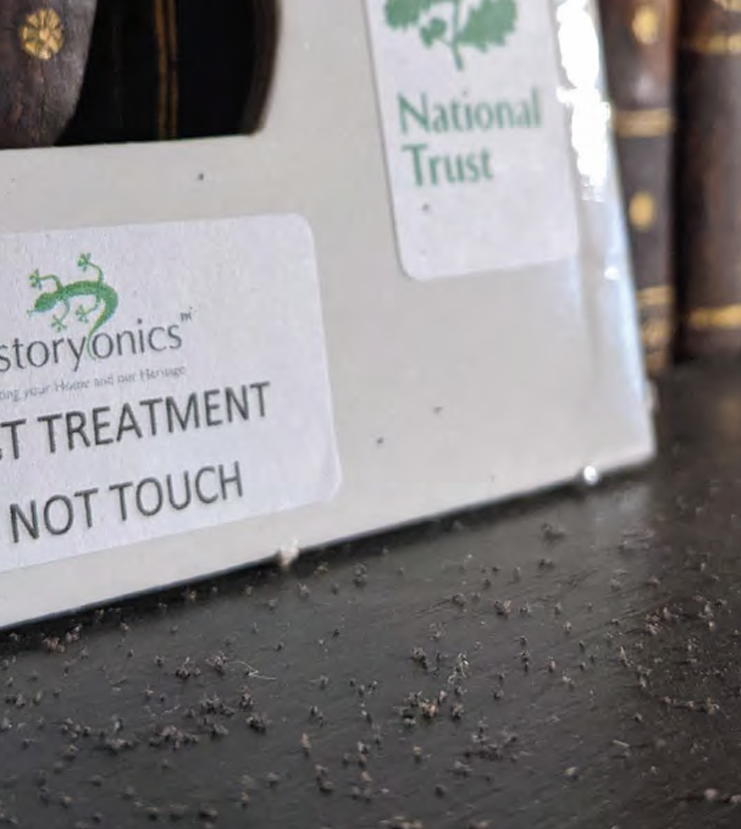
Signs of dead microwasps near a card dispenser
We were also aware of the short Trichogramma lifespan -- broadly two weeks -- and had been concerned about what would happen to the ultimately millions of dead wasp bodies, which suppliers tend to suggest merely ‘disappear’ naturally within standard dust deposits. Thankfully, Ellie did not find it necessary to significantly increase vacuuming in the rooms where the wasps were deployed, though occasionally found evidence of dead wasps around some of the egg-dispensers, which did require special measures.
We are continuing to investigate whether these instances reflect something in the immediate environment of the card that might have killed these adults prematurely (for example, legacy residues from past chemical treatments to the book shelves illustrated) or whether localised temperatures might have caused them undue stress (they are known to be very sensitive). Another theory is that the males, after mating, may die sooner than the females, which still need to locate the moth eggs and oviposit.
The absence of substantial numbers of dead wasps, coupled with evidence of their lack of flight, has alleviated concerns that tapestries, silk wall coverings and other vulnerable, vertical surfaces might be at risk from using Trichogramma, which is a valuable outcome for the collections on open display.
The First Year Data
Although we still do not have twelve months of moth counts at the time of writing, there is evidence of a substantial drop in the number caught, both on the pheromone traps deployed specifically for monthly checks during this trial and on the existing blunder and pheromone traps used in the normal quarterly IPM monitoring.
We contained any excitement at what appeared to be 80% overall declines in early spring counts, not least because we remembered that the Easter period of 2020 had been conspicuously warm almost everywhere in the UK, but certainly in Norfolk, compared to a particularly chilly Spring 2021.
We also knew that, one year into the project, the ground and first floors of the Mansion should theoretically (at least) have been awash with synthetic pheromone from the tabs, meaning the males would no longer be drawn to our pheromone monitoring traps as they would historically have done.
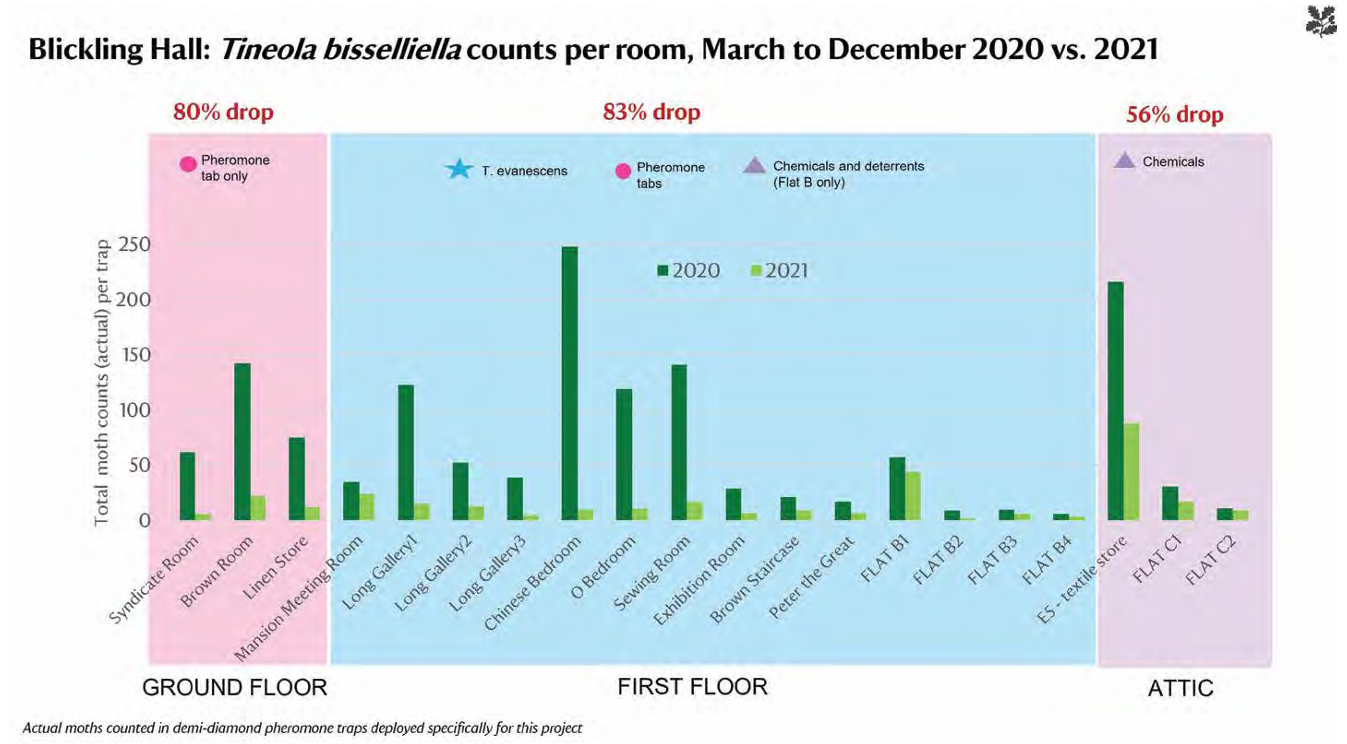
Blickling Hall: Tineola bisselliella counts per room, March to December 2020 vs. 2021
The 80% drops have continued for the rest of the year, however, which certainly bodes well, though the difference in efficacy on the ground floor (restricted purely to pheromone treatment) compared with the first floor (pheromones and microwasps combined) was not substantial; and the chemical treatments produced disappointing results, certainly in comparison.
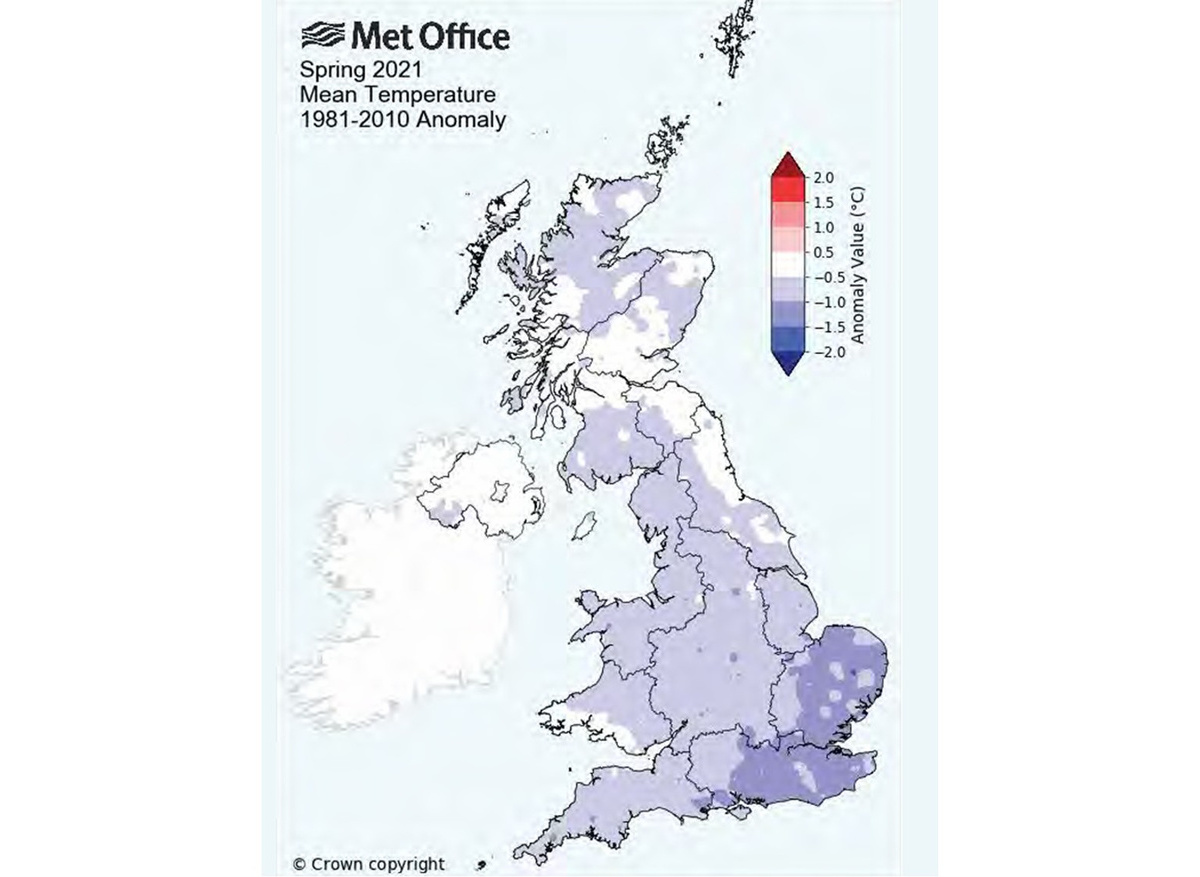
Charts showing substantially warmer spring 2020 vs. 2021, particularly in Norfolk
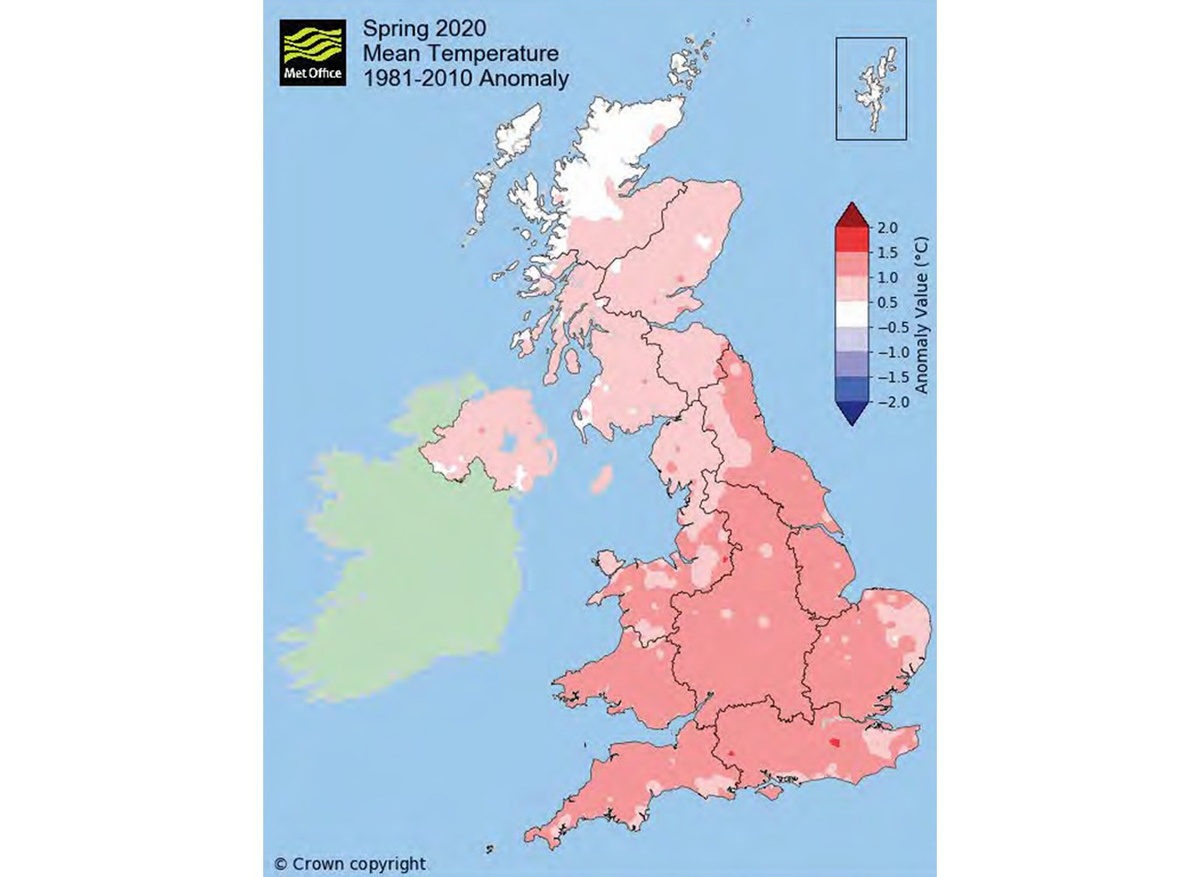
Charts showing substantially warmer spring 2020 vs. 2021, particularly in Norfolk
Second Year Changes
So we have decided to adapt the programme to offer more clarity in year two. From March 2022 we are taking away the pheromone tabs from rooms on the east façade of the ground floor, whilst also removing wasps and pheromones from four of the rooms on the west façade of the first floor. We anticipate less of a drop in numbers of adult moths caught on traps in both of the non-treated areas, and any difference between the two may yet indicate that the combined treatments are more effective than the solo pheromone disruption, or not. And indeed that chemical treatments really are less effective.
We will increase the concentration and regularity of chemical use on the attic floor and in the first-floor apartment and re-deploy the now redundant pheromone tabs in one space in the attic which is used as a textile store. As well as running a research trial, we must not forget that we are also treating a serious moth problem and the relatively smaller decline in this area is of concern.
Looking Ahead
And that’s where the project neatly ties together what are ultimately two different aims. For the Hall itself we are obviously aiming to eradicate an entrenched and potentially risky infestation, or, more likely, define thresholds below which residual insect activity could perhaps be considered ‘acceptable’ in a Historic House context. However, for collection managers, the aim is to establish a tiered treatment approach for Tineola Bisselliella.
Currently the Trust relies on well-documented preventive measures, with some treatments on sighting of insect frass or damage. When numbers reach a certain threshold, and depending on the outcomes of this trial, we would like to be able to suggest a certain treatment approach, perhaps the solo use of pheromone tabs, beyond which we would then potentially advocate the move to combined use of pheromone disruption with microwasps, for a limited period.
Though pricing strategies with suppliers haven’t been tied down, we do know the wasps are more expensive than the tabs. They are also clearly sufficiently interventive that our use of them should always be cautious and proportionate to the need. Thresholds will therefore need to be defined, and treatment efficacy clearly established. But it is heartening to know that while the wasps and pheromone tabs continue to do their work, moth numbers do seem to be significantly reduced after a year, and we have within our grasp a more robust, but at the same time balanced, practicable and sustainable response to a threat that shows no sign of receding and will continue to put many invaluable objects at risk in collections at the National Trust and beyond.