Since the beginning of Russia’s full-scale invasion of Ukraine four years ago, many Ukrainian conservators have become refugees around Europe and America seeking safety. As Russian terrorism continued it became clear that the Ukrainian conservators needed to find work, to continue with their professional development and to feel a part of the conservation network.
In the UK, the government’s Homes for Ukraine Scheme has helped enormously by finding sponsors and allowing work visas for the Ukrainian refugees. Many UK colleagues have answered the call to help in providing homes, work and training placements, networking opportunities, practical help and friendship.
Katya Belaia-Selzer, who is a Ukrainian born British paintings conservator, helped to bring the Ukrainian refugees together and created a group where information, training and work opportunities were shared. It became apparent that a lack of reliable dictionary of the conservation terminology was a barrier to successful collaboration. Katya and her colleagues started collating English terminology and translating into Ukrainian, which they uploaded to Katya’s Studio website for the refugees to use. It was then necessary to do something more far reaching and readily accessible. The American Institute for Conservation (AIC) Wiki lexicon felt like an obvious platform for this since it is a go-to place for other language translations. They therefore approached Sarah Stannage, executive director of the International Institute for Conservation (IIC), and the AIC e-editor Rachael Arenstein, to see if they could work together at developing the project scope: adding a Ukrainian translation to the already existing Wiki lexicon. The Wiki platform would enable the terms to be searched in English and Ukrainian thus enabling Ukrainian conservators working in Europe to communicate more effectively with their English-speaking colleagues and in the future to assist English-speaking conservators who may be part of the effort to restore the cultural heritage of Ukraine.
In 2023, the project received an IIC Seed Funding Grant to enable Katya’s team to receive necessary training from Rachael in using the Airtable software, which is great for international collaboration. The Seed fund also allowed the team to undertake necessary research, identify key partners and draw out the project proposal. The project received full funding from the British Council Arts Grant and work begun in December last year.
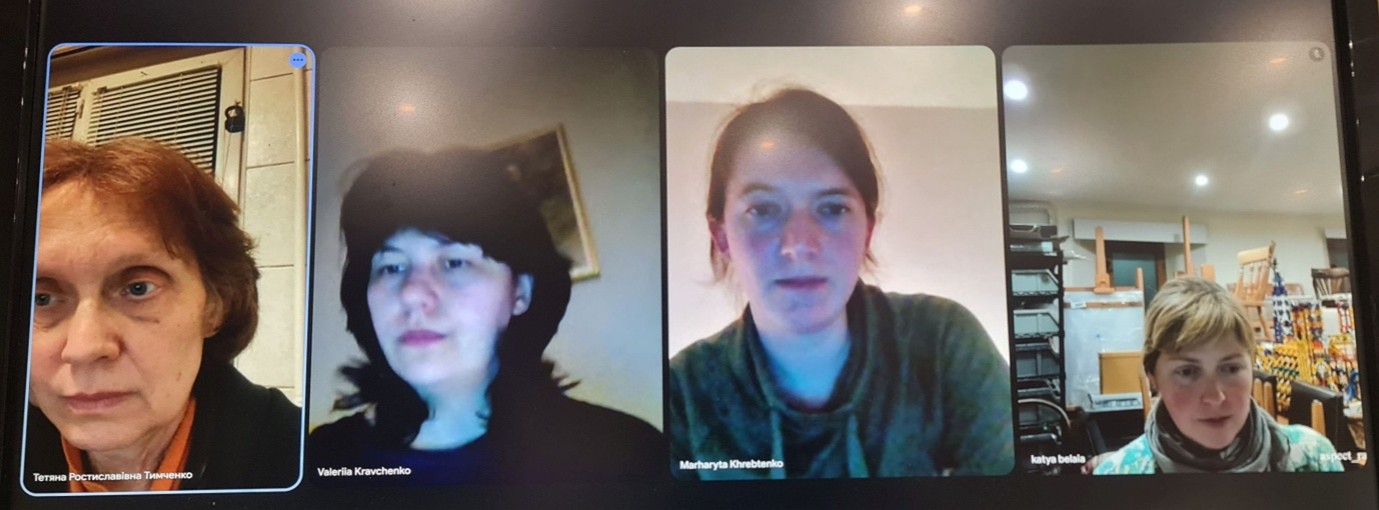
The team regularly meet up online to iron out specific translation queries and to boost morale during bleak winter days
During this past winter, Marharyta Khrebtenko, a professional paintings conservator from the National Centre for Restoration and Research in Kyiv, has been working on the translation together with Dr. Tetiana Tymchenko, Head of the Department of Technology and Restoration of Works of Art at the National Academy of Fine Arts and Architecture in Kyiv. In spite of the daily air raids on the capital, power cuts, sleepless nights and extreme working conditions, Marharyta and Tetiana set aside time to meet in person at the Academy to continue the project. Most of the students continued their learning online during the freezing winter. The Academy also has an underground air raid shelter.
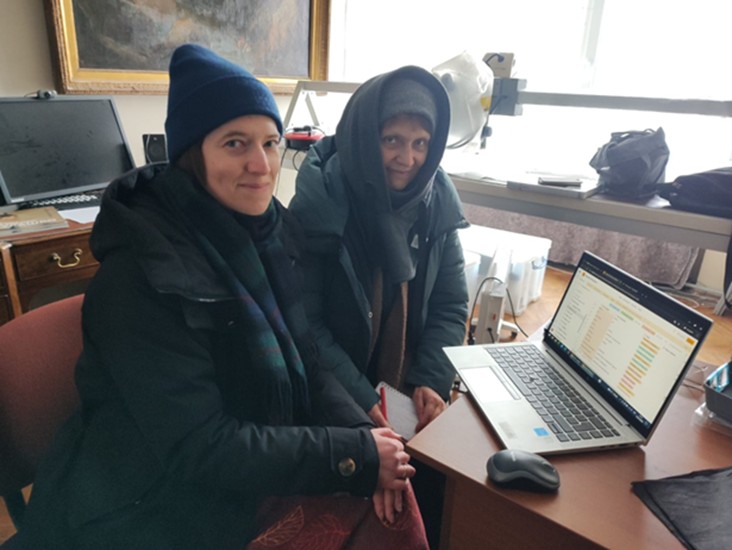
Marharyta and Tetiana at work at the Academy, Kyiv, despite freezing conditions
The conditions at the Academy were severe this winter; there was no heating for two months as the temperature outside dropped to -20°C. This eventually caused the pipes to burst. Across the city, the situation was desperate: while some residents had some sporadic heating, others had none at all. Electricity and internet access remain sporadic and unpredictable, often available only for a few hours at random intervals, rationed across city districts.
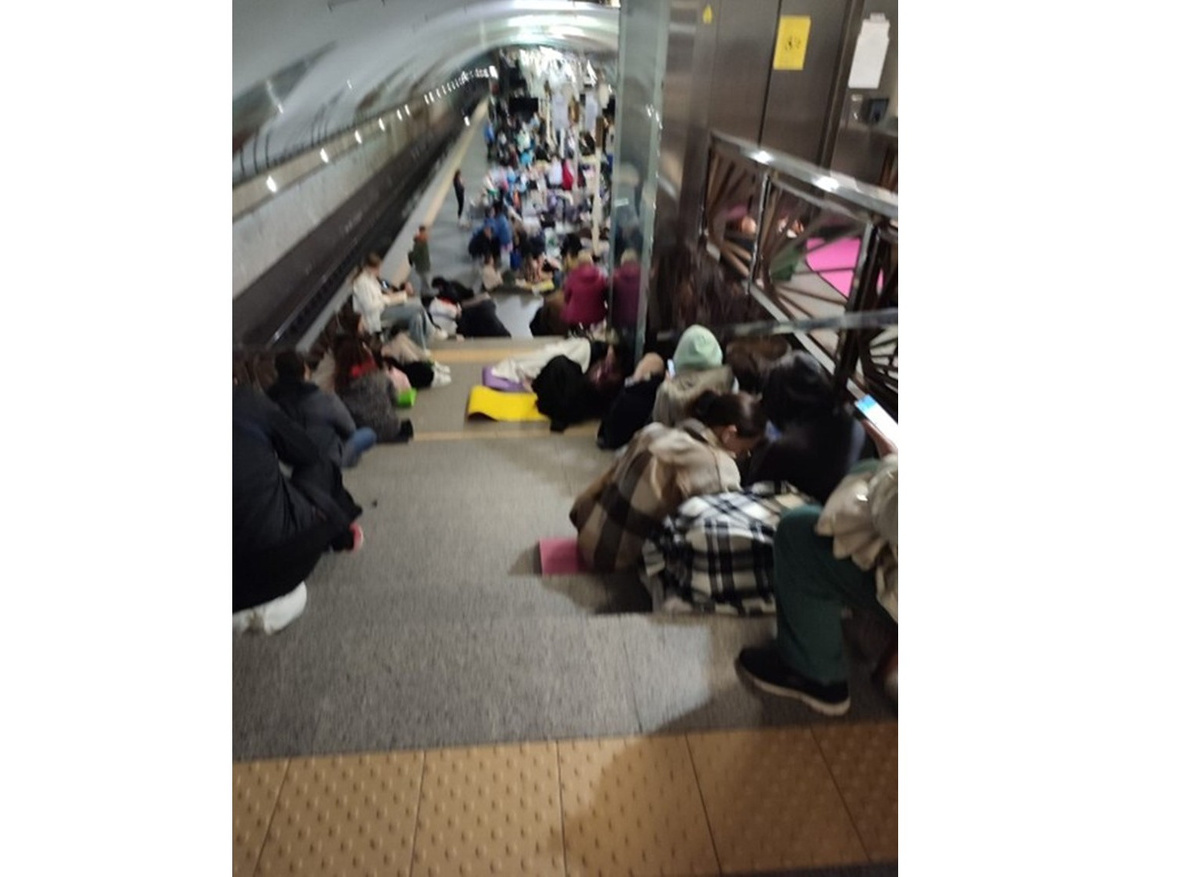
Marharyta and her husband Danylo, a fellow paintings conservator, spending countless nights in the underground, sleeping in a tent, during Russian attacks on the capital
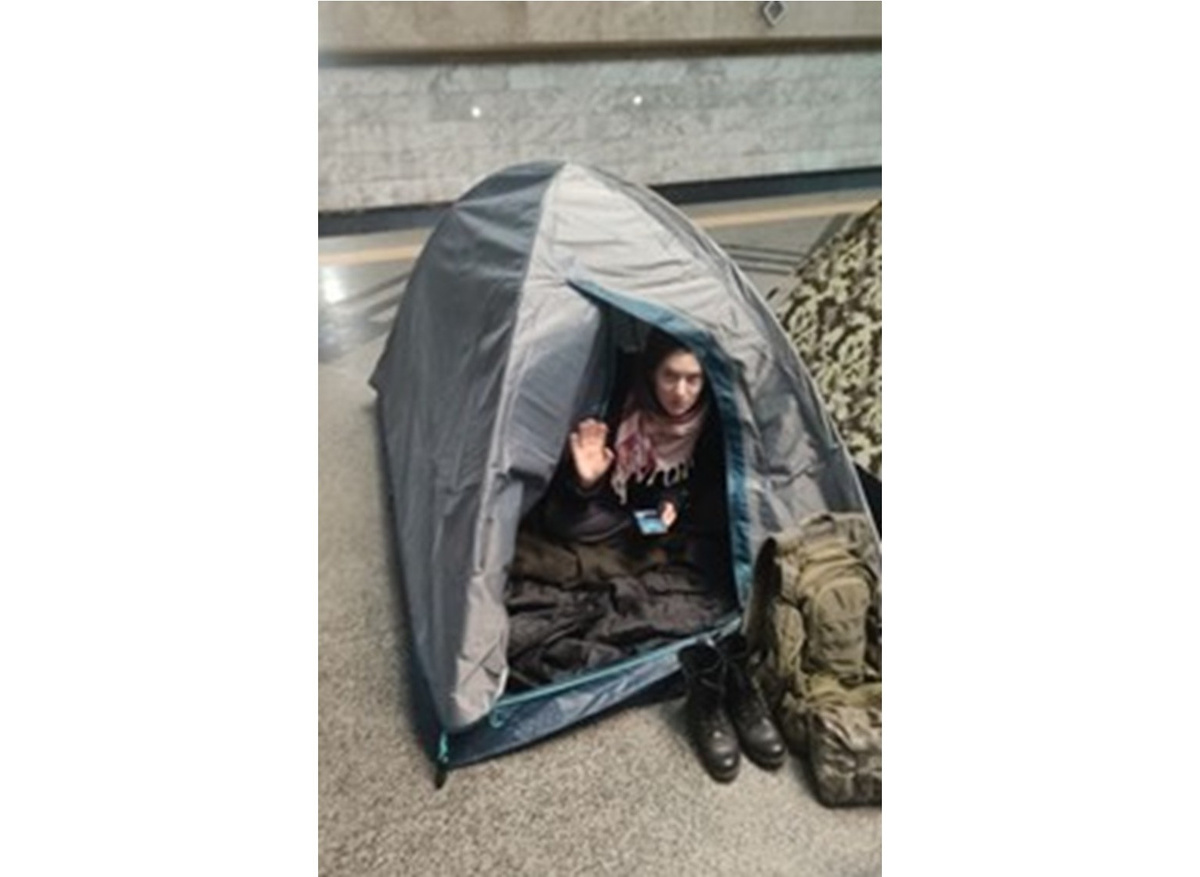
Marharyta and her husband Danylo, a fellow paintings conservator, spending countless nights in the underground, sleeping in a tent, during Russian attacks on the capital
This has been the harshest winter since the start of Russia’s full-scale invasion in 2022. Over the past four years Ukrainian civilian and industrial infrastructure has been the target of regular Russian strikes, including ballistic missiles, cruise missiles, and drones. Amongst countless devastated cultural and civilian buildings, there is significant damage to power stations. Much of the country runs on generators. Despite these unimaginable challenges, the project team have made considerable progress. The Ukrainian translation has now been proofread and is soon to be uploaded to the Wiki.
The current crisis in Ukraine highlights the importance for effective international partnership to preserve Ukraine’s cultural heritage. Due to Ukraine’s long history behind the “Iron Curtain” there has been a lack of access and opportunity to collaborate with Western colleagues – language barrier being a big factor. Today there is a huge push in Ukraine to modernise its cultural heritage institutions. There is also international effort and desire to help Ukraine resist, re-build and thrive. A standardised translation of specialist terminology will benefit the entire Ukrainian conservation and museum community, from conservation students to registrars, academics and policy makers, in their response to a crisis and during post war reconstruction. This project would contribute to helping Ukraine become a global player in setting high standards in the management and preservation of cultural heritage. Breaking down the language barrier means greater collaboration, networking, research, employment and advocacy.
Authors:
Christine Sitwell ACR – former National Specialist Paintings Conservation Adviser for the National Trust, Icon accredited paintings conservator and Fellow of IIC
Katya Belaia-Selzer – former assistant National Paintings Conservation Specialist Adviser for the National Trust and founder of the UA-UK Cultural Heritage Initiative
Dr Marharyta Khrebtenko – accredited paintings conservator at the National Centre for Restoration and Research, Kyiv, Ukraine
This project is supported by the British Council’s “Connections Through Culture Programme” #ConnectionsthroughCulture
Since this article was written, the lexicon has been translated into Ukrainian and is live on the AIC Wiki website.