How long do conservation treatments really last - and how do we decide when it is time to intervene again? Join the Paintings Group for a thought-provoking online session exploring the treatment cycles of easel paintings.
This event brings together conservation professionals to reflect on how treatments evolve and endure over time, and how decisions around care, re-treatment, and long-term outcomes are made in practice.
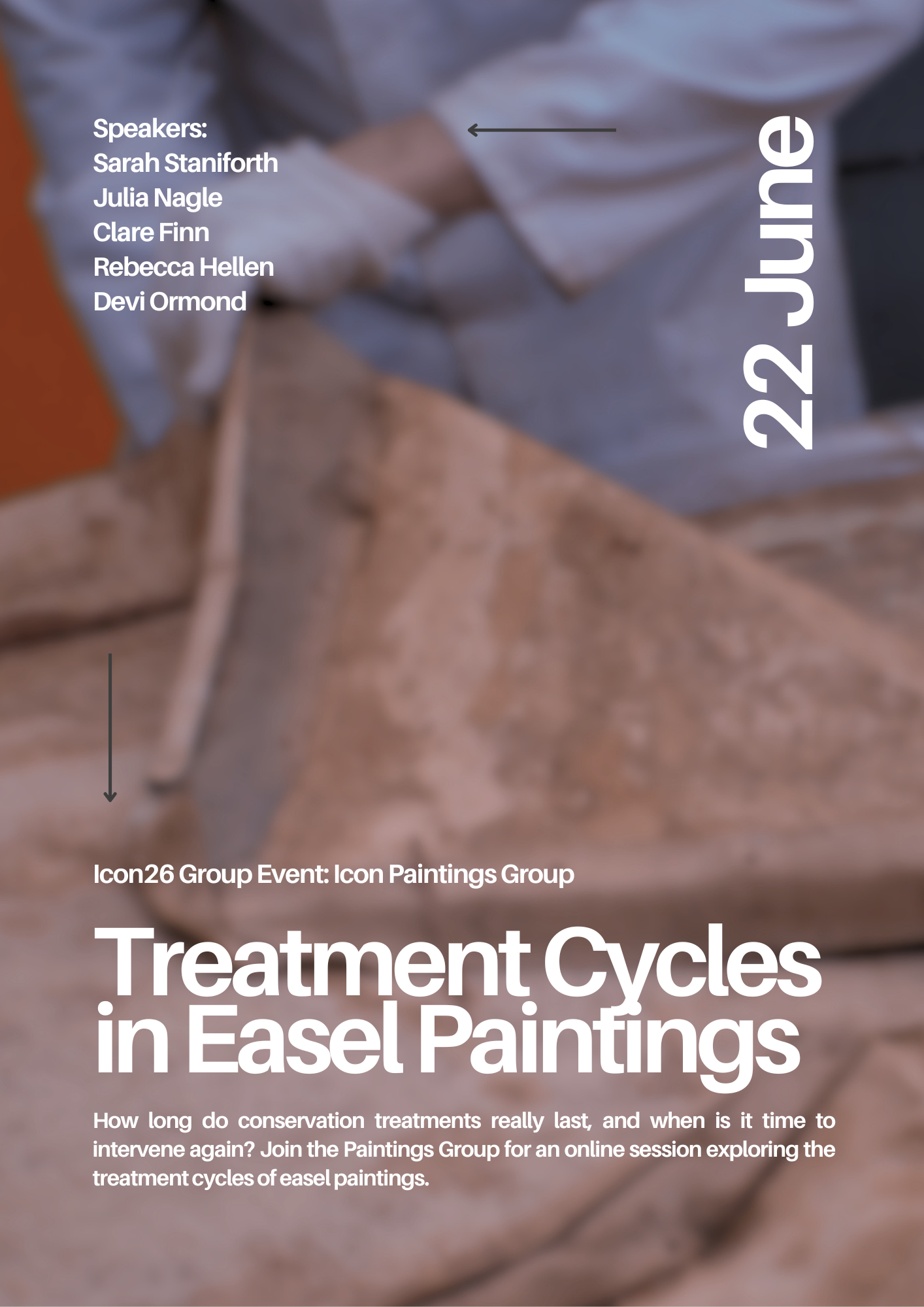
Through a series of short presentations, speakers will share insights drawn from case studies, research, and professional experience. The session will address key questions around the lifespan of conservation treatments, what influences the need for further intervention, and how approaches shift in response to new research and changing contexts.
The programme will also engage with core conservation principles, such as minimal intervention and reversibility, considering how these are interpreted and applied in real-world scenarios rather than as fixed or universal rules.
Designed for conservators, students, and anyone with an interest in paintings conservation, this session offers an opportunity to gain practical insights, engage with current thinking, and connect with peers across the field.
Programme
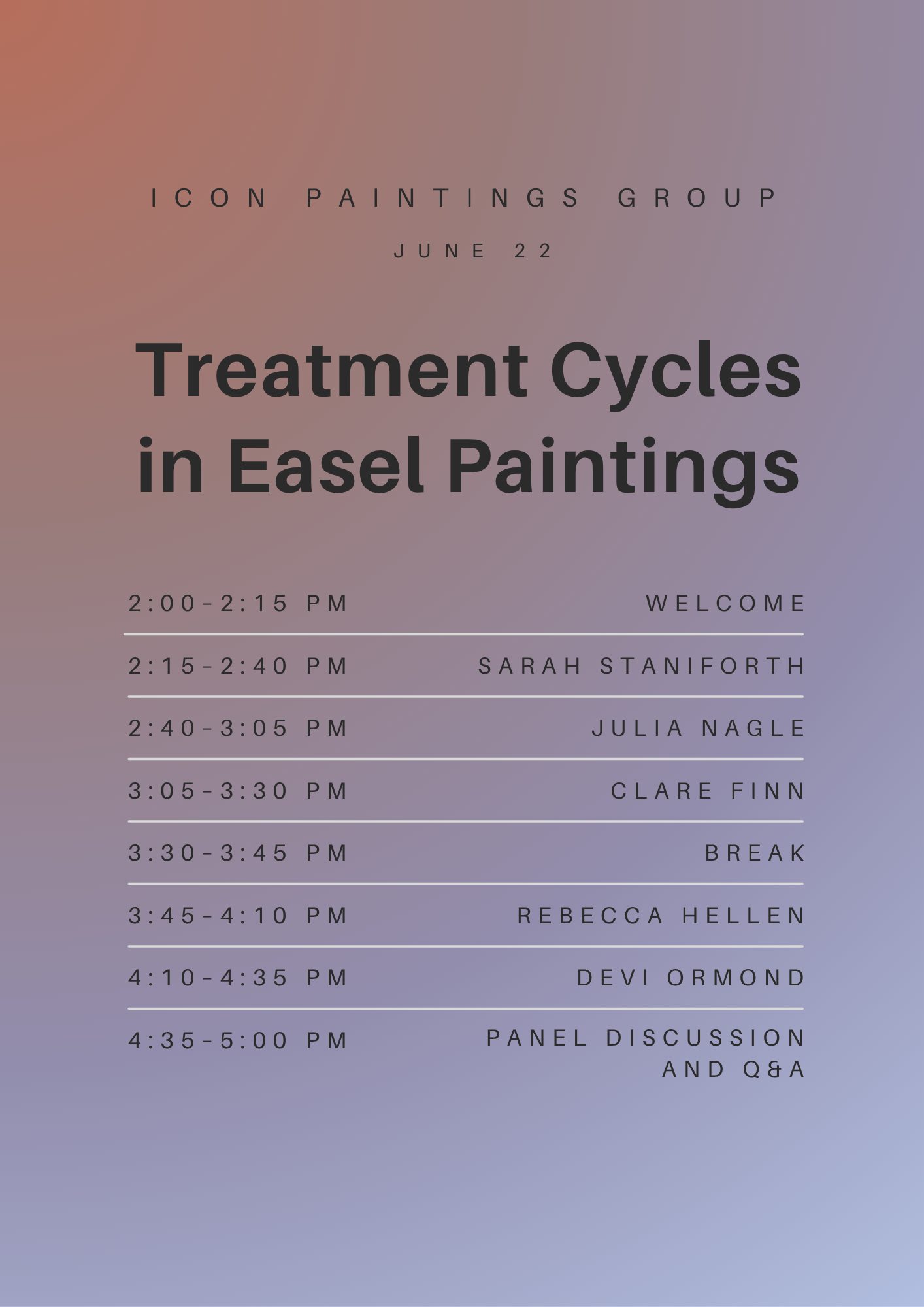
2:15-2:40
Sarah Staniforth
Can preventive conservation extend treatment cycles for easel paintings?
In 1996, Sarah wrote a paper for The Picture Restorer on the Management of Paintings Conservation in National Trust Houses. Sarah proposed treatment cycles of 25 years for minor in situ interventions and 100 years for major studio treatments, based on conservation records from the National Trust and National Gallery. With preventive conservation measures now standard practice, this talk considers how far improved environmental conditions may extend those treatment cycles
2:40-3:05
Julia Nagle ACR and Amiel Clarke
First Responders: Starting the Treatment Cycle for Modern and Contemporary Paintings
Conservators of modern and contemporary paintings are often the first to document and treat a work, establishing its treatment history. While this responsibility can be daunting, it also presents a valuable opportunity: to set a painting on the best possible path for its long-term care. Working with contemporary paintings gives us a rare advantage: the ability to prevent damage before it occurs. This presentation explores how careful documentation and minimal intervention can help preserve artists’ intentions and provide a strong foundation for the painting’s long-term care.
3:05-3:30
Dr Clare Finn ACR
The Rubens’ in the Banqueting House, their treatments over four centuries
Using surviving documentation, the talk traces the treatments the paintings received from their initial installation through just after WWII, examining changing approaches to those treatments.
3:30-3:45
Break
3:45-4:10
Rebecca Hellen
Cycles of Conservation and Restoration - The Mallory Family Portrait of c. 1649, British (English) School, from Fountains Hall, Fountain Abbey and Studley Royal Estate, National Trust
4:10-4:35
Devi Ormond
Exploring the Conservation History of Gustave Caillebotte’s Young Man at His Window
Acquired by the Getty Museum in 2021, Gustave Caillebotte’s Young Man at His Window had undergone extensive past conservation treatments. Research revealed that the painting had been transferred before leaving France in the 1950s and subsequently treated several times, resulting in a complicated, multilayered varnish, the removal of which only served to enhance its research. This talk presents the findings of that investigation and explores what the painting has endured during its relatively short history.
4:35-5:00
Panel Discussion and Q&A

Amiel Clarke

Dr Clare Finn ACR
Rebecca Hellen ACR

Julia Nagle ACR
Devi Ormond