
Morwena conserves costume, textiles and related objects from around the world. These can be made from cloth, plant fibre, feathers, beadwork and other materials.
Her clients include the National Trust, museums, art galleries, places of worship and private custodians. Supporting clients with collections care, through surveys, conservation plans, guidance and training workshops is an important part of her work. Morwena also carries out exhibition loan condition checks and gives public presentations of her work and research.
Recent projects include the conservation of a 16th century chasuble from a Devon church, the feather friezes at A la Ronde, fashionable dress for Killerton House and Scott’s 1901-1904 Antarctic expedition sledge flag for Exeter Cathedral.
Conservation treatments
First, the client is consulted about the heritage object, its history, significance, and how it is to be engaged with. Then, a detailed condition assessment is made to develop a conservation treatment proposal and estimate. The conservation may involve cleaning, stabilisation, repairs and/ or mounting, all of which are fully documented and photographed. Guidance is given on the longer-term care of the objects.
Collections Care Consultancy
Condition surveys are carried out to establish the condition of the objects, identify threats to the collection, and to set out and prioritise any necessary actions. This can form part of a conservation plan for the collection. Threats might include pest infestations, lack of physical support, and exposure to inappropriate environmental conditions or harmful materials.
Collections Care Training
A range of collections care training is offered to cover handling, storage, display, and/ or mounting of textiles, costume and world cultures collections. This can be a half- or full-day session for a single institution, or regional group of museums, e.g. in storing or displaying costume.
It can also be a longer-term project including the supervision of paid and/ or volunteer staff. Examples include 3 days to help mount an exhibition of uniforms at Gloucester Museum and a long-term project training and supervising volunteers to improve the storage of an important collection of pattern books at Coldharbour Mill Museum.
Exhibition Loans – Condition Checking
Condition assessments and condition checking for costume, textile-based and world cultures artefacts that are on loan to the client institution or being prepared for outward loan.
Public presentations
Presentations of recent conservation projects or research projects to specialist and general audiences. Examples include research into Woollen Tradecloth, presented at the Stroudwater Textile Trust AGM; and ‘Dressed to Impress: the Conservation of Ceremonial Regalia’ at Powderham Castle Heritage Open Days.
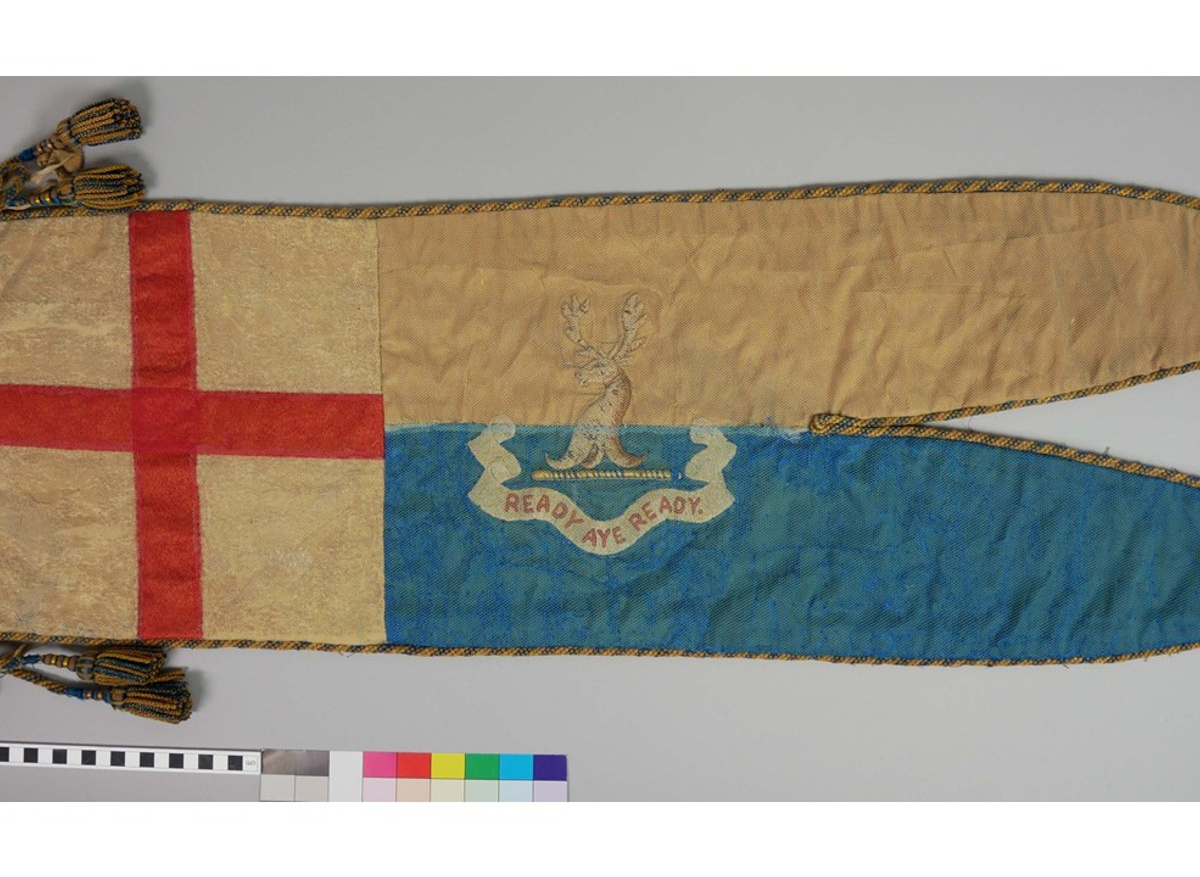
Scott’s 1901-04 Antarctic Expedition sledge flag, front before conservation
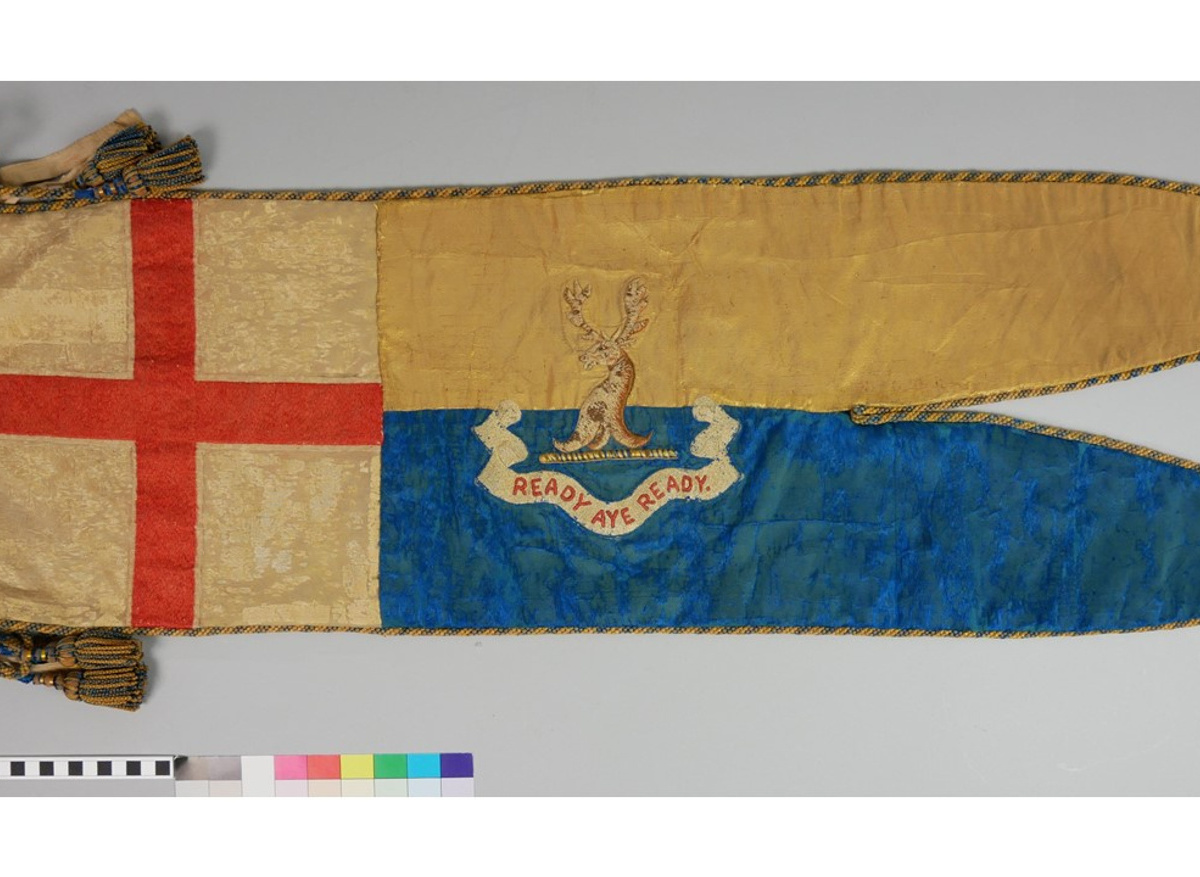
Scott’s 1901-04 Antarctic Expedition sledge flag, front after conservation
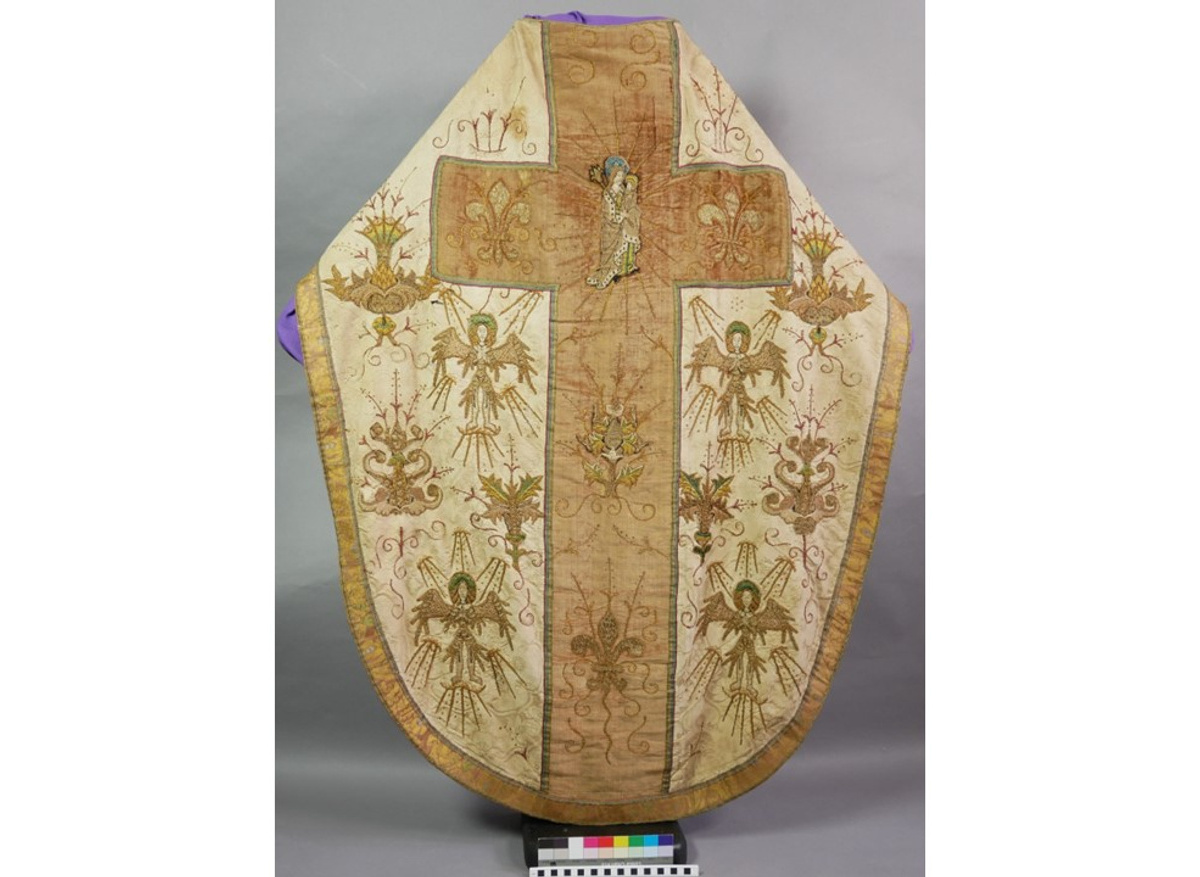
A 16th century chasuble, back before conservation, on an early 20th century mount
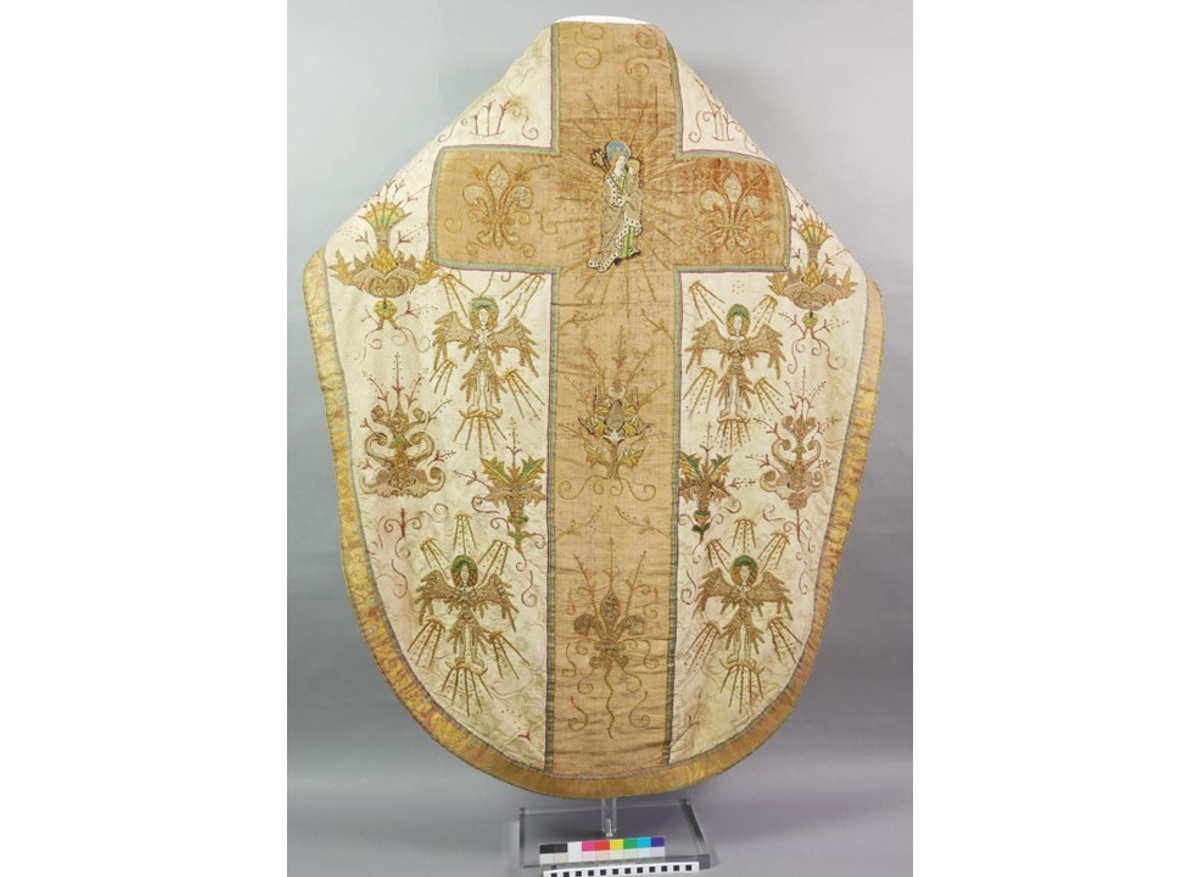
A 16th century chasuble, back after conservation and mounting
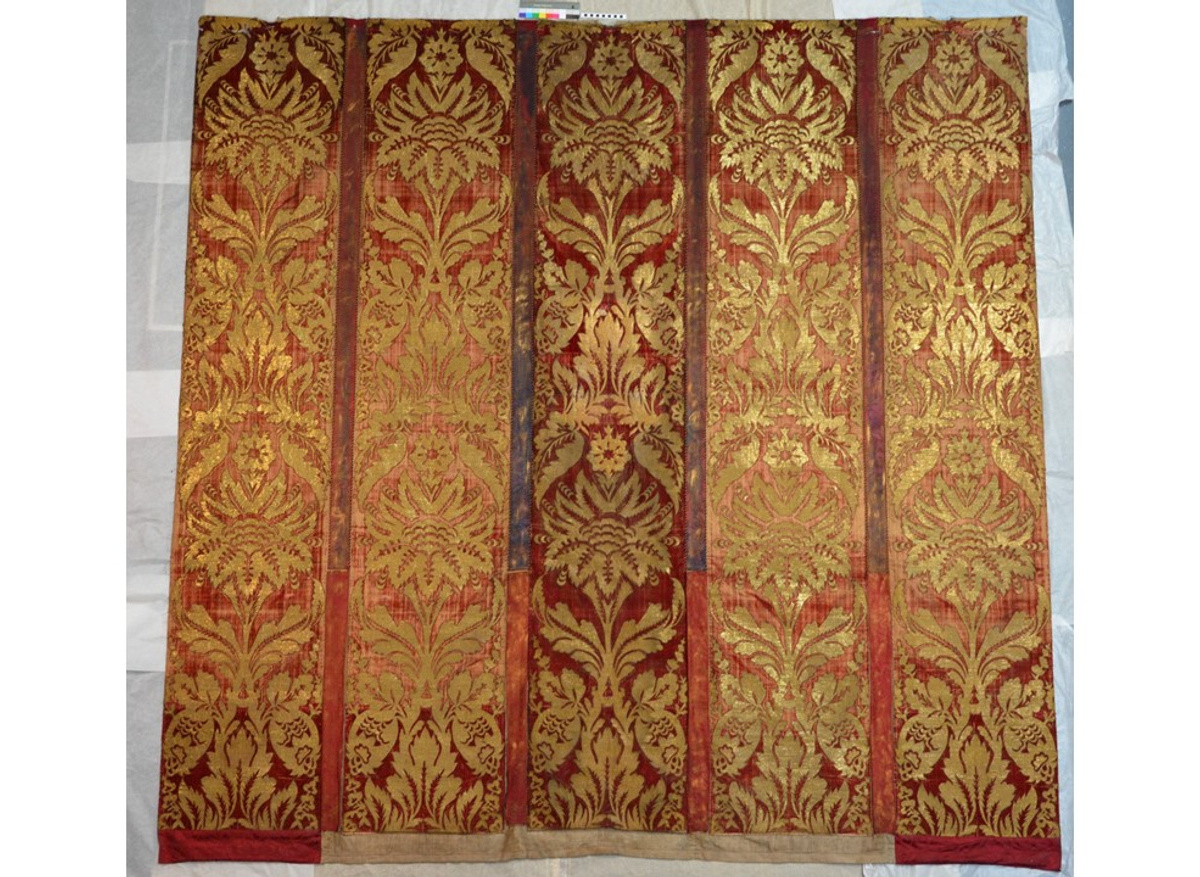
17th century Portuguese dossal, obverse before conservation
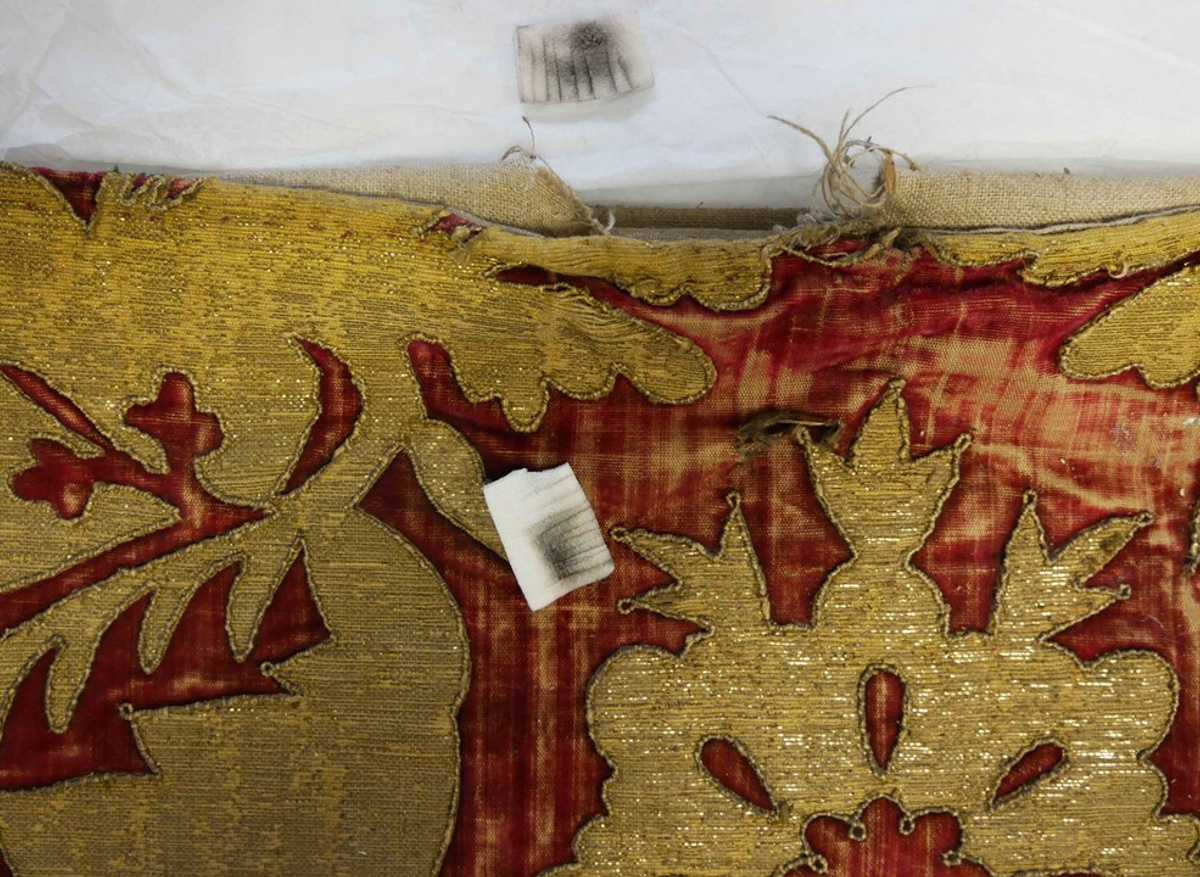
During cleaning of the dossal
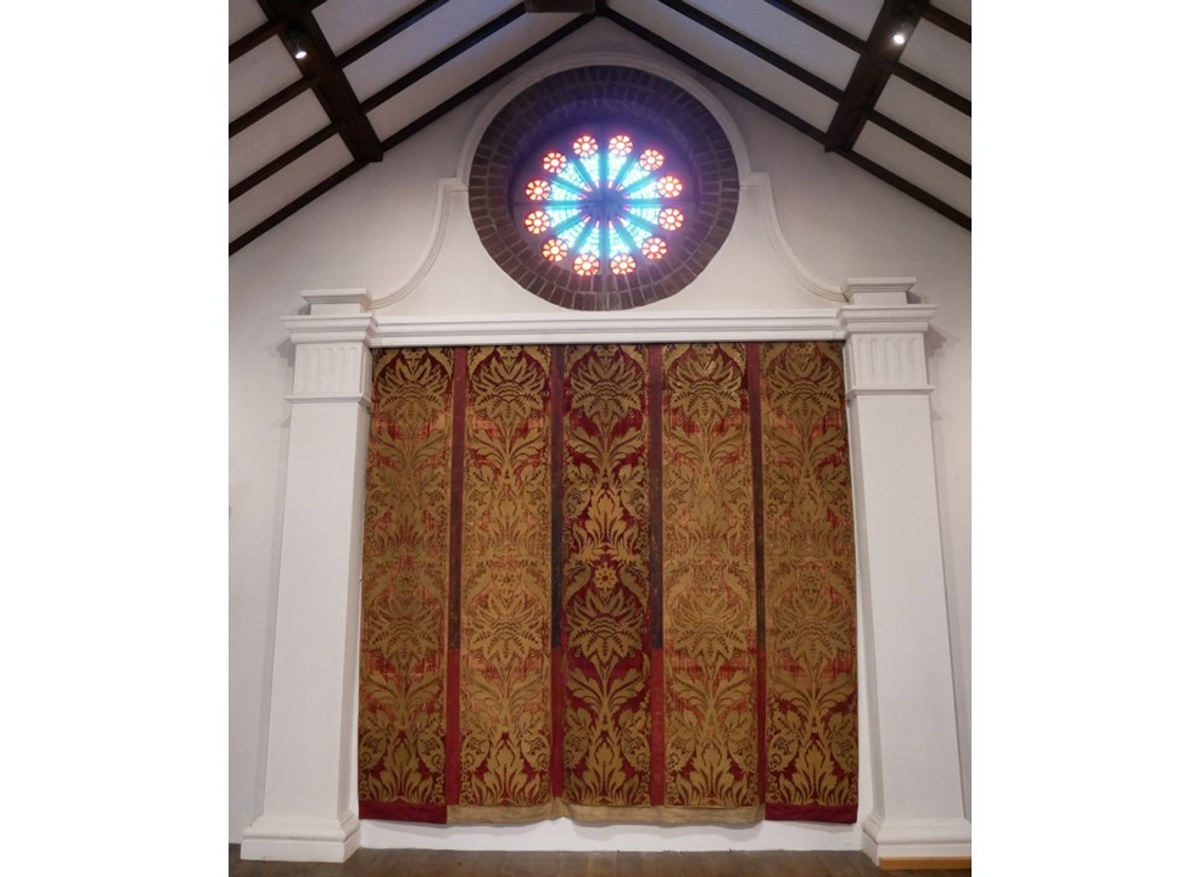
17th century Portuguese dossal obverse, after conservation and re-installation
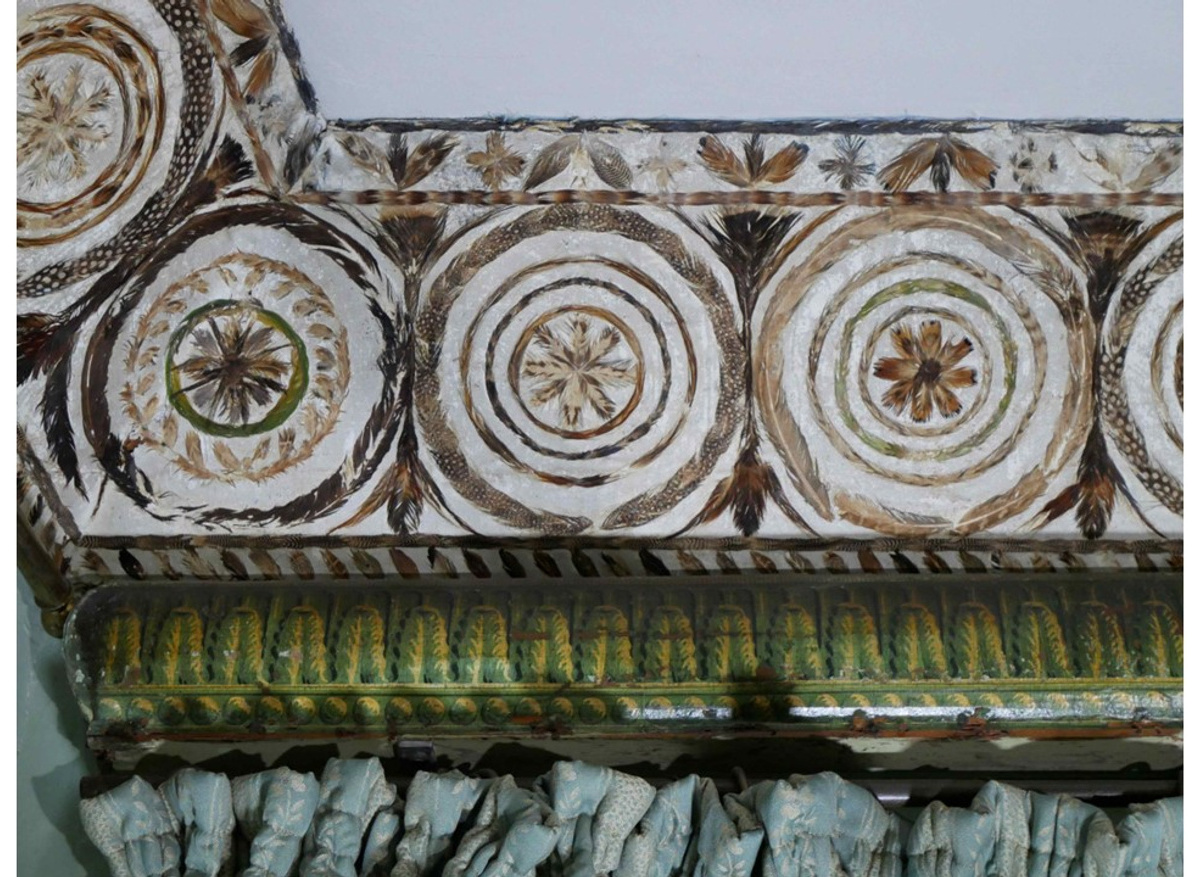
A small section of the coving feather frieze in the drawing room.
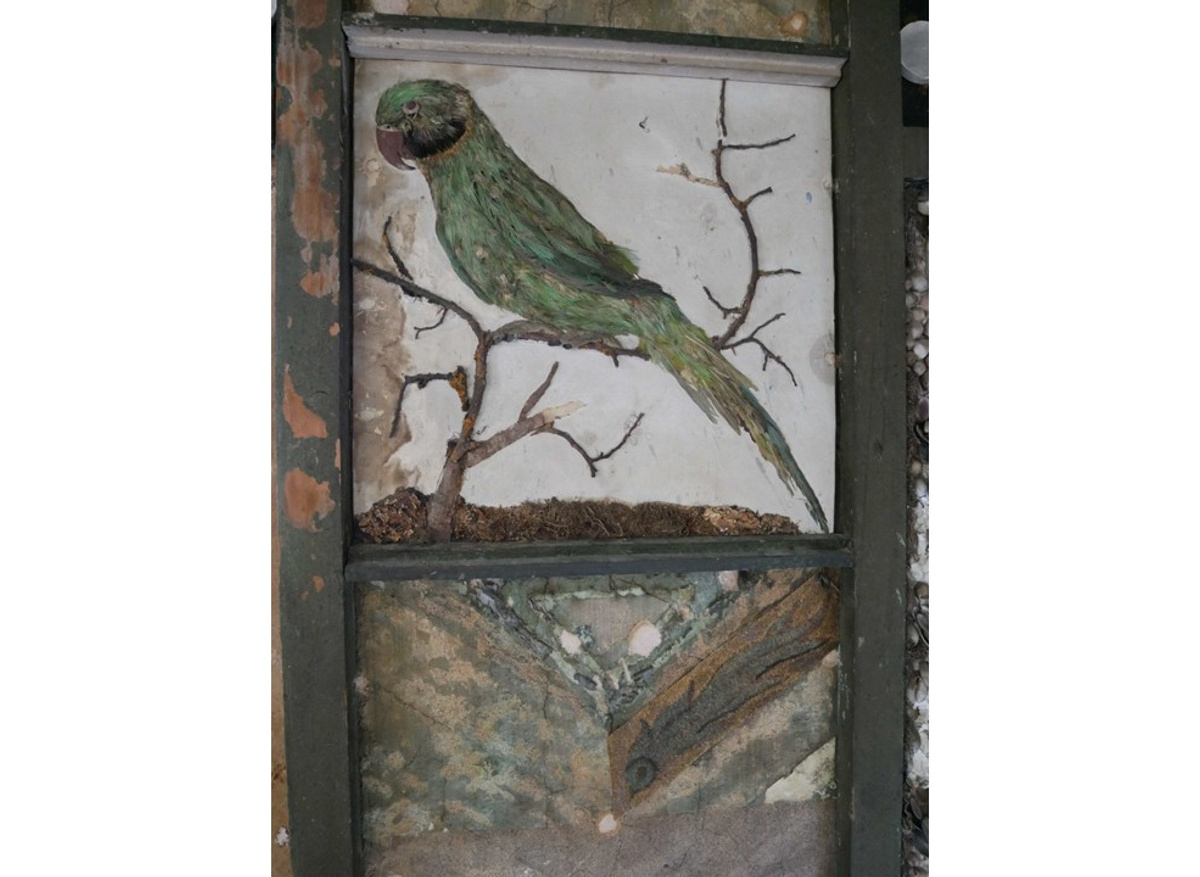
A Shell Gallery bird picture, A la Ronde, The National Trust, after conservation and reinstallation
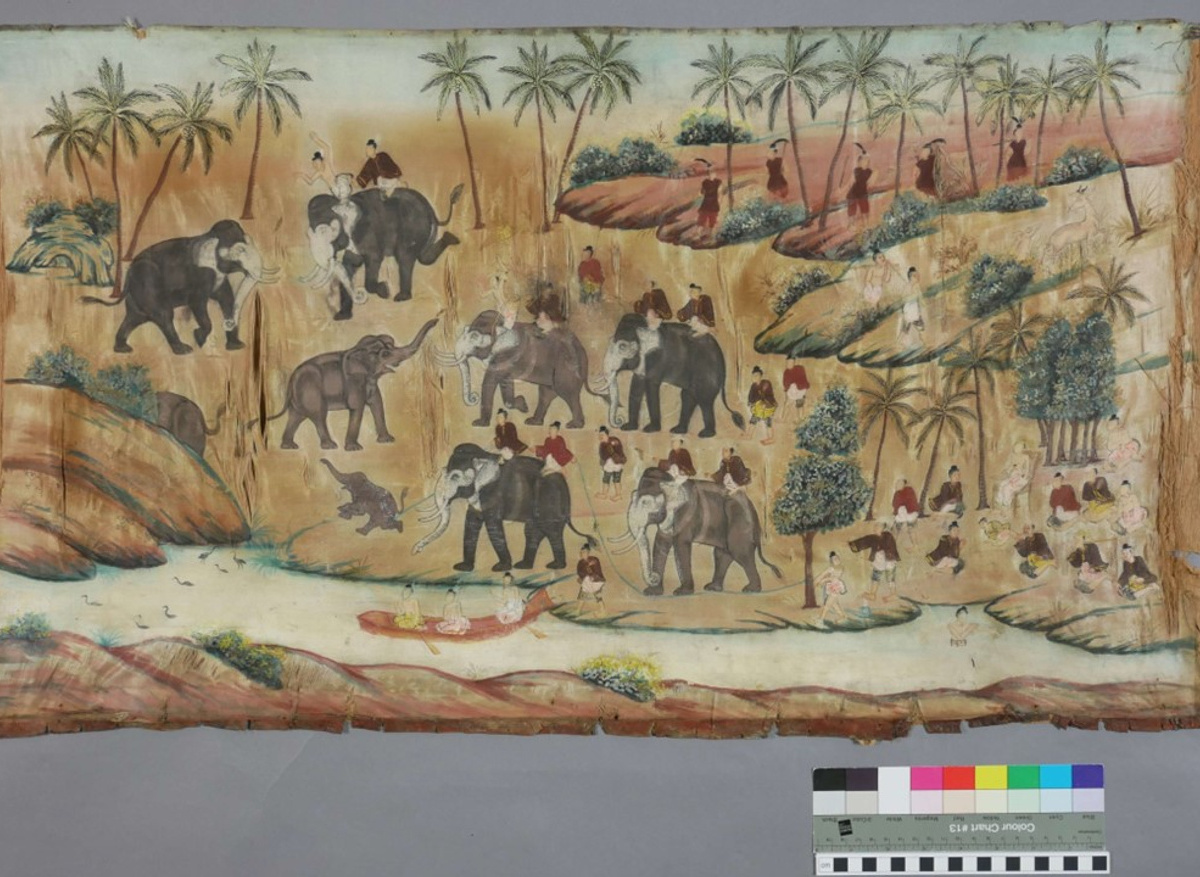
Myanmar painting of river scene with elephants and people, unframed.
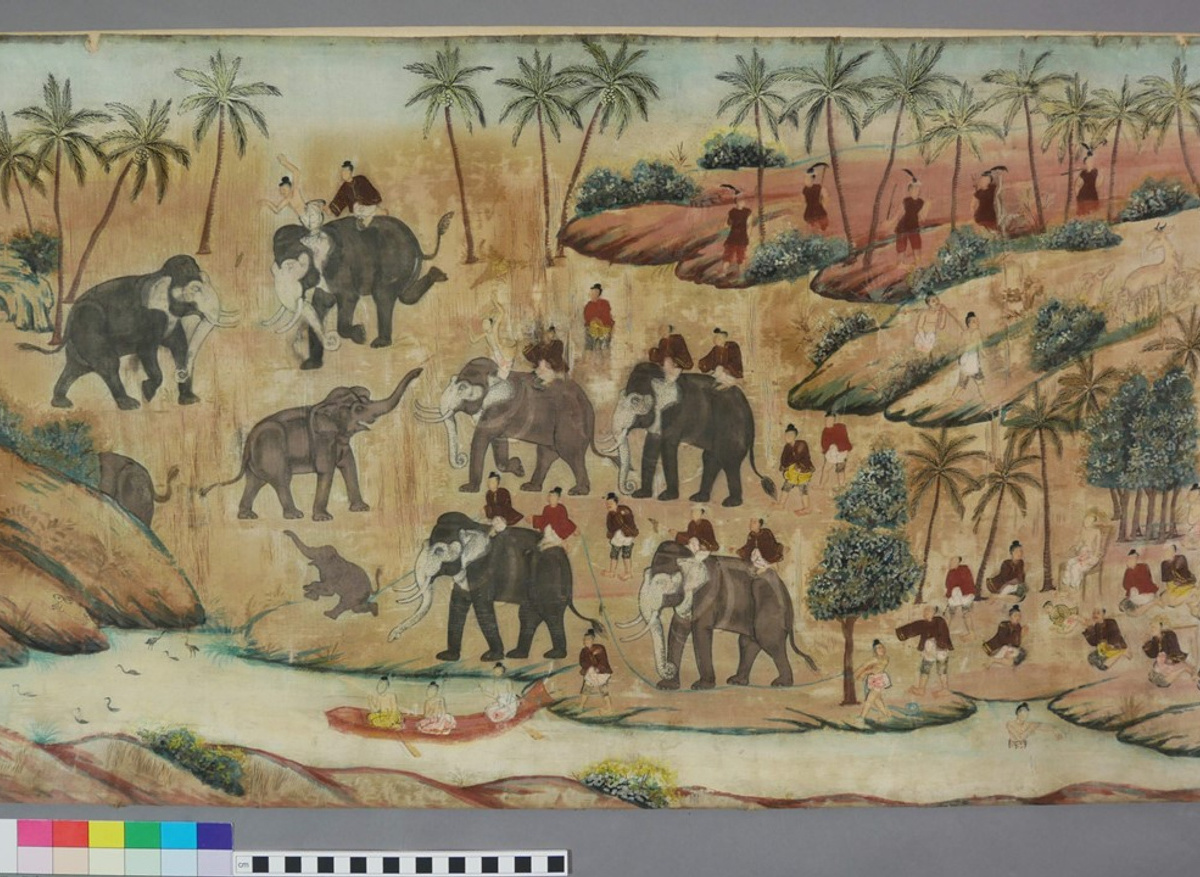
Myanmar painting of river scene with elephants and people, after conservation and mounting.
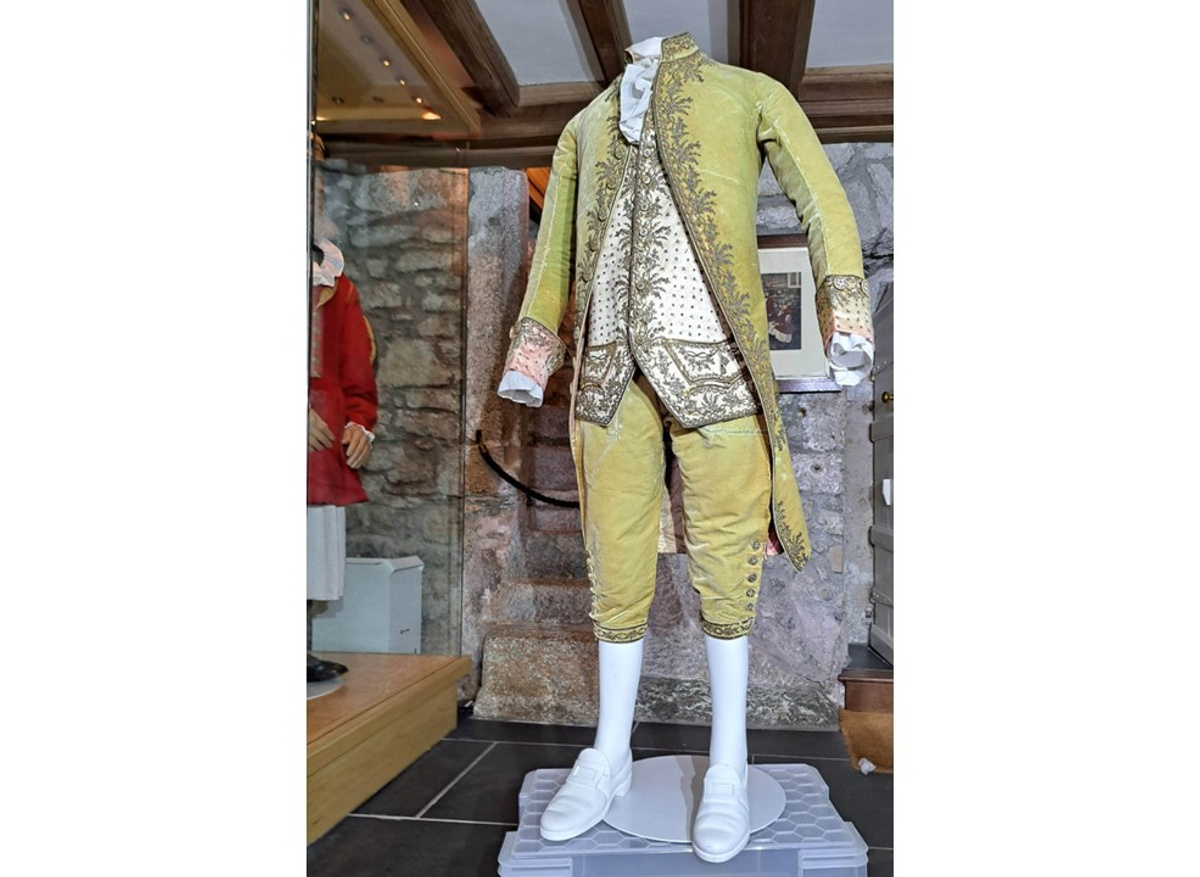
Court suit after conservation and mounting
Client Testimonials
Morwena carried out the vital work of stabilising and conserving Captain R.F. Scott’s Antarctic Expedition sledging flag in 2025, prior to long-term display in the new Treasures Exhibition Gallery. The difference between its pre- and post-conservation condition is astonishing and the accompanying conservation report will remain a vital reference tool. She made the administration of the conservation process so straightforward.
Ellie Jones
Exeter Cathedral Archivist
Biography
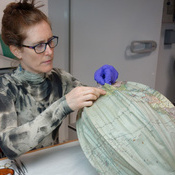
Morwena Stephens
Morwena has a 3-year Postgraduate Diploma in Textile Conservation, Textile Conservation Centre, London University. She has an Adult Education City & Guilds Certificate, and Experimental Psychology BA Hons, Oxford University.
Morwena then had a 12-month Museums & Galleries internship in ethnography conservation at Exeter’s Royal Albert Memorial Museum and a 10-week Mellon Fellowship at National Museum of the American Indian, Smithsonian Institution, USA.
While training she had placements at LP3 Conservation, France and Fitzwilliam Museum, Cambridge; and contracts at Musée de l’Armée, Paris and later at the Museum of Welsh Life, Cardiff.
She has been in independent practice for over 25 years.