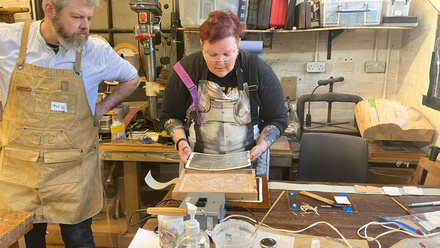
In August 2026, I had the pleasure of attending a training event focussed on the salvage, cleaning and digital restoration of photographs damaged during the 2024 Valencia floods. Using the wonderful facilities at the National Archives London, Ana Carreres Llopis and Paula Ogayar Oroz guided 12 of us through the process of separating blocked black and white and colour photographs which Valencia citizens had manage to rescue from their ruined homes.
As I have a deep interest about how conservators respond after disasters, it was valuable to hear Ana’s firsthand experiences. While the ideal salvage scenario involves a swift response measured in days, the reality of the widespread Valencia floods meant many days of no electricity, sweltering temperatures, no WiFi, limited road access, and a huge volume of filthy wet photographs.
Yet even with these challenges, the conservators created a system that gathered damaged material, processed it to preserve ownership, packaged and froze most of it, then trained newly fledged conservators on cleaning and unblocking methods. The goal was to preserve, as much as possible, the faces of people in the images. Once separated, the photographs were reunited with their owners. At all times, the teams worked with care to handle this deeply personal material in line with Spanish laws about image ownership, personal dignity and privacy.
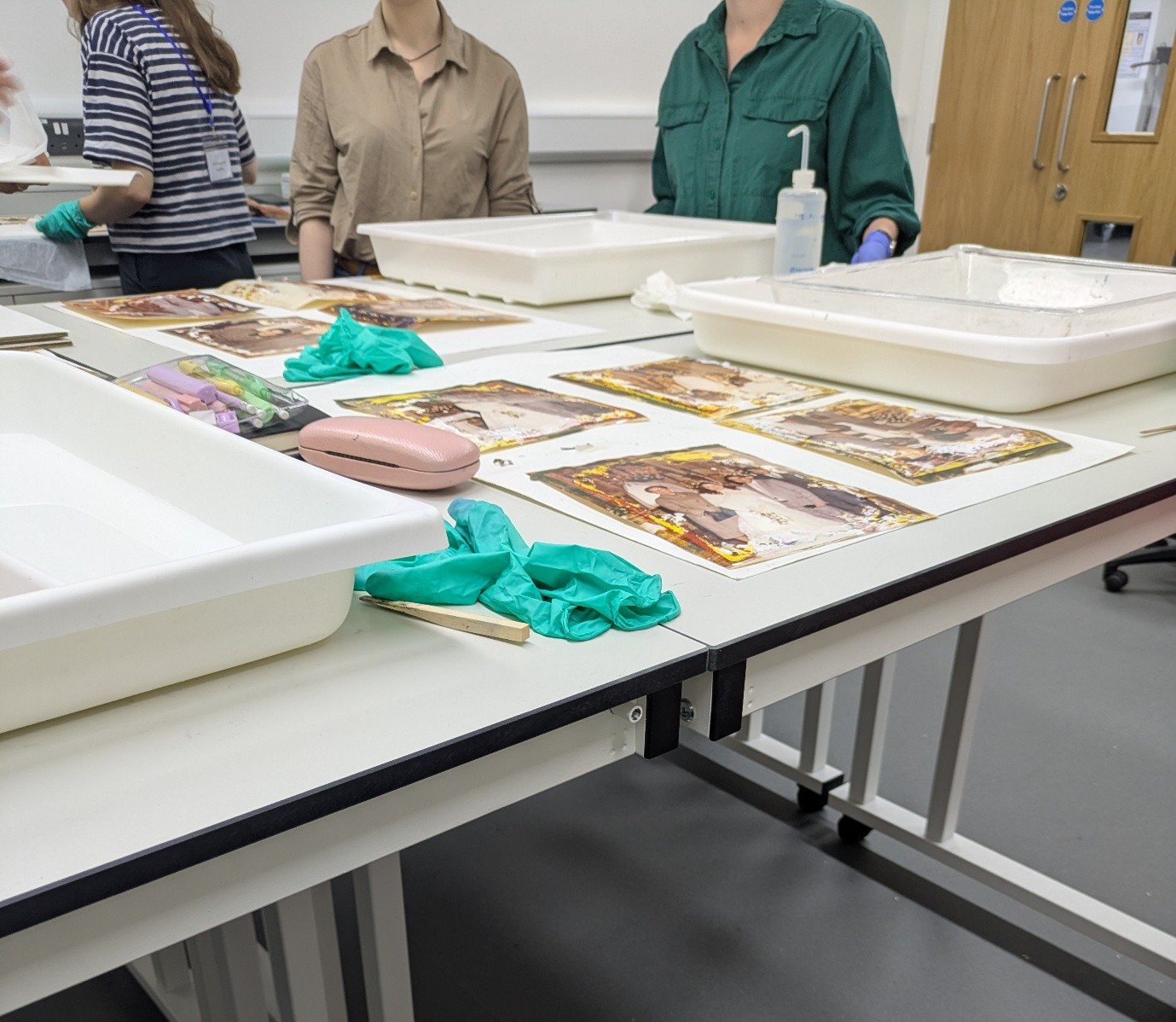
A selection of colour photographs from the 1980s, after separation.
We were able to try soaking and unblocking some badly stuck examples. It felt strange to have to work so quickly, accepting that this could result in some damage while pursuing the goal of revealing and saving what we could. Work too slowly, and the images simply dissolved…
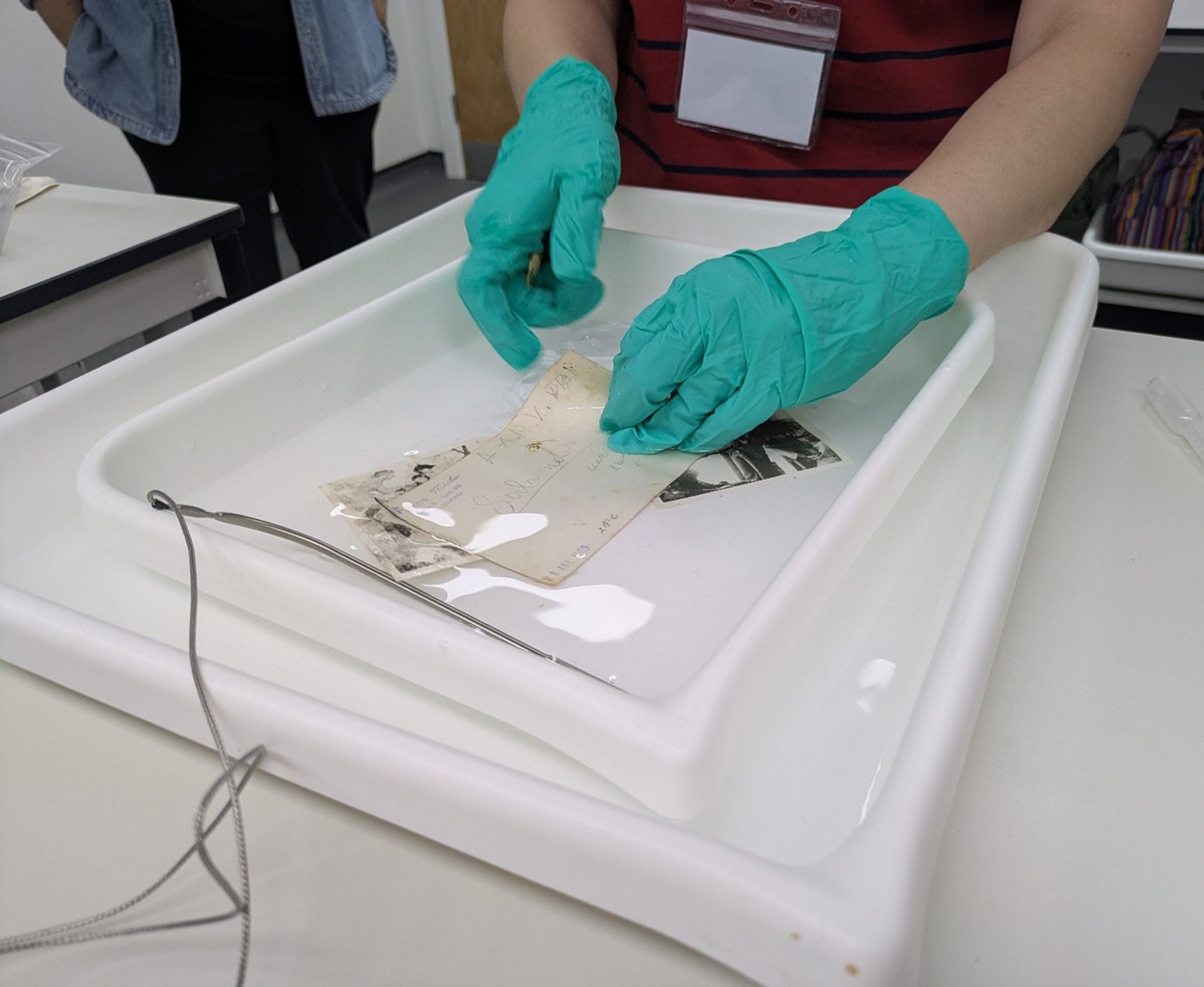
The “cold Bain Marie” setup used to keep the water chilled during immersion of the blocked photographs. The cold temperature slowed down the dissolution of the gelatine layers.
The chance to learn directly from those involved in the Valencia flood response was an invaluable experience, and I am grateful to have taken part.