Contributing to the conservation of St. Bartholomew’s Hospital’s North Wing, has been the chance to develop new skills and build upon pre-existing ones. This project brings together history, art, and public engagement. Working as part of the wider team has brought the chance to collaborate and learn about different aspects of conservation and navigating the challenges of working on a building site.
Hands-On Conservation: A Learning Curve

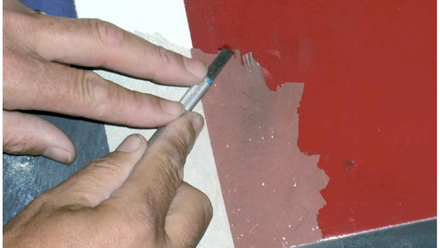
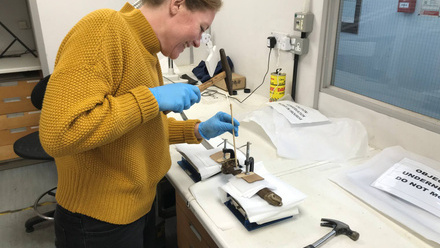
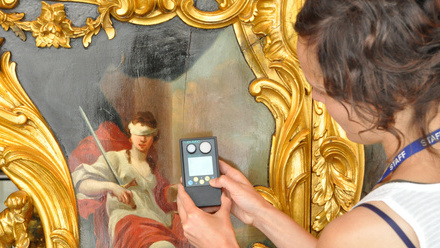
My primary responsibilities revolved around the restoration of the hospital's Great Hall and the Hogarth Staircase, constructed in the 1730s. Early on, my team and I tackled the gilded elements of the Great Hall, a Victorian addition to the ornate 18th-century plaster ceiling. Cleaning, filling, consolidating, and retouching the gilding were meticulous tasks that required patience, precision, and teamwork. We attempted to conserve as much of the original gilding as possible before decorators followed our work, replacing elements that were too damaged by internal environmental factors. Later, I had the chance to apply these skills to address challenges like water-damaged plaster and peeling paint on the ceiling above the Hogarth Staircase. This was a chance to learn new techniques such as wielding a hot spatula to careful return peeling paint back to the walls surface, without cracking the paint leading to further flaking.
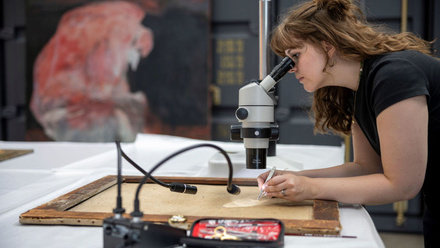
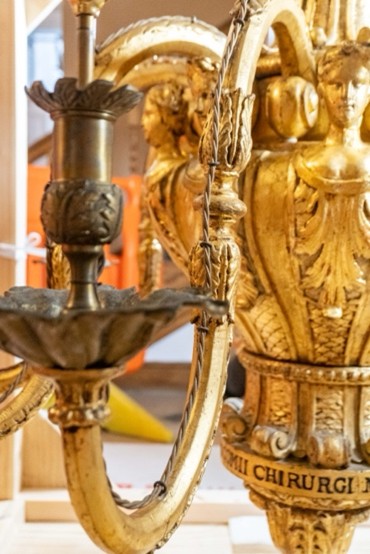
One of the standout moments of my internship was conducting a condition report on the Freke Chandelier, an extraordinary Roman-Greco style piece adorned with intricate busts of gods. This close examination which had never been done before highlighted small cracks in the wooden structure, as well as other potentially problematic areas that can now been observed to ensure they do not affect the structural integrity of the piece.
Delving into Historical Research: Women in Philanthropy
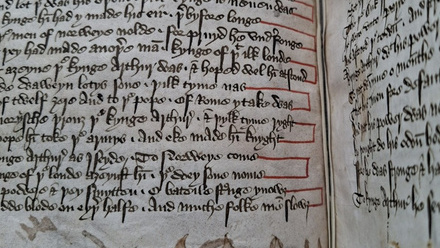
Alongside the physical conservation work, I embarked on a research project focused on the lives of women donors whose names appear on the benefactor boards in the Great Hall. Of the 3,016 names listed, only 155 belonged to women. By delving into parish records and national archives, I uncovered stories of widows and women from influential families who played pivotal roles in supporting the hospital. These insights shed light on the broader societal dynamics of the time, including how changes in law and social networks empowered women to use increasing autonomy over their finances for good.
This research has been one of the most rewarding aspects of my internship, blending history with the personal stories of individuals who left their mark on this historic space. As part of my contribution, I’ve compiled this research into a report for Bart’s Heritage archives, with plans for a future article on their website.
Engaging with the Public: Sharing the Conservation Story
An unexpected highlight of the internship was the opportunity to engage with visitors during their tours of the project. Explaining the ongoing conservation work and answering their questions gave me a chance to reflect on the significance of the project and share my growing passion for heritage preservation, as well as speak to individuals from the hospital who have interesting memories of the North Wing.
Takeaways and Reflections
This internship has been a fantastic opportunity to learn new techniques, gain an insight into the decision-making processes in conservation, and explore the interplay between practical work and historical research. Working alongside a talented team has provided me with invaluable mentorship, while independent projects have allowed me to develop confidence and initiative.
St. Bartholomew’s Hospital is more than just a historic building; it’s a testament to centuries of philanthropy and craftsmanship. Being part of its restoration has not only honed my skills but also deepened my commitment to preserving cultural heritage for future generations.